Song Rig
Tiger Rag
Les Paul · Les Paul Trio · 1945
Tone Overview
What Makes This Sound Unique
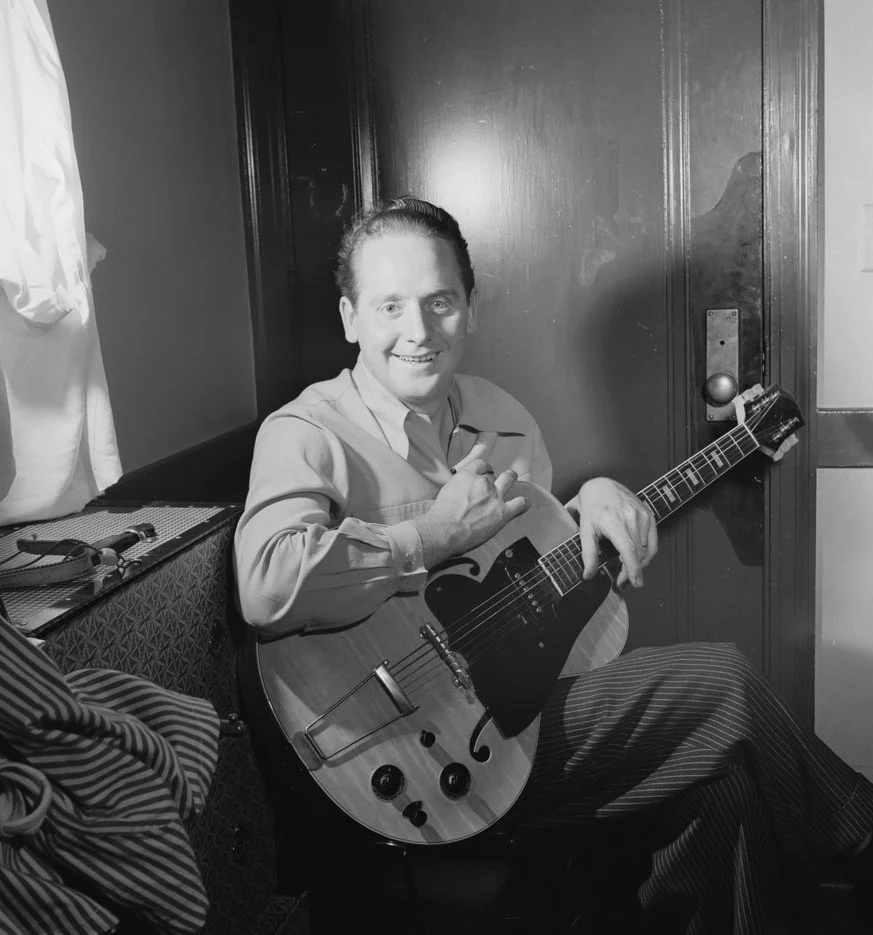
Pre-electric Les Paul — this 1945 trio recording shows his jazz guitar roots before the multitrack experiments. A clean, swinging archtop tone deeply influenced by Django Reinhardt, played at astonishing speed. The hollow-body resonance and no amplification processing creates a very direct, natural sound.
Signal Chain
- 1Epiphone Broadway archtop (acoustic/electric)
- 2Early small tube amplifier (Fender-type, late 1940s)
- 3No effects — pure direct guitar tone
Amp Settings
The earliest Les Paul recordings use a near-flat amp EQ with the treble slightly elevated to help the pick attack cut through the rhythm section. The pickup on the Epiphone archtop had a bright, glassy character different from the humbuckers Paul would later develop for Gibson.
Technique
How to Play It
Breakneck single-note speed with jazz vocabulary — Tiger Rag was a Dixieland showpiece that Paul adapted as a virtuosic guitar showcase. His right-hand economy picking and left-hand position shifts predate the speed techniques of later rock and metal players by decades.
Budget Alternative
Achievable With
Hollow-body archtop (Ibanez AF75, Gibson ES-125) → very clean small tube amp → practice alternate picking. Paul's speed at this tempo was remarkable for any era — the technique is the bottleneck, not the gear.
Your Gear
Adapt to My Amp
More from Les Paul
Other Song Rigs
How High the Moon
New Sound! Les Paul · 1951
The invention of multitrack recording disguised as a pop record — Les Paul used …
View rig →Mockin' Bird Hill
New Sound! Les Paul · 1951
A country-influenced pop record showing Les Paul's range beyond pure showmanship…
View rig →Vaya Con Dios
Bye Bye Blues · 1953
Les Paul and Mary Ford's best-selling record — a reverbed, slightly warm guitar …
View rig →Lover (When You're Near Me)
The New Sound · 1948
The earliest demonstration of multitrack overdubbing on a commercial record — Le…
View rig →The World Is Waiting for the Sunrise
Les Paul & Mary Ford At Home · 1951
Les Paul and Mary Ford's most famous recording — the combination of Paul's multi…
View rig →