Rig Builder
Budget Rig Breakdown
Signal Chain


Essentials
Complete Your Rig
The accessories every serious guitarist needs — cables, strings, and the rest.
Ernie Ball Regular Slinky Strings (10-46)
The balance between bending ease and tone — standard gauge for blues and classic rock.
Dunlop Tortex Standard Pick 0.73mm (Pack of 12)
Medium-gauge picks used by blues and rock guitarists for attack and warmth.
Planet Waves American Stage Guitar Cable 10ft
Solderless ends and lifetime warranty. The cable most session guitarists trust.
Boss TU-3 Chromatic Tuner Pedal
The professional standard for live tuning. True bypass, powers other pedals, ultra-accurate.
Levy's M8 Guitar Strap
Quality leather strap used by touring guitarists. Genuine comfort for 3-hour sets.
Technique
Key Tone Tips
- Wah parked at varying positions acts as an EQ filter on funk comping — not a sweep effect
- Muted 16th-note funk strumming: dead strings on even 16ths, ring out on rhythmic hits
- Clean Strat or Tele-style pickup for funk: bridge or middle, treble up, bass down
- Hard rock lead tone: switch to neck or middle humbucker equivalent, turn up amp gain
- Prince's vibrato is fast and narrow for sustained leads — less wide than blues players
- Learn both funk rhythm (16th-note muting) and pentatonic lead playing — he switches mid-song
- Thumb-over-neck technique for the low E string adds a warm, rounded bass note tone
- Dynamics: Prince went from almost inaudible to full-volume screaming within single bars
- Study the "Purple Rain" solo and "Let's Go Crazy" outro for the rock side of his tone
- The "Purple Rain" solo requires mastering bent notes held for several beats with controlled, fast vibrato — Prince holds bends at the peak of pitch for much longer than most rock players, adding vibrato only after the bend has settled, which creates the aching, sustained quality of the solo
- Listen to "When Doves Cry" carefully — it has no bass guitar whatsoever, with the bass role filled by the bass drum and synth. Prince's guitar part on this track is in fact a sparse, funky rhythm guitar playing in a frequency range above where a bass would normally sit; understanding this arrangement context changes how you approach the guitar part
- For the rhythm side of Prince's style, practise funk ghost-notes at 16th-note resolution on a single string before adding chord changes — the ghost notes (dead-string mutes on every 16th) are the foundation, with the actual notes and chords as punctuation within that constant 16th-note framework
Background
About Prince's Sound
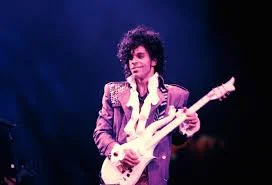
Prince is the most complete guitar player in pop music history — rhythm, lead, funk, blues and rock all coexisted in his playing with equal mastery. His custom Cloud guitar through a clean-to-dirty amp, with a wah pedal as a rhythmic tool, created tones from funk-clean precision to explosive rock lead.
Tone History
Prince's Tone Evolution
Prince treated the guitar as a secondary instrument publicly but privately regarded it as his deepest voice — his tone shifted from funk-pop clarity in the early '80s to searing stadium rock on Purple Rain, then to an idiosyncratic mix of jazz-inflected clean tones and violent wah-drenched leads in his later career.
Full timeline: 3 eras →Song Breakdowns
Prince Song Rigs
Purple Rain
Purple Rain · 1984
The most emotionally powerful guitar solo of the 1980s. Prince plays a sing…
When Doves Cry
Purple Rain · 1984
One of the strangest hit singles in pop history — famously has no bass guit…
Little Red Corvette
1999 · 1982
More keyboard-forward than Prince's guitar-heavy work, but the guitar contr…