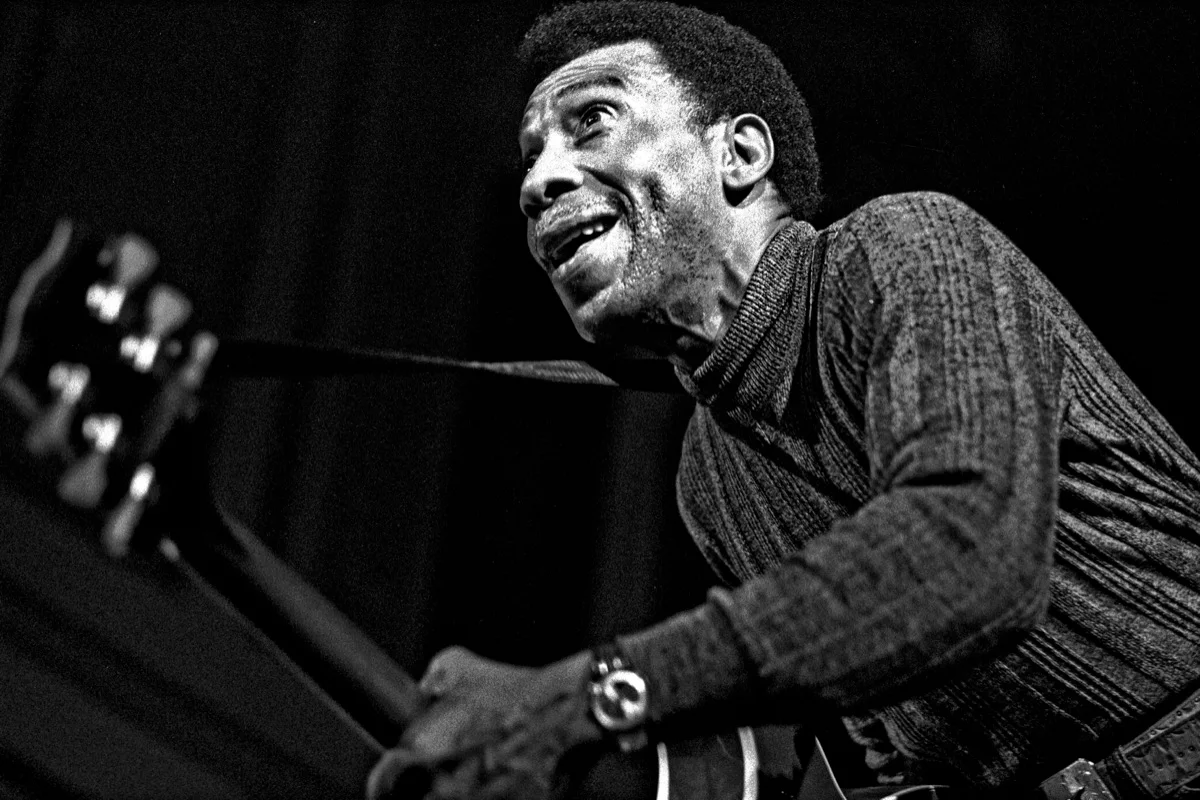
Song Rig
Hard Way Blues
T-Bone Walker · Imperial Records · 1950
Tone Overview
What Makes This Sound Unique
T-Bone at his most direct and blues-fundamental — a slow, heavy blues track that strips away some of the jazz sophistication for a more emotionally immediate statement. The tone is slightly more driven than the jump blues material, with the amp pushed to produce a warmer, more saturated sound for the slower blues feel.
Signal Chain
- 1Gibson ES-5 (neck pickup)
- 2Small amp (pushed harder)
Amp Settings
Slightly warmer and more driven than the jump blues material — slow blues requires the guitar to sustain and swell rather than chop and jab. The neck pickup provides the rounded, singing quality appropriate for slow blues.
Technique
How to Play It
Slow blues double stops — T-Bone's slow blues playing uses sustained pairs of notes with wide vibrato, a technique that reveals his deep connection to the Delta blues tradition beneath the jazz-influenced surface of his jump blues work.
Budget Alternative
Achievable With
ES-335 neck pickup → Fender amp at natural breakup → the slow blues feel requires deliberate timing: place notes slightly behind the beat and let them sustain before the next phrase begins.
Your Gear
Adapt to My Amp
More from T-Bone
Other Song Rigs
T-Bone Shuffle
The Complete Recordings of T-Bone Walker 1940–1954 · 1942
The earliest sophisticated electric blues guitar tone on record — T-Bone Walker …
View rig →Call It Stormy Monday
Call It Stormy Monday (single) · 1947
The slow blues template — T-Bone's most influential single performance, cited by…
View rig →Mean Old World
Mean Old World (single) · 1942
T-Bone's earliest surviving recordings showcase a rawer, less refined version of…
View rig →Bobby Sox Baby
T-Bone Walker Sings the Blues · 1942
T-Bone's jump blues at its most exuberant — an upbeat, swinging track that showc…
View rig →Two Bones and a Pick
Imperial Records Sessions · 1950
T-Bone's Imperial Records era tone — slightly cleaner and more recorded than the…
View rig →