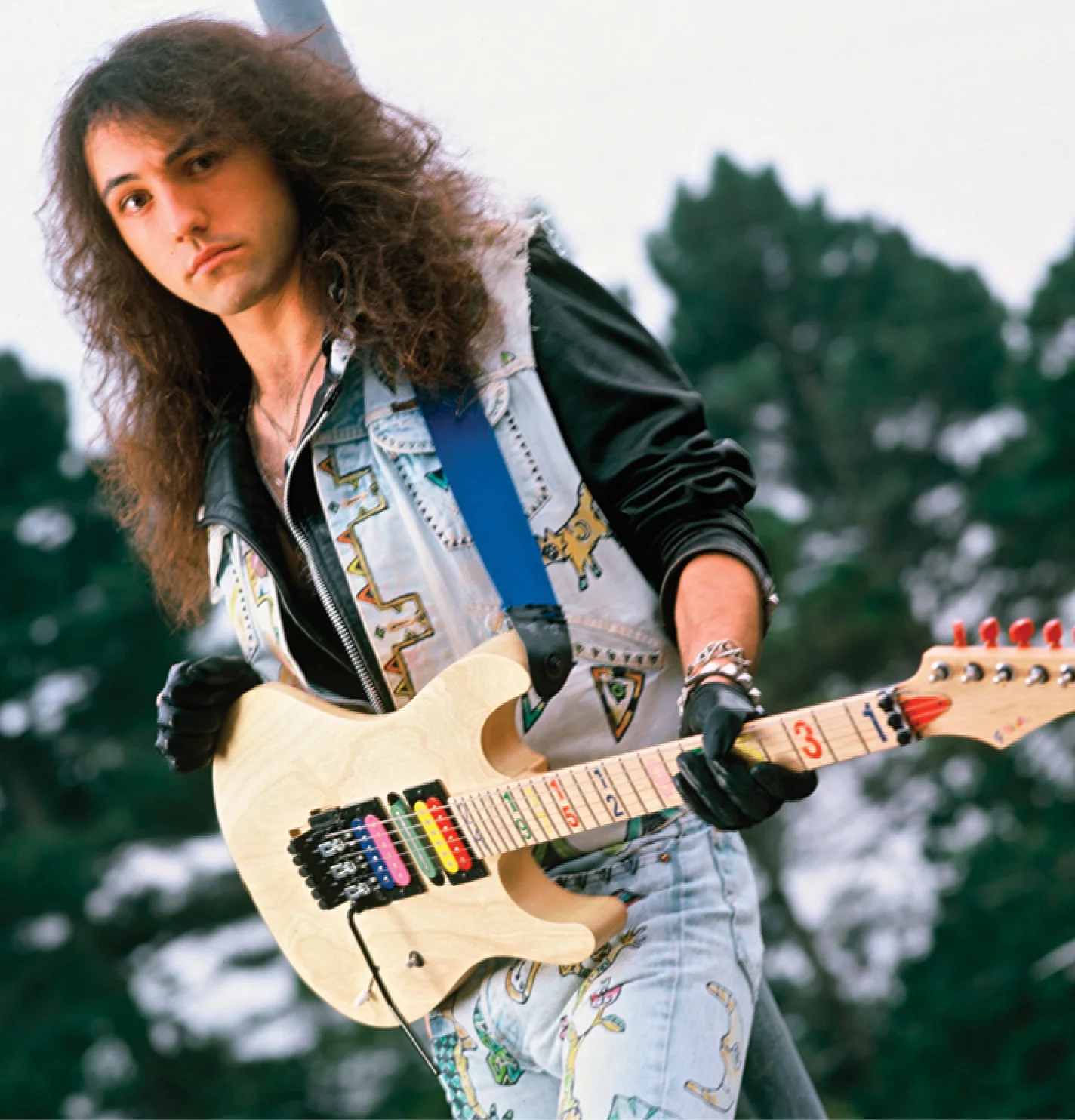
Sound Like Jason Becker
Jason Becker stands as one of metal's most enduring tonal references — crushing and technically demanding by nature and endlessly studied. Jason Becker played a Carvin DC127 through a Carvin X100B and Marshall JCM800, producing neoclassical shred of extraordinary emotional depth. His career was cut short by ALS in 1990, but the recordings he left — with Cacophony and on Perpetual Burn — remain the most harmonically sophisticated shred albums ever made. These complete rig guides at four budget levels show exactly what gear it takes to get there.
Quick Answer
To sound like Jason Becker, start with a Ibanez RG421 EX into a Boss Katana 50 MkII.
Tone Analysis
Jason Becker's Guitar Tone — In Depth
Tone Philosophy
Jason Becker was diagnosed with ALS in 1990 at age twenty-two and has been unable to play guitar since approximately 1996 due to progressive paralysis. His recorded output with Cacophony (alongside Marty Friedman) and his self-titled solo album represent one of the most technically accomplished and melodically sophisticated bodies of work in instrumental guitar music, compressed into a career window of less than five years.
The Signature Sound
The Cacophony Speed Metal Symphony era tone and the Perpetual Burn album represent Becker's primary sonic context: a Jackson guitar through a high-gain amplifier (various Marshall and Mesa units), with the melodic neo-classical vocabulary he shared with Friedman executed at speeds that remain extraordinary. His tone has a warmth unusual in the genre.
Key Gear
Jackson guitars with DiMarzio pickups were primary. Marshall amplifiers appear throughout his recordings. His setup shared much with the broader shred movement of the period.
Playing Approach
Becker's technique at his peak combined the neo-classical vocabulary of Malmsteen with a melodic sensibility closer to Friedman — he prioritised beautiful melody at speed rather than speed as an end in itself. His compositions use non-Western scales and unusual modal approaches.
Legacy
Becker's influence among technical guitarists is profound and his ALS diagnosis has made his story widely known. He continues to compose using an eye-tracking communication system, and his continued creative output despite total physical limitation is an inspiration to guitarists and non-guitarists alike.
Budget Comparison
Pick Your Budget Level
£1,000 · Pro-Level
~£986
- GuitarJackson JS22 DKA Dinky
- WahDunlop GCB95 Cry Baby Wah
- AmpBoss Katana 100 MkII
- DelayStrymon Timeline
£2,500 · Premium
~£2485
- GuitarIbanez RG550 Genesis Collection
- WahWilson Effects MkII Wah
- AmpMarshall DSL40CR
- DelayStrymon Timeline
- ReverbElectro-Harmonix Holy Grail Nano
Shop Now
Buy the Key Gear — £500 Sweet Spot
Guitar, amp and essential effects for the authentic Jason Becker sound. The guitar and amp together account for 80% of the tone.
Complete the Rig
Essentials Every Guitarist Needs
These aren't exciting — but every rig needs them. Buy once, sorted forever.
Tone Profile
Jason Becker's Sound
Bright, cutting superstrat tone through a high-gain amp — articulate and clear even at full saturation. Becker favoured forward midrange rather than scooped metal EQ, making every note cut through. His vibrato was wide and classically precise; his phrasing drew from Bach and Paganini as much as Van Halen. The tone serves the melody, never drowning it.
Modeling Amps
Get Jason Becker's Tone on Your Modeler
Targeting Carvin V3 / Legacy. Use these amp models and IRs as your starting point — dial in from there using the knob settings above.
Carvin Legacy is 6L6-based Mesa-style — clean tones are very open
Carvin sits between Mesa and Marshall — try Mark IV Clean for reference
Song Match
Which Jason Becker Songs Suit Your Amp
Tone Match
Closest Real-World Tone Match
If you like Jason Becker's tone, these players use a similar approach — same gear philosophy, comparable sound characteristics.
Weekly Tone Tips
One setting, one artist insight, one gear pick. No noise.