Heavy MetalHard Rock1980s–present
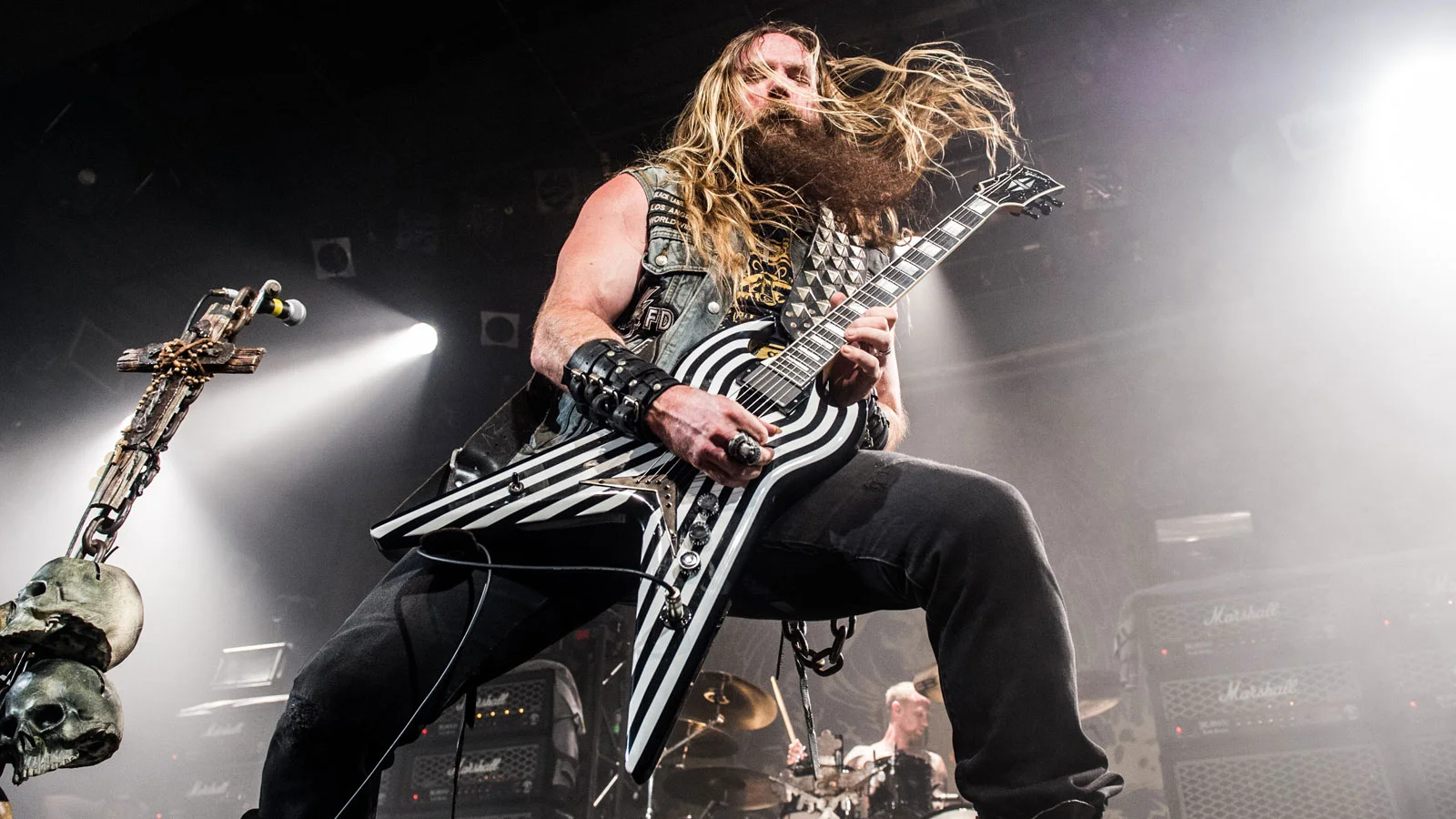
Zakk Wylde — £500 · Sweet Spot Rig
Gibson Les Paul Custom (EMG 81/85 pickups) into a Marshall JCM800 with a Boss SD-1 Super OverDrive boosting the front end (gain low, volume high). The result is very high gain with a tight low end and compressed, harmonically saturated lead tone. Pinch harmonics pop out naturally at these gain levels.
Signal Path
Signal Chain
Full signal path
GuitarLP Std
AmpKatana 50
Full Gear List
£500 · Sweet Spot — Complete Rig
Tone Tips
Getting the Sound Right
- Boss SD-1 before the amp: gain at 9 o'clock (low), level boosted — push the amp, not add dirt
- Pinch harmonics: pick edge digs into the string, thumb immediately mutes it slightly
- EMG 81 bridge pickup gives the tighter, more compressed attack vs passive pickups
- Marshall gain at 7–8, master at 5–6 — enough for infinite sustain without getting flabby
- Pentatonic scale in 12th position is Zakk's home — learn the "boxes" at higher frets
- Wah pedal parked at heel position adds a dark, mid-scoop to rhythm parts
- Vibrato is wide and fast — practise sustained notes with aggressive finger vibrato
- Palm muting with varying pressure creates the rhythmic pulse in the heavy riff parts
Avoid These Pitfalls
Common Mistakes When Chasing This Tone
- Not using a gate on the JCM800's high-gain channel — self-noise at this gain level is continuous and audible between notes. A noise gate is not a style choice; it is functional equipment for this gain level
- Ignoring the active pickup battery — a dying 9V battery in an active pickup system produces distortion artifacts before going completely silent. Replace every 3-4 months of regular use, before any recording session
- Ignoring the individual pickup volume and tone controls — the two-pickup switching options on a Les Paul give you four distinct tones within a single setting. Most players only use two.
- Using a high-gain distortion pedal instead of amp gain — British crunch amps have a specific harmonic character when driven from their own gain stage. A pedal changes this character.
- Skipping the Tube Screamer-style boost — this pedal before the amp's high-gain channel is not optional for many players. It tightens the low end, not adds gain. Gain on the pedal at 0.
- Moving the wah too fast — wah is a filter effect that needs time to sweep through its range musically. Fast rocking produces a quacking sound; musical use is slower and more deliberate.
- Setting gain too high on the overdrive pedal — most overdrive pedals are most useful at gain settings of 2-5, where they add character without dominating the tone. High gain settings on an OD pedal become a distortion, not an overdrive.
- Ignoring down-tuning — trying to achieve dropped-tuning riff character at standard pitch produces a thinner, less aggressive result regardless of EQ.
Tone Profile
Zakk Wylde's Sound
Gibson Les Paul Custom (EMG 81/85 pickups) into a Marshall JCM800 with a Boss SD-1 Super OverDrive boosting the front end (gain low, volume high). The result is very high gain with a tight low end and compressed, harmonically saturated lead tone. Pinch harmonics pop out naturally at these gain levels.