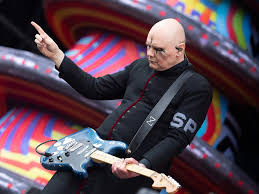
Billy Corgan — £500 · Sweet Spot Tone
At £500 · Sweet Spot, Billy Corgan's abrasive and emotionally direct tone is more accessible than most players expect. Rooted in a defining era for electric guitar, their sound — Billy Corgan's Smashing Pumpkins tone is the sound of shoegaze meeting hard rock — walls of layered distortion, Big Muff fuzz cranked to maximum sustain, and a melodic sensibility that cuts through the noise. — starts with Epiphone Les Paul Standard and Boss Katana 50 MkII, totalling ~£527. That combination captures the defining characteristics without the premium price tag.
Build Billy Corgan's £500 · Sweet Spot Rig
3 pieces · Total ~£527
What guitar does Billy Corgan use?
Billy Corgan is primarily associated with lp style guitars. At a £500 budget, Epiphone Les Paul Standard delivers the essential tonal character.
What to Buy
£500 · Sweet Spot — Complete Gear List
Why This Rig Works
How Billy Corgan's gear choices create the signature tone
Epiphone Les Paul Standard
The set-neck construction and ProBucker humbuckers deliver the sustain, thickness and mid-forward push of the genuine article. Bridge pickup into a crunch amp is the authentic hard rock formula.
Boss DS-1 Distortion
The DS-1 at moderate gain acts as a loud, slightly dirty boost into a clean-ish amp. At lower gain settings it adds grit without completely masking the guitar's character — versatile for everything from crunch to full distortion.
Boss Katana 50 MkII
Its 'Brown' amp character at low gain is an excellent approximation of the Fender-style clarity that Hendrix, Mayer, Gilmour and SRV all relied on. Built-in effects mean you're a few knob turns away from the right tone.
The Combined Tone
Stratocaster into a Marshall or Mesa Boogie, with an Electro-Harmonix Big Muff Pi running at maximum Volume to compensate for the fuzz's severe mid-cut. In the studio, Corgan layered up to 40 guitar tracks. Live, the Big Muff into a pushed amp delivers the wall-of-fuzz character of "Cherub Rock" and "Siamese Dream."
Tone Tips
Getting the Sound Right
- Big Muff Volume knob above noon — the fuzz cuts mids dramatically. Push the output to compensate and maintain presence in the mix
- Maximum Sustain on the Big Muff for Siamese Dream leads — Corgan used a near-infinite sustain setting for soaring lead tones
- The amp is slightly overdriven into the Big Muff — a clean amp makes the Muff too fizzy; a slightly-dirty amp rounds off the harsh top end
- Stratocaster neck pickup for solos — despite the high gain, Corgan often used the neck pickup for its warmer, more vocal character
- Studio technique: in "Siamese Dream" the guitars were quadruple-tracked with slight pitch and tone variations to create the massive layered sound
- Use a ProCo RAT in place of the Big Muff for the distortion-without-fuzz-character — more mid-forward and better for rhythm parts
- Tune down to Eb standard for the characteristic Pumpkins "heaviness" — most of the band's recordings are in Eb
- The chord voicings are often power chords with an added major third — the "Corgan chord" is not just a bare fifth
Avoid These Pitfalls
Common Mistakes When Chasing This Tone
- Not using a gate on the JCM800's high-gain channel — self-noise at this gain level is continuous and audible between notes. A noise gate is not a style choice; it is functional equipment for this gain level
- Placing a tuner or buffered pedal before the Big Muff — most fuzz circuits (especially germanium ones) are sensitive to the impedance of the signal feeding them. A buffered pedal before the fuzz changes how the guitar volume knob responds. Run fuzz first in the chain
- Ignoring the individual pickup volume and tone controls — the two-pickup switching options on a Les Paul give you four distinct tones within a single setting. Most players only use two.
- Running amp gain at 10 — above 8 on most high-gain channels, the signal becomes a compressed, indistinct wall. Moderate-high gain with a boost pedal in front gives better results.
- Clean amp at too low a volume — even a clean amp provides warmth and tonal character that the pedal sits in. An amp at minimum volume has no character for the pedal to interact with.
- Moving the wah too fast — wah is a filter effect that needs time to sweep through its range musically. Fast rocking produces a quacking sound; musical use is slower and more deliberate.
- Not using alternate tunings — the open, droning quality of dropped tunings is central to most grunge riffs. Standard tuning loses this quality.
- Using a high-gain metal amp channel instead of a fuzz into a clean amp — grunge distortion has a different harmonic content and feel than metal. A Big Muff into a Fender is the correct circuit.
Budget Alternatives
Same Tone, Different Budget
FAQ
Billy Corgan Tone — Common Questions
Billy Corgan is primarily associated with lp style guitars. At a £500 budget, Epiphone Les Paul Standard delivers the essential tonal character.
Billy Corgan's amp is high gain voiced — clean to moderate gain. At the £500 level, Boss Katana 50 MkII is the closest match.
Yes — £500 covers a real guitar and amp in the right tonal family. This rig totals £527 and captures the essential character. The guitar and amp account for 80% of the tone; pedals are secondary at this budget.
Billy Corgan's essential pedals include Distortion, Wah. At the £500 tier: Boss DS-1 Distortion. Distortion is the most important pedal — the others add nuance.
Billy Corgan's tone is defined by wall-of-sound, smashing-pumpkins, dense-layering. The combination of lp guitar and high gain amp creates a sound that is immediately recognisable.
Billy Corgan's gain approach is pedal-driven — distortion pedals into a relatively clean amp. The pedal defines the distortion character. At £500, this is replicated through Boss Katana 50 MkII paired with Boss DS-1 Distortion.
Billy Corgan — £500 · Sweet Spot Complete Rig
~£527Guitar
Epiphone Les Paul Standard
Distortion
Boss DS-1 Distortion
Amp
Boss Katana 50 MkII
Tone Match
Closest Real-World Tone Match
If you like Billy Corgan's tone, these players use a similar approach — same gear philosophy, comparable sound characteristics.
Related Tones