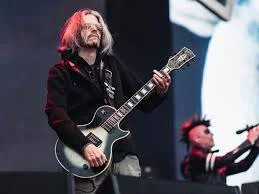
Adam Jones — £500 · Sweet Spot Tone
At £500 · Sweet Spot, Adam Jones's layered and compositionally bold tone is more accessible than most players expect. Rooted in an era of reinvention, grunge, and raw expression, their sound — Adam Jones of Tool creates guitar parts that function more like orchestral sections than standard rock guitar — odd time signatures, detuned riffs that breathe like drones, and a vocabulary entirely his own built on texture and space. — starts with Epiphone Les Paul Standard and Boss Katana 50 MkII, totalling ~£527. That combination captures the defining characteristics without the premium price tag.
Build Adam Jones's £500 · Sweet Spot Rig
3 pieces · Total ~$669
What guitar does Adam Jones use?
Adam Jones is primarily associated with lp style guitars. At a £500 budget, Epiphone Les Paul Standard delivers the essential tonal character.
What to Buy
£500 · Sweet Spot — Complete Gear List
Can't find one? See alternatives:
Why This Rig Works
How Adam Jones's gear choices create the signature tone
Epiphone Les Paul Standard
The set-neck construction and ProBucker humbuckers deliver the sustain, thickness and mid-forward push of the genuine article. Bridge pickup into a crunch amp is the authentic hard rock formula.
Boss DS-1 Distortion
The DS-1 at moderate gain acts as a loud, slightly dirty boost into a clean-ish amp. At lower gain settings it adds grit without completely masking the guitar's character — versatile for everything from crunch to full distortion.
Boss Katana 50 MkII
Its 'Brown' amp character at low gain is an excellent approximation of the Fender-style clarity that Hendrix, Mayer, Gilmour and SRV all relied on. Built-in effects mean you're a few knob turns away from the right tone.
The Combined Tone
Gibson Les Paul (various) into a Diezel VH4 or Marshall head, tuned down to Eb or D. The tone is dense and saturated with a mid-forward character — not scooped. An MXR Phase 90 runs almost constantly on slower songs. The attack is mid-tempo and deliberate; Tool riffs are never rushed.
Tone Tips
Getting the Sound Right
- On the Boss Katana 50 MkII: use the Brown channel — the closest model to a Marshall-voiced preamp at this price. Set character to 8, gain to 5. For Adam Jones's lead volume jump, use the Boost mode rather than adding a separate boost pedal.
- Tune to Eb or D standard — Tool songs exist in a lower register that creates the "baritone without a baritone" quality
- Play behind the beat intentionally — Tool's rhythmic feel is heavy because the notes come slightly after the expected beat, not on it
- The Phase 90 runs very slow and at low mix — it's not obvious but adds movement to sustained notes
- Odd time signatures (7/8, 11/8, 5/4) require counting rather than feeling — practise subdivisions with a metronome at very slow tempos
- The Diezel VH4 is mid-heavy, not scooped — if the amp sounds too bright or too bassy, it's the wrong direction. Mid-forward is the target
- The guitar volume knob on a Les Paul into a Marshall DSL is a full clean-to-lead system: at 7 you're at the clean edge of the amp's crunch character; at 10 you're into full breakup. Use this before any pedal change
- High-output Les Paul humbuckers into a Marshall DSL high-gain channel: the output level of the pickup directly affects how the amp's gain structure reacts. A pickup with DC resistance above 15kΩ can push the amp into uncomfortably saturated territory — try the neck pickup before the bridge for comparison
Avoid These Pitfalls
Common Mistakes When Chasing This Tone
- Not using a gate on the Marshall DSL's high-gain channel — self-noise at this gain level is continuous and audible between notes. A noise gate is not a style choice; it is functional equipment for this gain level
- Not exploring the Marshall DSL alone before adding pedals — a Les Paul or humbucker guitar into a British amp is already a near-complete overdrive system. Adding drive pedals on top is often unnecessary and muddies the amp's natural character
- Setting the amp bass too high — the inherent warmth of mahogany means you need less bass EQ than with a Strat. Starting at 5 rather than 7 prevents low-end mud.
- Running amp gain at 10 — above 8 on most high-gain channels, the signal becomes a compressed, indistinct wall. Moderate-high gain with a boost pedal in front gives better results.
- Skipping the Tube Screamer-style boost — this pedal before the amp's high-gain channel is not optional for many players. It tightens the low end, not adds gain. Gain on the pedal at 0.
Budget Alternatives
Same Tone, Different Budget
FAQ
Adam Jones Tone — Common Questions
Adam Jones is primarily associated with lp style guitars. At a £500 budget, Epiphone Les Paul Standard delivers the essential tonal character.
Adam Jones's amp is high gain voiced — high-gain with significant distortion from the amp itself. At the £500 level, Boss Katana 50 MkII is the closest match.
Yes — £500 covers a real guitar and amp in the right tonal family. This rig totals £527 and captures the essential character. The guitar and amp account for 80% of the tone; pedals are secondary at this budget.
Adam Jones's essential pedals include EQ, Distortion. At the £500 tier: Boss DS-1 Distortion. EQ is the most important pedal — the others add nuance.
Adam Jones's tone is defined by cinematic, drop-d, hypnotic. The combination of lp guitar and high gain amp creates a sound that is immediately recognisable.
Adam Jones's gain approach is high-gain — dedicated high-gain amp channels or heavy drive pedals with significant distortion. At £500, this is replicated through Boss Katana 50 MkII paired with Boss DS-1 Distortion.
Adam Jones — £500 · Sweet Spot Complete Rig
~£527Guitar
Epiphone Les Paul Standard
Distortion
Boss DS-1 Distortion
Amp
Boss Katana 50 MkII
Tone Match
Closest Real-World Tone Match
If you like Adam Jones's tone, these players use a similar approach — same gear philosophy, comparable sound characteristics.
Related Tones