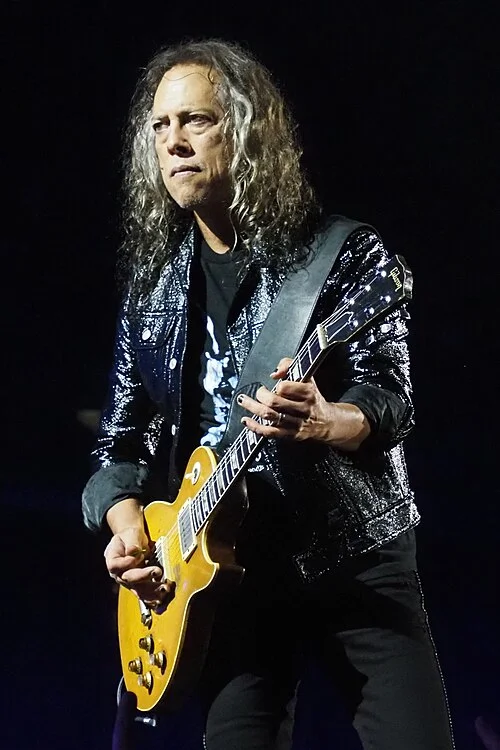
Kirk Hammett — £500 · Sweet Spot Tone
Kirk Hammett defined the lead guitar vocabulary of thrash metal — wah-soaked pentatonic runs, Mesa Boogie high gain and a sense of drama in every solo. His KH-2 signature ESP through a Dual Rectifier is the template for aggressive, expressive metal lead playing. Replicating that aggressive and precise sound at the £500 · Sweet Spot mark means Jackson JS22 Dinky into Boss Katana 50 MkII. The effects — Dunlop GCB95 Cry Baby Wah, Boss DS-1 Distortion — add the finishing texture. This build totals ~£592 and captures the core character — the sweet spot — enough to get genuinely close to the sound without breaking the bank.
Build Kirk Hammett's £500 · Sweet Spot Rig
4 pieces · Total ~$612
What guitar does Kirk Hammett use?
Kirk Hammett is primarily associated with superstrat style guitars. At a £500 budget, Jackson JS22 Dinky delivers the essential tonal character.
What to Buy
£500 · Sweet Spot — Complete Gear List
Can't find one? See alternatives:
Why This Rig Works
How Kirk Hammett's gear choices create the signature tone
Jackson JS22 Dinky
The Jackson JS22 Dinky provides the tonal foundation for the entire rig — its character shapes everything that follows.
- Expression Filtervocal mid-sweep with Fasel resonance
- Crunch Boxraw transistor crunch and rock aggression
Boss Katana 50 MkII
Its 'Brown' amp character at low gain is an excellent approximation of the Fender-style clarity that Hendrix, Mayer, Gilmour and SRV all relied on. Built-in effects mean you're a few knob turns away from the right tone.
The Combined Tone
ESP KH-2 (EMG 81/60 pickups) into a Mesa Boogie Dual Rectifier. The Dunlop Kirk Hammett Signature Cry Baby wah is almost always in use — Hammett uses it as a tone-shaping filter on rhythm parts and for the characteristic wah-drenched solos. Very high gain, smooth sustain from the EMGs.
Tone Tips
Getting the Sound Right
- On the Boss Katana 50 MkII: use the Brown channel — the closest model to a Marshall-voiced preamp at this price. Set character to 8, gain to 5. For Kirk Hammett's lead volume jump, use the Boost mode rather than adding a separate boost pedal.
- Wah pedal in the "on" position at heel or toe acts as a tone filter — learn to park it
- EMG 81 bridge pickup: tighter, more compressed attack than passive pickups at high gain
- Mesa Boogie Dual Rectifier Modern mode: gain at 7, master at 4 — tight and punishing
- Wah-laden pentatonic patterns: pick and wah simultaneously for the classic Kirk phrasing
- Open-string pull-offs create the snaking chromatic runs through solos
- Active pickups give a very flat, wide-range signal to the Dual Rectifier's input — the amp's EQ has more leverage than with passive pickups. Small EQ changes produce large tonal shifts; start with all controls at noon and adjust minimally
Avoid These Pitfalls
Common Mistakes When Chasing This Tone
- Running the Dual Rectifier's gain channel at maximum — above 8 on most high-gain channels, palm mutes lose note separation and become an indistinct wall. The target is the minimum gain for the target saturation, not maximum
- Expecting the guitar volume knob to clean up the tone at high gain the same way it does with passive pickups — active pickups output a consistent, buffered signal. The volume knob only changes output level, not the pickup's interaction with the amp
- Neglecting to adjust a floating bridge when changing string gauges or tuning — a Floyd Rose or floating bridge requires re-balancing the spring tension any time the string setup changes.
- Not using a noise gate — self-noise at metal gain levels is continuous between notes. A gate is not stylistic; it is required for professional-sounding silence between riffs.
- Maximum gain on the amp channel — this is the most common mistake in high-gain playing. The clarity and note separation that makes fast playing readable degrades at maximum gain.
Budget Alternatives
Same Tone, Different Budget
FAQ
Kirk Hammett Tone — Common Questions
Kirk Hammett is primarily associated with superstrat style guitars. At a £500 budget, Jackson JS22 Dinky delivers the essential tonal character.
Kirk Hammett's amp is high gain voiced — high-gain with significant distortion from the amp itself. At the £500 level, Boss Katana 50 MkII is the closest match.
Yes — £500 covers a real guitar and amp in the right tonal family. This rig totals £482 and captures the essential character. The guitar and amp account for 80% of the tone; pedals are secondary at this budget.
Kirk Hammett's essential pedals include Wah, Delay. At the £500 tier: Dunlop GCB95 Cry Baby Wah, Boss DS-1 Distortion. Wah is the most important pedal — the others add nuance.
Kirk Hammett's tone is defined by wah-heavy-lead, melodic-blues-influenced, thrash-rhythm. The combination of superstrat guitar and high gain amp creates a sound that is immediately recognisable.
Kirk Hammett's gain approach is high-gain — dedicated high-gain amp channels or heavy drive pedals with significant distortion. At £500, this is replicated through Boss Katana 50 MkII paired with Dunlop GCB95 Cry Baby Wah.
Kirk Hammett — £500 · Sweet Spot Complete Rig
~£592Guitar
Jackson JS22 Dinky
Amp
Boss Katana 50 MkII
Wah
Dunlop GCB95 Cry Baby Wah
Distortion
Boss DS-1 Distortion
Tone Match
Closest Real-World Tone Match
If you like Kirk Hammett's tone, these players use a similar approach — same gear philosophy, comparable sound characteristics.
Related Tones