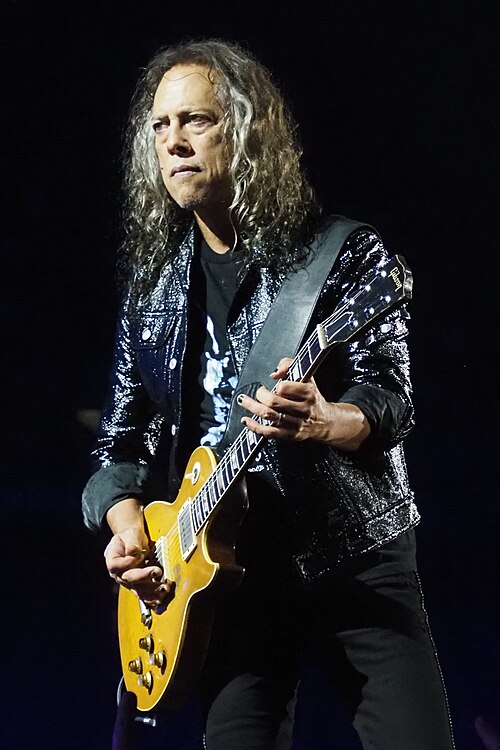
Kirk Hammett — £1,000 · Pro-Level Tone
Kirk Hammett defined the lead guitar vocabulary of thrash metal — wah-soaked pentatonic runs, Mesa Boogie high gain and a sense of drama in every solo. His KH-2 signature ESP through a Dual Rectifier is the template for aggressive, expressive metal lead playing. Replicating that aggressive and precise sound at the £1,000 · Pro-Level mark means Jackson JS22 DKA Dinky into Boss Katana 100 MkII. The effects — Dunlop GCB95 Cry Baby Wah, Strymon Timeline — add the finishing texture. This build totals ~£986 and captures the core character — a serious investment that brings you within touching distance of the real thing.
Build Kirk Hammett's £1,000 · Pro-Level Rig
4 pieces · Total ~£986
What guitar does Kirk Hammett use?
Kirk Hammett is primarily associated with superstrat style guitars. At a £1,000 budget, Jackson JS22 DKA Dinky delivers the essential tonal character.
What to Buy
£1,000 · Pro-Level — Complete Gear List
Why This Rig Works
How Kirk Hammett's gear choices create the signature tone
Jackson JS22 DKA Dinky
The Jackson JS22 DKA Dinky provides the tonal foundation for the entire rig — its character shapes everything that follows.
- Expression Filtervocal mid-sweep with Fasel resonance
- DelayStrymon Timeline
Boss Katana 100 MkII
The extra headroom lets you push the clean channel harder before it breaks up, essential for loud-amp technique. More speaker excursion gives a fuller, more three-dimensional clean.
The Combined Tone
ESP KH-2 (EMG 81/60 pickups) into a Mesa Boogie Dual Rectifier. The Dunlop Kirk Hammett Signature Cry Baby wah is almost always in use — Hammett uses it as a tone-shaping filter on rhythm parts and for the characteristic wah-drenched solos. Very high gain, smooth sustain from the EMGs.
Tone Tips
Getting the Sound Right
- Wah pedal in the "on" position at heel or toe acts as a tone filter — learn to park it
- EMG 81 bridge pickup: tighter, more compressed attack than passive pickups at high gain
- Mesa Boogie Dual Rectifier Modern mode: gain at 7, master at 4 — tight and punishing
- Wah-laden pentatonic patterns: pick and wah simultaneously for the classic Kirk phrasing
- Open-string pull-offs create the snaking chromatic runs through solos
- Riff technique: downstroke-heavy palm muting with the wrist close to the bridge
- Tremolo bar dips for dramatic accents at phrase endings — fast dip, immediate return
- Delay: 300ms at low mix on solos gives depth without muddying fast runs
Avoid These Pitfalls
Common Mistakes When Chasing This Tone
- Running the Dual Rectifier's gain channel at maximum — above 8 on most high-gain channels, palm mutes lose note separation and become an indistinct wall. The target is the minimum gain for the target saturation, not maximum
- Expecting the guitar volume knob to clean up the tone at high gain the same way it does with passive pickups — active pickups output a consistent, buffered signal. The volume knob only changes output level, not the pickup's interaction with the amp
- Neglecting to adjust a floating bridge when changing string gauges or tuning — a Floyd Rose or floating bridge requires re-balancing the spring tension any time the string setup changes.
- Not using a noise gate — self-noise at metal gain levels is continuous between notes. A gate is not stylistic; it is required for professional-sounding silence between riffs.
- Maximum gain on the amp channel — this is the most common mistake in high-gain playing. The clarity and note separation that makes fast playing readable degrades at maximum gain.
- Leaving the wah in a fixed position (cocked) between uses — a cocked wah acts as a midrange filter and changes the tone. If not using the wah expressively, take it out of the chain.
- Too many repeats at high mix — more than 3 repeats makes the delay effect accumulate and overwhelm the dry guitar signal. Keep it to 2-3 repeats at a subtle mix level.
- Scooped mid EQ — no guitar tone cuts through a thrash band with scooped mids. Mesa Rectifier tones at band volume are more mid-present than they appear in isolation.
Budget Alternatives
Same Tone, Different Budget
FAQ
Kirk Hammett Tone — Common Questions
Kirk Hammett is primarily associated with superstrat style guitars. At a £1,000 budget, Jackson JS22 DKA Dinky delivers the essential tonal character.
Kirk Hammett's amp is high gain voiced — high-gain with significant distortion from the amp itself. At the £1,000 level, Boss Katana 100 MkII is the closest match.
The £1,000 tier adds noticeably better build quality and tonal nuance over the £500 rig. This build totals £986 with Jackson JS22 DKA Dinky, Boss Katana 100 MkII, 2 effects. This is the tier where the tone becomes genuinely convincing for gigging and recording.
Kirk Hammett's essential pedals include Wah, Delay. At the £1,000 tier: Dunlop GCB95 Cry Baby Wah, Strymon Timeline. Wah is the most important pedal — the others add nuance.
Kirk Hammett's tone is defined by wah-heavy-lead, melodic-blues-influenced, thrash-rhythm. The combination of superstrat guitar and high gain amp creates a sound that is immediately recognisable.
Kirk Hammett's gain approach is high-gain — dedicated high-gain amp channels or heavy drive pedals with significant distortion. At £1,000, this is replicated through Boss Katana 100 MkII paired with Dunlop GCB95 Cry Baby Wah.
Kirk Hammett — £1,000 · Pro-Level Complete Rig
~£986Guitar
Jackson JS22 DKA Dinky
Wah
Dunlop GCB95 Cry Baby Wah
Amp
Boss Katana 100 MkII
Delay
Strymon Timeline
Tone Match
Closest Real-World Tone Match
If you like Kirk Hammett's tone, these players use a similar approach — same gear philosophy, comparable sound characteristics.
Related Tones