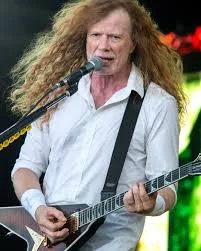
Dave Mustaine — £1,000 · Pro-Level Tone
The £1,000 · Pro-Level build for Dave Mustaine's relentless and intense sound opens with Jackson JS32 Rhoads — the tonal foundation that defines the character. Into Marshall DSL40CR paired with Boss NS-2 Noise Suppressor, the rig comes to ~£917 and delivers the essential elements. Dave Mustaine co-invented the thrash metal riff with Metallica before founding Megadeth — and his rhythm playing is among the tightest in metal history. His aggressive downpicking, complex polyrhythmic riffs and lead style blending rock and classical modes define the Megadeth sound.
Build Dave Mustaine's £1,000 · Pro-Level Rig
3 pieces · Total ~$1,165
What guitar does Dave Mustaine use?
Dave Mustaine is primarily associated with superstrat style guitars. At a £1,000 budget, Jackson JS32 Rhoads delivers the essential tonal character.
What to Buy
£1,000 · Pro-Level — Complete Gear List
Can't find one? See alternatives:
Why This Rig Works
How Dave Mustaine's gear choices create the signature tone
Jackson JS32 Rhoads
The Jackson JS32 Rhoads provides the tonal foundation for the entire rig — its character shapes everything that follows.
Boss NS-2 Noise Suppressor
Boss NS-2 Noise Suppressor — noise gate coloring added to the signal.
Marshall DSL40CR
The Marshall DSL40CR converts the guitar signal into audible sound and adds its own tonal character — EQ shaping, natural gain, and the overall feel of the final tone.
The Combined Tone
Jackson Flying V or Dean VMNT (active EMG pickups) into a Krank Krankenstein or Marshall JCM900. Very high gain on the rhythm side, with a tight, controlled low end. Lead tone is smooth and singing — the aggression comes from rhythmic precision and picking attack, not just gain.
Tone Tips
Getting the Sound Right
- The Marshall DSL40CR delivers power-tube saturation at master volume 6–7 — this compression and sag is what separates amp-driven tone from pedal tone. Set the master first, then dial back the channel gain to taste rather than the other way around.
- Downpicking at speed is the core technique — practise slowly with a metronome
- Palm muting with varying pressure creates the rhythmic pulse in thrash riffs
- Amp EQ: bass 5, mid 6, treble 7, presence 7 — brighter than Sabbath, cuts through the mix
- Polyrhythmic riffs: Megadeth tracks often have riffs in 7/8 or against odd groupings
- Lead tone: same gain as rhythm, but move to the neck pickup for a smoother quality
- Pick very close to the bridge for extra bite and articulation on fast runs
Avoid These Pitfalls
Common Mistakes When Chasing This Tone
- Not using a gate on the Marshall DSL's high-gain channel — self-noise at this gain level is continuous and audible between notes. A noise gate is not a style choice; it is functional equipment for this gain level
- Not exploring the Marshall DSL alone before adding pedals — a Les Paul or humbucker guitar into a British amp is already a near-complete overdrive system. Adding drive pedals on top is often unnecessary and muddies the amp's natural character
- Skipping the Tube Screamer-style boost — this pedal before the amp's high-gain channel is not optional for many players. It tightens the low end, not adds gain. Gain on the pedal at 0.
- Using too much gain — clarity at speed requires that individual palm mutes are audible. Maximum gain creates a compressed wall that sounds powerful but loses all rhythmic precision.
- Scooped mid EQ — no guitar tone cuts through a thrash band with scooped mids. Mesa Rectifier tones at band volume are more mid-present than they appear in isolation.
Budget Alternatives
Same Tone, Different Budget
FAQ
Dave Mustaine Tone — Common Questions
Dave Mustaine is primarily associated with superstrat style guitars. At a £1,000 budget, Jackson JS32 Rhoads delivers the essential tonal character.
Dave Mustaine's amp is high gain voiced — high-gain with significant distortion from the amp itself. At the £1,000 level, Marshall DSL40CR is the closest match.
The £1,000 tier adds noticeably better build quality and tonal nuance over the £500 rig. This build totals £917 with Jackson JS32 Rhoads, Marshall DSL40CR, 1 effect. This is the tier where the tone becomes genuinely convincing for gigging and recording.
Dave Mustaine's essential pedals include Distortion, EQ, Delay. At the £1,000 tier: Boss NS-2 Noise Suppressor. Distortion is the most important pedal — the others add nuance.
Dave Mustaine's tone is defined by thrash, technical, aggressive. The combination of superstrat guitar and high gain amp creates a sound that is immediately recognisable.
Dave Mustaine's gain approach is high-gain — dedicated high-gain amp channels or heavy drive pedals with significant distortion. At £1,000, this is replicated through Marshall DSL40CR paired with Boss NS-2 Noise Suppressor.
Dave Mustaine — £1,000 · Pro-Level Complete Rig
~£917Guitar
Jackson JS32 Rhoads
Amp
Marshall DSL40CR
Noise Gate
Boss NS-2 Noise Suppressor
Tone Match
Closest Real-World Tone Match
If you like Dave Mustaine's tone, these players use a similar approach — same gear philosophy, comparable sound characteristics.
Related Tones