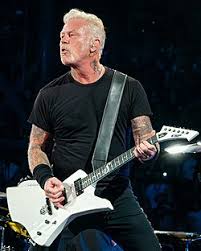
James Hetfield — £1,000 · Pro-Level Tone
James Hetfield's relentless and intense tone took shape during a defining era for electric guitar and remains one of the most sought-after sounds on guitar. James Hetfield is widely regarded as the greatest rhythm guitarist in metal — his downpicking technique, perfectly controlled palm muting and sense of dynamic groove make Metallica's riffs feel like forces of nature. His ESP Explorer-style guitars through Mesa Boogie produce a tight, surgical rhythm tone matched by no one. At the £1,000 · Pro-Level mark — a serious investment that brings you within touching distance of the real thing — the build centres on a Jackson JS32 Dinky running through a Marshall DSL40CR, with Boss NS-2 Noise Suppressor completing the signal chain, totalling ~£917.
Build James Hetfield's £1,000 · Pro-Level Rig
3 pieces · Total ~£917
What guitar does James Hetfield use?
James Hetfield is primarily associated with explorer style guitars. At a £1,000 budget, Jackson JS32 Dinky delivers the essential tonal character.
What to Buy
£1,000 · Pro-Level — Complete Gear List
Why This Rig Works
How James Hetfield's gear choices create the signature tone
Jackson JS32 Dinky
The Jackson JS32 Dinky provides the tonal foundation for the entire rig — its character shapes everything that follows.
Boss NS-2 Noise Suppressor
Boss NS-2 Noise Suppressor — noise gate coloring added to the signal.
Marshall DSL40CR
The Marshall DSL40CR converts the guitar signal into audible sound and adds its own tonal character — EQ shaping, natural gain, and the overall feel of the final tone.
The Combined Tone
ESP James Hetfield signature (active EMG 81/60 pickups) into a Mesa Boogie Dual Rectifier or Engl Powerball. Very high gain, extremely tight low end — Hetfield's downpicking attack is so controlled that every note is perfectly articulated even at extreme gain levels. Almost no effects on rhythm; leads use subtle delay.
Tone Tips
Getting the Sound Right
- Strict downpicking is Hetfield's signature — no alternate picking on primary riff strokes
- Palm muting pressure varies riff to riff — tight against the bridge = chunky; release = ring
- EMG 81 bridge pickup delivers the tight, fast transient response that thrash demands
- Mesa Dual Rectifier: Modern mode, gain 7–8, master 4 — tight and powerful
- Noise gate essential — turn it off and the riffs turn to mush at high gain
- Left-hand muting: mute unused strings with the side of the fretting fingers
- Rhythm tone is darker and tighter than lead tone — mids scooped slightly for rhythms
- Gallop rhythm (16th–8th–8th, repeat) is central to early Metallica — practise at 80bpm first
Avoid These Pitfalls
Common Mistakes When Chasing This Tone
- Running the Dual Rectifier's gain channel at maximum — above 8 on most high-gain channels, palm mutes lose note separation and become an indistinct wall. The target is the minimum gain for the target saturation, not maximum
- Expecting the guitar volume knob to clean up the tone at high gain the same way it does with passive pickups — active pickups output a consistent, buffered signal. The volume knob only changes output level, not the pickup's interaction with the amp
- Expecting the same access to lower frets as on a conventional guitar — explorer and V shapes limit lower-body contact, which changes the natural picking position. Allow for this in technique.
- Not using a noise gate — self-noise at metal gain levels is continuous between notes. A gate is not stylistic; it is required for professional-sounding silence between riffs.
- Maximum gain on the amp channel — this is the most common mistake in high-gain playing. The clarity and note separation that makes fast playing readable degrades at maximum gain.
- Alternating pick rhythm parts — thrash rhythm is primarily down-picked for a reason. The extra weight of consistent downstrokes is part of the physical feel.
- Using too much gain — clarity at speed requires that individual palm mutes are audible. Maximum gain creates a compressed wall that sounds powerful but loses all rhythmic precision.
Budget Alternatives
Same Tone, Different Budget
FAQ
James Hetfield Tone — Common Questions
James Hetfield is primarily associated with explorer style guitars. At a £1,000 budget, Jackson JS32 Dinky delivers the essential tonal character.
James Hetfield's amp is high gain voiced — high-gain with significant distortion from the amp itself. At the £1,000 level, Marshall DSL40CR is the closest match.
The £1,000 tier adds noticeably better build quality and tonal nuance over the £500 rig. This build totals £917 with Jackson JS32 Dinky, Marshall DSL40CR, 1 effect. This is the tier where the tone becomes genuinely convincing for gigging and recording.
James Hetfield's essential pedals include EQ, Boost, Delay. At the £1,000 tier: Boss NS-2 Noise Suppressor. EQ is the most important pedal — the others add nuance.
James Hetfield's tone is defined by mechanical-precision, tight-low-end, down-picked. The combination of explorer guitar and high gain amp creates a sound that is immediately recognisable.
James Hetfield's gain approach is high-gain — dedicated high-gain amp channels or heavy drive pedals with significant distortion. At £1,000, this is replicated through Marshall DSL40CR paired with Boss NS-2 Noise Suppressor.
James Hetfield — £1,000 · Pro-Level Complete Rig
~£917Guitar
Jackson JS32 Dinky
Amp
Marshall DSL40CR
Noise Gate
Boss NS-2 Noise Suppressor
Tone Match
Closest Real-World Tone Match
If you like James Hetfield's tone, these players use a similar approach — same gear philosophy, comparable sound characteristics.
Related Tones