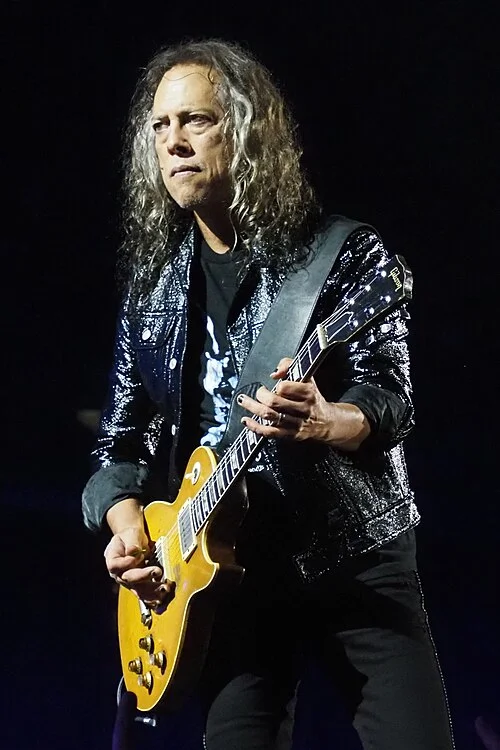
Kirk Hammett — £2,500 · Premium Tone
Kirk Hammett defined the lead guitar vocabulary of thrash metal — wah-soaked pentatonic runs, Mesa Boogie high gain and a sense of drama in every solo. His KH-2 signature ESP through a Dual Rectifier is the template for aggressive, expressive metal lead playing. Replicating that aggressive and precise sound at the £2,500 · Premium mark means Ibanez Prestige RG5121 into Marshall DSL40CR. The effects — Dunlop GCB95 Cry Baby Wah, MXR M108S 10-Band EQ — add the finishing texture. This build totals ~£2475 and captures the core character — a premium build targeting the most accurate recreation possible.
Build Kirk Hammett's £2,500 · Premium Rig
5 pieces · Total ~$3,143
What guitar does Kirk Hammett use?
Kirk Hammett is primarily associated with superstrat style guitars. At a £2,500 budget, Ibanez Prestige RG5121 delivers the essential tonal character.
What to Buy
£2,500 · Premium — Complete Gear List
Can't find one? See alternatives:
Why This Rig Works
How Kirk Hammett's gear choices create the signature tone
Ibanez Prestige RG5121
The Ibanez Prestige RG5121 provides the tonal foundation for the entire rig — its character shapes everything that follows.
- Expression Filtervocal mid-sweep with Fasel resonance
- Tone Sculptorten-band surgical frequency sculpting
- DelayBoss DD-3T Digital Delay
Marshall DSL40CR
The Marshall DSL40CR converts the guitar signal into audible sound and adds its own tonal character — EQ shaping, natural gain, and the overall feel of the final tone.
The Combined Tone
ESP KH-2 (EMG 81/60 pickups) into a Mesa Boogie Dual Rectifier. The Dunlop Kirk Hammett Signature Cry Baby wah is almost always in use — Hammett uses it as a tone-shaping filter on rhythm parts and for the characteristic wah-drenched solos. Very high gain, smooth sustain from the EMGs.
Tone Tips
Getting the Sound Right
- The Marshall DSL40CR delivers power-tube saturation at master volume 6–7 — this compression and sag is what separates amp-driven tone from pedal tone. Set the master first, then dial back the channel gain to taste rather than the other way around.
- Wah pedal in the "on" position at heel or toe acts as a tone filter — learn to park it
- EMG 81 bridge pickup: tighter, more compressed attack than passive pickups at high gain
- Study "Fade to Black" solo and "One" for the range from melodic to aggressive
- The wah pedal is often used at a fixed position rather than swept — Hammett holds the wah at a mid-position to filter the tone to a specific nasal peak rather than continuously sweeping. This static filtering is as important as the dynamic sweeping in defining his rhythm tone
- The ESP/LTD guitar's 24-fret neck enables access to notes above the 22nd fret used in solos like 'One' — specific solo climaxes require notes at the 24th fret (two octaves above open). A 22-fret guitar cannot play these notes and requires position compromises that change the phrasing
- Study the dynamic contrast between 'Fade to Black' and 'Battery' — both are Metallica, but the former demonstrates clean arpeggiation and melodic soloing while the latter is pure thrash aggression. Hammett's vocabulary spans both extremes, and building each style independently is the practice priority
Avoid These Pitfalls
Common Mistakes When Chasing This Tone
- Running the Dual Rectifier's gain channel at maximum — above 8 on most high-gain channels, palm mutes lose note separation and become an indistinct wall. The target is the minimum gain for the target saturation, not maximum
- Expecting the guitar volume knob to clean up the tone at high gain the same way it does with passive pickups — active pickups output a consistent, buffered signal. The volume knob only changes output level, not the pickup's interaction with the amp
- Leaving the wah in a fixed position (cocked) between uses — a cocked wah acts as a midrange filter and changes the tone. If not using the wah expressively, take it out of the chain.
- Too many repeats at high mix — more than 3 repeats makes the delay effect accumulate and overwhelm the dry guitar signal. Keep it to 2-3 repeats at a subtle mix level.
- Scooped mid EQ — no guitar tone cuts through a thrash band with scooped mids. Mesa Rectifier tones at band volume are more mid-present than they appear in isolation.
Budget Alternatives
Same Tone, Different Budget
FAQ
Kirk Hammett Tone — Common Questions
Kirk Hammett is primarily associated with superstrat style guitars. At a £2,500 budget, Ibanez Prestige RG5121 delivers the essential tonal character.
Kirk Hammett's amp is high gain voiced — high-gain with significant distortion from the amp itself. At the £2,500 level, Marshall DSL40CR is the closest match.
The £2,500 tier uses Kirk Hammett's actual gear choices or direct equivalents. Total: £2,475. The tonal step up from £1,000 is real but diminishing — worth it for regular performers and studio work.
Kirk Hammett's essential pedals include Wah, Delay. At the £2,500 tier: Dunlop GCB95 Cry Baby Wah, MXR M108S 10-Band EQ, Boss DD-3T Digital Delay. Wah is the most important pedal — the others add nuance.
Kirk Hammett's tone is defined by wah-heavy-lead, melodic-blues-influenced, thrash-rhythm. The combination of superstrat guitar and high gain amp creates a sound that is immediately recognisable.
Kirk Hammett's gain approach is high-gain — dedicated high-gain amp channels or heavy drive pedals with significant distortion. At £2,500, this is replicated through Marshall DSL40CR paired with Dunlop GCB95 Cry Baby Wah.
Kirk Hammett — £2,500 · Premium Complete Rig
~£2475Guitar
Ibanez Prestige RG5121
Wah
Dunlop GCB95 Cry Baby Wah
EQ
MXR M108S 10-Band EQ
Amp
Marshall DSL40CR
Delay
Boss DD-3T Digital Delay
Tone Match
Closest Real-World Tone Match
If you like Kirk Hammett's tone, these players use a similar approach — same gear philosophy, comparable sound characteristics.
Related Tones