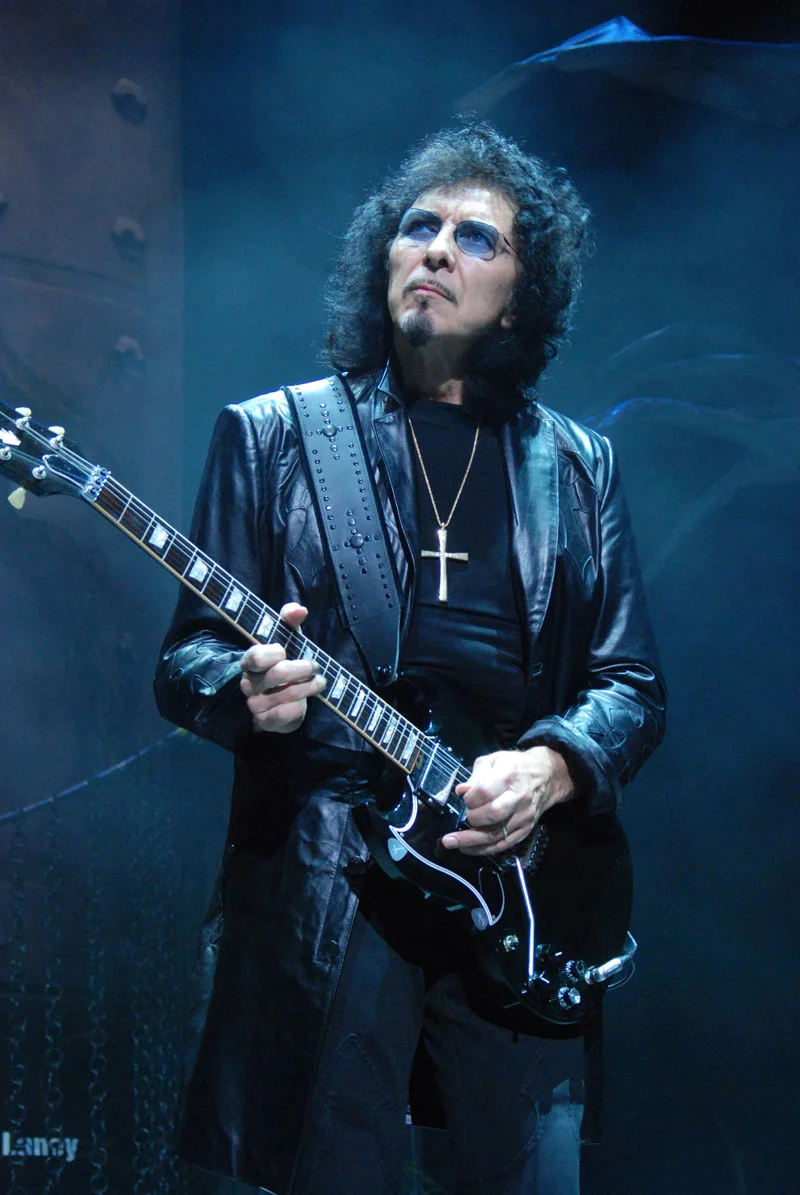
Tony Iommi — £2,500 · Premium Tone
Tony Iommi's aggressive and precise tone took shape during the golden age of electric guitar innovation and remains one of the most sought-after sounds on guitar. Tony Iommi invented heavy metal. After losing the tips of two fingers in an industrial accident, he tuned his strings down — creating the dark, slow, heavily de-tuned riff vocabulary that launched a genre. His SG into a loud Laney, pushed with a treble booster, is the foundation of all heavy music that followed. At the £2,500 · Premium mark — a premium build targeting the most accurate recreation possible — the build centres on a Gibson SG Junior running through a Marshall DSL100H, with MXR Distortion+ M104 and MXR M108S 10-Band EQ completing the signal chain, totalling ~£2485.
Build Tony Iommi's £2,500 · Premium Rig
5 pieces · Total ~$3,156
What guitar does Tony Iommi use?
Tony Iommi is primarily associated with sg style guitars. At a £2,500 budget, Gibson SG Junior delivers the essential tonal character.
What to Buy
£2,500 · Premium — Complete Gear List
Why This Rig Works
How Tony Iommi's gear choices create the signature tone
Gibson SG Junior
The Gibson SG Junior provides the tonal foundation for the entire rig — its character shapes everything that follows.
- BoostMXR Distortion+ M104
- Tone Sculptorten-band surgical frequency sculpting
- Studio Crunchamp-simulating saturation at any volume
Marshall DSL100H
The Marshall DSL100H converts the guitar signal into audible sound and adds its own tonal character — EQ shaping, natural gain, and the overall feel of the final tone.
The Combined Tone
Gibson SG (tuned down to C# or D) into a Laney Supergroup 100W or Marshall, pushed hard by a Dallas Rangemaster treble booster. The downtuned strings combined with high gain and a dark amp voicing create the thick, menacing sustain. Iommi's custom thimble fingertips produce a slightly softer note attack than bare skin.
Tone Tips
Getting the Sound Right
- The Marshall DSL100H delivers power-tube saturation at master volume 6–7 — this compression and sag is what separates amp-driven tone from pedal tone. Set the master first, then dial back the channel gain to taste rather than the other way around.
- Tune down at least a half step (Eb) — C# for early Sabbath, D for later material
- Use the neck pickup for maximum thickness on riff-based parts
- Study "Iron Man" and "Black Sabbath" for the two defining Iommi riff archetypes
- The Rangemaster treble booster clips the upper midrange harmonics, adding a singing quality to single-note riffs that a modern overdrive pedal cannot replicate — modern equivalents include the Catalinbread Naga Viper and the Effectrode PC-2A, which aim to replicate the germanium transistor character
- Iommi lost the tips of two fretting fingers in an industrial accident and solved the reach problem by tuning down and using lighter strings than typical heavy metal players — if you play standard tuning with heavy strings, the riffs physically feel wrong because they were conceived on a lighter, lower-pitched instrument
- The tritone interval (b5 or #4 in scale terms) appears in nearly every Iommi riff as a tension point — practise power chord shapes that include the tritone (root + flat 5 below or above) across the fretboard in all positions to understand how he built menace into simple two-note shapes
Avoid These Pitfalls
Common Mistakes When Chasing This Tone
- Not exploring the Marshall DSL alone before adding pedals — a Les Paul or humbucker guitar into a British amp is already a near-complete overdrive system. Adding drive pedals on top is often unnecessary and muddies the amp's natural character
- Scooping mids to compensate for the naturally mid-forward character — the midrange presence of an SG is the point. Removing it makes the guitar sound wrong for the style.
- Using a distortion pedal to replace amp saturation — amp-driven tone has a specific feel (dynamics, touch sensitivity, natural compression) that pedal distortion cannot replicate. The source of gain matters.
- Using single-coil pickups — the lack of output and mid-frequency push makes it impossible to achieve the tightness needed for high-gain rhythm playing.
- Skipping the Tube Screamer-style boost — this pedal is not about adding gain. It focuses the low end before the amp sees the signal, which produces tighter palm mutes.
Budget Alternatives
Same Tone, Different Budget
FAQ
Tony Iommi Tone — Common Questions
Tony Iommi is primarily associated with sg style guitars. At a £2,500 budget, Gibson SG Junior delivers the essential tonal character.
Tony Iommi's amp is british crunch voiced — the amp running hot, providing natural tube saturation. At the £2,500 level, Marshall DSL100H is the closest match.
The £2,500 tier uses Tony Iommi's actual gear choices or direct equivalents. Total: £2,485. The tonal step up from £1,000 is real but diminishing — worth it for regular performers and studio work.
Tony Iommi's essential pedals include Boost, EQ. At the £2,500 tier: MXR Distortion+ M104, MXR M108S 10-Band EQ, Boss DS-2 Turbo Distortion. Boost is the most important pedal — the others add nuance.
Tony Iommi's tone is defined by dark, doom, heavy-riff. The combination of sg guitar and british crunch amp creates a sound that is immediately recognisable.
Tony Iommi's gain approach is amp-driven — natural tube saturation from pushing the amp hard, not from distortion pedals. At £2,500, this is replicated through Marshall DSL100H paired with MXR Distortion+ M104.
Tony Iommi — £2,500 · Premium Complete Rig
~£2485Guitar
Gibson SG Junior
Boost
MXR Distortion+ M104
EQ
MXR M108S 10-Band EQ
Distortion
Boss DS-2 Turbo Distortion
Amp
Marshall DSL100H
Tone Match
Closest Real-World Tone Match
If you like Tony Iommi's tone, these players use a similar approach — same gear philosophy, comparable sound characteristics.
Related Tones