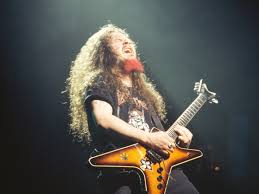
Dimebag Darrell — £500 · Sweet Spot Tone
Dimebag Darrell's Pantera tone defined 1990s metal — crushing palm-muted riffs, pinch harmonics that could peel paint and an unmistakable Randall solid-state amp sound that every metal player tried to copy. Replicating that crushing and technically demanding sound at the £500 · Sweet Spot mark means Ibanez RG421 EX into Boss Katana 50 MkII. This build totals ~£478 and captures the core character — the sweet spot — enough to get genuinely close to the sound without breaking the bank.
Build Dimebag Darrell's £500 · Sweet Spot Rig
2 pieces · Total ~£478
What guitar does Dimebag Darrell use?
Dimebag Darrell is primarily associated with superstrat style guitars. At a £500 budget, Ibanez RG421 EX delivers the essential tonal character.
What to Buy
£500 · Sweet Spot — Complete Gear List
Why This Rig Works
How Dimebag Darrell's gear choices create the signature tone
Ibanez RG421 EX
The Ibanez RG421 EX provides the tonal foundation for the entire rig — its character shapes everything that follows.
Boss Katana 50 MkII
Its 'Brown' amp character at low gain is an excellent approximation of the Fender-style clarity that Hendrix, Mayer, Gilmour and SRV all relied on. Built-in effects mean you're a few knob turns away from the right tone.
The Combined Tone
Dean ML or Diamond Darrell signature guitar into a Randall RG100 ES solid-state amp — not a tube amp. The Randall delivers a tight, scooped, and aggressive crunch that tubes cannot match for this style. A Boss MT-2 boosts the gain further and a DigiTech Whammy provides the "squeal" harmonics.
Tone Tips
Getting the Sound Right
- The Randall solid-state amp is essential — do not substitute with a tube amp and expect the same tone. Solid-state gives the tight, scooped character
- Palm muting is the foundation of his rhythm playing — keep your picking-hand edge on the strings directly behind the saddles for maximum definition
- Pinch harmonics require the pick to barely protrude from the thumb and first finger — touch the string with the thumb flesh immediately after picking to produce the squeal
- Tune to Db standard (half step below Eb) — Pantera played a full step and a half down from standard, giving the massive, heavy feel
- The Boss MT-2 is used at moderate settings — tone scooped (bass and treble up, mid down), not at maximum gain
- DigiTech Whammy set to octave up, heel-down position — kick to toe for the screaming pinch harmonic effect
- Downpicking is preferred for rhythm riffs — Dimebag used a very heavy pick and downpicked most of the rhythmic work
- Keep the bridge pickup — he almost never used the neck pickup for his signature tones
Avoid These Pitfalls
Common Mistakes When Chasing This Tone
- Running the Randall's gain channel at maximum — above 8 on most high-gain channels, palm mutes lose note separation and become an indistinct wall. The target is the minimum gain for the target saturation, not maximum
- Leaving the wah pedal engaged but stationary between rocking it — a cocked wah (fixed position, not moving) acts as a midrange filter that changes the core tone. Either rock it expressively or bypass it completely; a cocked wah changes the sound in ways that are often unintended
- Neglecting to adjust a floating bridge when changing string gauges or tuning — a Floyd Rose or floating bridge requires re-balancing the spring tension any time the string setup changes.
- Not using a noise gate — self-noise at metal gain levels is continuous between notes. A gate is not stylistic; it is required for professional-sounding silence between riffs.
- Maximum gain on the amp channel — this is the most common mistake in high-gain playing. The clarity and note separation that makes fast playing readable degrades at maximum gain.
- Leaving the wah in a fixed position (cocked) between uses — a cocked wah acts as a midrange filter and changes the tone. If not using the wah expressively, take it out of the chain.
- Using single-coil pickups — the lack of output and mid-frequency push makes it impossible to achieve the tightness needed for high-gain rhythm playing.
- Skipping the Tube Screamer-style boost — this pedal is not about adding gain. It focuses the low end before the amp sees the signal, which produces tighter palm mutes.
Budget Alternatives
Same Tone, Different Budget
FAQ
Dimebag Darrell Tone — Common Questions
Dimebag Darrell is primarily associated with superstrat style guitars. At a £500 budget, Ibanez RG421 EX delivers the essential tonal character.
Dimebag Darrell's amp is high gain voiced — high-gain with significant distortion from the amp itself. At the £500 level, Boss Katana 50 MkII is the closest match.
Yes — £500 covers a real guitar and amp in the right tonal family. This rig totals £478 and captures the essential character. The guitar and amp account for 80% of the tone; pedals are secondary at this budget.
Dimebag Darrell's tone is defined by ultra-gain, pinch-harmonic-heavy, scooped. The combination of superstrat guitar and high gain amp creates a sound that is immediately recognisable.
Dimebag Darrell's gain approach is high-gain — dedicated high-gain amp channels or heavy drive pedals with significant distortion. At £500, this is replicated through Boss Katana 50 MkII.
Dimebag Darrell — £500 · Sweet Spot Complete Rig
~£478Guitar
Ibanez RG421 EX
Amp
Boss Katana 50 MkII
Tone Match
Closest Real-World Tone Match
If you like Dimebag Darrell's tone, these players use a similar approach — same gear philosophy, comparable sound characteristics.
Related Tones