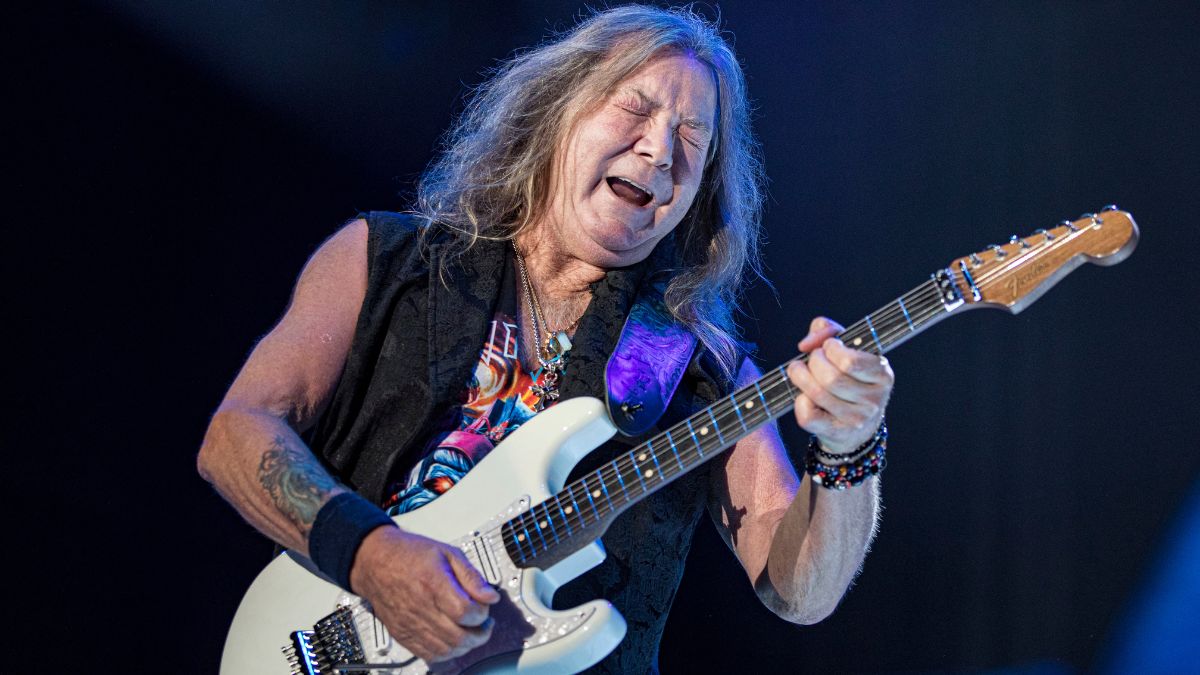
Dave Murray — £1,000 · Pro-Level Tone
The £1,000 · Pro-Level build for Dave Murray's crushing and technically demanding sound opens with Squier Classic Vibe 60s Stratocaster — the tonal foundation that defines the character. Into Marshall DSL20CR paired with Walrus Audio Fundamental Delay, the rig comes to ~£977 and delivers the essential elements. Fender Stratocaster with EMG pickups through a Marshall — Murray's Iron Maiden leads are melodic, harmonised and technically precise, rooted in the NWOBHM tradition but with a bluesy Hendrix influence.
Build Dave Murray's £1,000 · Pro-Level Rig
3 pieces · Total ~£977
What guitar does Dave Murray use?
Dave Murray is primarily associated with strat style guitars. At a £1,000 budget, Squier Classic Vibe 60s Stratocaster delivers the essential tonal character.
What to Buy
£1,000 · Pro-Level — Complete Gear List
Why This Rig Works
How Dave Murray's gear choices create the signature tone
Squier Classic Vibe 60s Stratocaster
The alnico V pickups are the real deal — they deliver genuine Strat chime, quack and warmth that responds naturally to pick attack. An ideal foundation for Hendrix, Mayer, Gilmour or SRV tones.
Walrus Audio Fundamental Delay
Walrus Audio Fundamental Delay — delay coloring added to the signal.
Marshall DSL20CR
The DSL's crunch channel captures the classic JCM800-era Marshall sound that Slash and Frusciante are built on. At 20 watts you can push the power amp hard enough to get natural tube saturation without needing ear protection.
The Combined Tone
Fender Stratocaster with EMG pickups through a Marshall — Murray's Iron Maiden leads are melodic, harmonised and technically precise, rooted in the NWOBHM tradition but with a bluesy Hendrix influence.
Tone Tips
Getting the Sound Right
- Single-coil hum is part of the character — fight it with guitar angle relative to the amp rather than compression
- Humbuckers into a British amp creates the classic rock sound — single coils work too but the character shifts toward a more Hendrix/early Clapton vibe
- At amp-driven gain levels the guitar's volume knob controls the whole range from clean to lead — rolling back 2 notches should clean up completely
- Delay after dirt pedals gives cleaner repeats; delay before dirt gives fuzzy, distorted echoes — both are intentional tools
- Tune down a half to full step — the reduced string tension creates the characteristic "chewy" quality in the bottom strings that is impossible to fake at standard pitch.
- Keep mids at 5-6 on the amp, never scooped — a true mid-scoop (bass and treble up, mids down) sounds massive in isolation but disappears entirely in a band mix.
Avoid These Pitfalls
Common Mistakes When Chasing This Tone
- Leaving the guitar volume at 10 — single coil brightness at full volume can be harsh. Rolling back to 8-9 tames the top end without killing output.
- Using a high-gain distortion pedal instead of amp gain — British crunch amps have a specific harmonic character when driven from their own gain stage. A pedal changes this character.
- Playing at bedroom volume expecting amp-driven tone — the power-tube saturation that defines this gain structure only occurs when the amp is working at substantial output. This is not replicable at low volumes.
- Too many repeats at high mix — more than 3 repeats makes the delay effect accumulate and overwhelm the dry guitar signal. Keep it to 2-3 repeats at a subtle mix level.
- Ignoring down-tuning — trying to achieve dropped-tuning riff character at standard pitch produces a thinner, less aggressive result regardless of EQ.
- Running gain at maximum — above 8 on most high-gain channels, palm mutes become indistinct and individual notes blur. The right amount of gain is the minimum for the target saturation.
Budget Alternatives
Same Tone, Different Budget
FAQ
Dave Murray Tone — Common Questions
Dave Murray is primarily associated with strat style guitars. At a £1,000 budget, Squier Classic Vibe 60s Stratocaster delivers the essential tonal character.
Dave Murray's amp is british crunch voiced — the amp running hot, providing natural tube saturation. At the £1,000 level, Marshall DSL20CR is the closest match.
The £1,000 tier adds noticeably better build quality and tonal nuance over the £500 rig. This build totals £977 with Squier Classic Vibe 60s Stratocaster, Marshall DSL20CR, 1 effect. This is the tier where the tone becomes genuinely convincing for gigging and recording.
Dave Murray's essential pedals include Delay. At the £1,000 tier: Walrus Audio Fundamental Delay. Delay is the most important pedal — the others add nuance.
Dave Murray's tone is defined by iron-maiden, dual-harmony-leads, british-crunch. The combination of strat guitar and british crunch amp creates a sound that is immediately recognisable.
Dave Murray's gain approach is amp-driven — natural tube saturation from pushing the amp hard, not from distortion pedals. At £1,000, this is replicated through Marshall DSL20CR paired with Walrus Audio Fundamental Delay.
Dave Murray — £1,000 · Pro-Level Complete Rig
~£977Guitar
Squier Classic Vibe 60s Stratocaster
Amp
Marshall DSL20CR
Delay
Walrus Audio Fundamental Delay
Tone Match
Closest Real-World Tone Match
If you like Dave Murray's tone, these players use a similar approach — same gear philosophy, comparable sound characteristics.
Related Tones