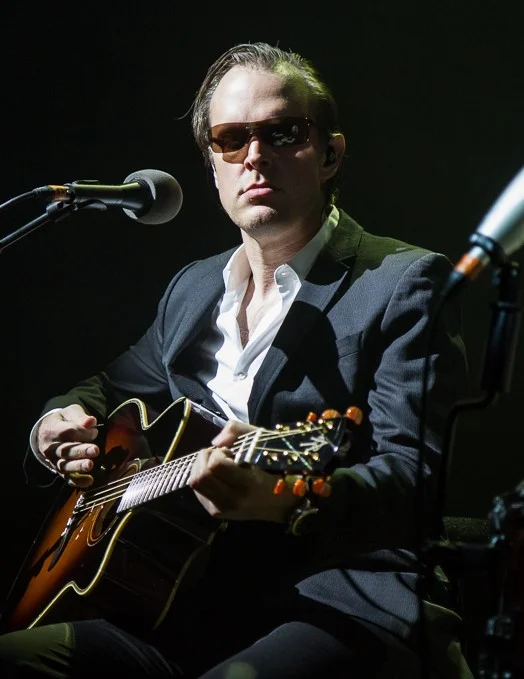
Joe Bonamassa — £500 · Sweet Spot Tone
Joe Bonamassa's raw and emotionally charged tone took shape during a period of genre-blending and sonic exploration and remains one of the most sought-after sounds on guitar. Joe Bonamassa is the most technically accomplished modern blues-rock guitarist — a vast vintage gear collection combined with encyclopaedic knowledge of blues and rock history. His multiple vintage Les Pauls through Dumble and Fender Tweed amps deliver a tone with extraordinary dynamic range and harmonic richness. At the £500 · Sweet Spot mark — the sweet spot — enough to get genuinely close to the sound without breaking the bank — the build centres on a Epiphone Les Paul Standard running through a Boss Katana 50 MkII, totalling ~£478.
Build Joe Bonamassa's £500 · Sweet Spot Rig
2 pieces · Total ~$607
What guitar does Joe Bonamassa use?
Joe Bonamassa is primarily associated with lp style guitars. At a £500 budget, Epiphone Les Paul Standard delivers the essential tonal character.
What to Buy
£500 · Sweet Spot — Complete Gear List
Can't find one? See alternatives:
Why This Rig Works
How Joe Bonamassa's gear choices create the signature tone
Epiphone Les Paul Standard
The set-neck construction and ProBucker humbuckers deliver the sustain, thickness and mid-forward push of the genuine article. Bridge pickup into a crunch amp is the authentic hard rock formula.
Boss Katana 50 MkII
Its 'Brown' amp character at low gain is an excellent approximation of the Fender-style clarity that Hendrix, Mayer, Gilmour and SRV all relied on. Built-in effects mean you're a few knob turns away from the right tone.
The Combined Tone
Vintage Les Paul (1957 Goldtop or 1959 Standard) into a Dumble ODS or Fender Tweed Deluxe. The combination is warm and organic — no harsh edges, enormous dynamic range. Bonamassa controls clean to crunch entirely with pick attack and guitar volume; pedals are used sparingly.
Tone Tips
Getting the Sound Right
- On the Boss Katana 50 MkII: use the Brown channel — the closest model to a Marshall-voiced preamp at this price. Set character to 8, gain to 5. For Joe Bonamassa's lead volume jump, use the Boost mode rather than adding a separate boost pedal.
- Attack controls everything — light touch for cleans, dig in hard for natural breakup
- Guitar volume knob is your gain control — 10 for crunch, 7 for clean, 4 for crystal clear
- Tweed Deluxe pushed hard gives a compressed, vintage breakup nothing else replicates
- Les Paul bridge pickup: aggressive pick attack into slightly dirty amp for the core tone
- Vibrato is measured — Bonamassa uses it only on target notes at the end of phrases
- A slapback delay (150-200ms, 1 repeat, low mix) on a clean Dumble-style thickens the sound without audible echo — the repeat arrives close enough that it sounds like more speaker, not a separate event. Set mix at 20-25% maximum
Avoid These Pitfalls
Common Mistakes When Chasing This Tone
- Setting the amp bass too high — the inherent warmth of mahogany means you need less bass EQ than with a Strat. Starting at 5 rather than 7 prevents low-end mud.
- Scooping the mids on a Marshall-style amp — the upper midrange emphasis is what makes British amps cut through. Mid-scoop EQ sounds good alone but disappears in a band mix.
- Setting the boost level too high relative to the base tone — a boost for solos should raise the presence of the guitar, not cause a volume jump that overwhelms the mix. Level matching matters.
- Setting gain too high on the overdrive pedal — most overdrive pedals are most useful at gain settings of 2-5, where they add character without dominating the tone. High gain settings on an OD pedal become a distortion, not an overdrive.
- Compression before a drive pedal at high settings — heavy compression before overdrive removes the pick attack that drive pedals respond to. The overdrive then has a flat, lifeless character.
Budget Alternatives
Same Tone, Different Budget
FAQ
Joe Bonamassa Tone — Common Questions
Joe Bonamassa is primarily associated with lp style guitars. At a £500 budget, Epiphone Les Paul Standard delivers the essential tonal character.
Joe Bonamassa's amp is british crunch voiced — clean with headroom, pushed by an overdrive pedal. At the £500 level, Boss Katana 50 MkII is the closest match.
Yes — £500 covers a real guitar and amp in the right tonal family. This rig totals £478 and captures the essential character. The guitar and amp account for 80% of the tone; pedals are secondary at this budget.
Joe Bonamassa's tone is defined by blues-rock, vintage-tones, collectors-grade. The combination of lp guitar and british crunch amp creates a sound that is immediately recognisable.
Joe Bonamassa's gain approach is clean-boosted — a clean amp pushed by an overdrive pedal. The pedal adds colour; the amp adds body. At £500, this is replicated through Boss Katana 50 MkII.
Joe Bonamassa — £500 · Sweet Spot Complete Rig
~£478Guitar
Epiphone Les Paul Standard
Amp
Boss Katana 50 MkII
Tone Match
Closest Real-World Tone Match
If you like Joe Bonamassa's tone, these players use a similar approach — same gear philosophy, comparable sound characteristics.
Related Tones