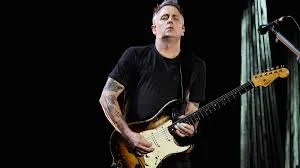
Mike McCready — £1,000 · Pro-Level Tone
At £1,000 · Pro-Level, Mike McCready's abrasive and emotionally direct tone is more accessible than most players expect. Rooted in an era of reinvention, grunge, and raw expression, their sound — Mike McCready of Pearl Jam brings a Hendrix-influenced blues vocabulary into a grunge context — expressive solos, Uni-Vibe textures and a highly melodic lead approach that makes him stand out in a genre more associated with raw noise. — starts with Squier Classic Vibe 60s Stratocaster and Marshall DSL20CR, totalling ~£996. That combination captures the defining characteristics without the premium price tag.
Build Mike McCready's £1,000 · Pro-Level Rig
4 pieces · Total ~$1,265
What guitar does Mike McCready use?
Mike McCready is primarily associated with strat style guitars. At a £1,000 budget, Squier Classic Vibe 60s Stratocaster delivers the essential tonal character.
What to Buy
£1,000 · Pro-Level — Complete Gear List
Can't find one? See alternatives:
Why This Rig Works
How Mike McCready's gear choices create the signature tone
Squier Classic Vibe 60s Stratocaster
The alnico V pickups are the real deal — they deliver genuine Strat chime, quack and warmth that responds naturally to pick attack. An ideal foundation for Hendrix, Mayer, Gilmour or SRV tones.
- Expression Filtervocal mid-sweep with Fasel resonance
- OverdriveFulltone OCD Overdrive
Marshall DSL20CR
The DSL's crunch channel captures the classic JCM800-era Marshall sound that Slash and Frusciante are built on. At 20 watts you can push the power amp hard enough to get natural tube saturation without needing ear protection.
The Combined Tone
Fender Stratocaster into a Marshall head, often with a Uni-Vibe running for slow passages. The tone is blues-inflected rock — relatively clean rhythm with a moderate overdrive pushing the solos above the mix. A Cry Baby wah adds expressiveness to lead lines. The feel is Hendrix in a grunge context.
Tone Tips
Getting the Sound Right
- The Marshall DSL20CR delivers power-tube saturation at master volume 6–7 — this compression and sag is what separates amp-driven tone from pedal tone. Set the master first, then dial back the channel gain to taste rather than the other way around.
- Hendrix vocabulary in a grunge context — practise Hendrix phrasing (double stops, call-and-response, wah dynamics) then apply to Pearl Jam tempos
- Uni-Vibe running slow creates the swirling texture on "Even Flow" and similar songs — keep the rate very slow, almost imperceptible
- Wah used expressively during solos, parked mid-sweep for filtered rhythm texture — similar to Hendrix's filtering technique
- The TS808 runs at near-zero drive and boosted level — it's a clean push into the Marshall, not an overdrive pedal
- Vibrato is wide and immediately applied — do not delay before starting the vibrato. The note barely rings before the vibrato kicks in
- The Marshall gain is moderate, not high — McCready's solo tone has pick dynamics. A high gain setting removes the touch sensitivity he relies on
Avoid These Pitfalls
Common Mistakes When Chasing This Tone
- Stacking a second overdrive after the TS808 with single coils — the combined mid emphasis of two stacked ODs into single-coil pickups produces a congested, nasal sound that struggles to sit in a mix
- Placing a tuner or buffered pedal before the Fuzz Face — most fuzz circuits (especially germanium ones) are sensitive to the impedance of the signal feeding them. A buffered pedal before the fuzz changes how the guitar volume knob responds. Run fuzz first in the chain
- Playing at bedroom volume expecting amp-driven tone — the power-tube saturation that defines this gain structure only occurs when the amp is working at substantial output. This is not replicable at low volumes.
- Setting gain too high on the overdrive pedal — most overdrive pedals are most useful at gain settings of 2-5, where they add character without dominating the tone. High gain settings on an OD pedal become a distortion, not an overdrive.
- Leaving the wah in a fixed position (cocked) between uses — a cocked wah acts as a midrange filter and changes the tone. If not using the wah expressively, take it out of the chain.
Budget Alternatives
Same Tone, Different Budget
FAQ
Mike McCready Tone — Common Questions
Mike McCready is primarily associated with strat style guitars. At a £1,000 budget, Squier Classic Vibe 60s Stratocaster delivers the essential tonal character.
Mike McCready's amp is british crunch voiced — the amp running hot, providing natural tube saturation. At the £1,000 level, Marshall DSL20CR is the closest match.
The £1,000 tier adds noticeably better build quality and tonal nuance over the £500 rig. This build totals £996 with Squier Classic Vibe 60s Stratocaster, Marshall DSL20CR, 2 effects. This is the tier where the tone becomes genuinely convincing for gigging and recording.
Mike McCready's essential pedals include Overdrive, Wah. At the £1,000 tier: Dunlop GCB95 Cry Baby Wah, Fulltone OCD Overdrive. Overdrive is the most important pedal — the others add nuance.
Mike McCready's tone is defined by hendrix-influenced, expressive-bends, grunge-blues. The combination of strat guitar and british crunch amp creates a sound that is immediately recognisable.
Mike McCready's gain approach is amp-driven — natural tube saturation from pushing the amp hard, not from distortion pedals. At £1,000, this is replicated through Marshall DSL20CR paired with Dunlop GCB95 Cry Baby Wah.
Mike McCready — £1,000 · Pro-Level Complete Rig
~£996Guitar
Squier Classic Vibe 60s Stratocaster
Wah
Dunlop GCB95 Cry Baby Wah
Overdrive
Fulltone OCD Overdrive
Amp
Marshall DSL20CR
Tone Match
Closest Real-World Tone Match
If you like Mike McCready's tone, these players use a similar approach — same gear philosophy, comparable sound characteristics.
Related Tones