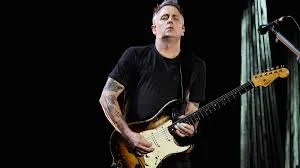
Mike McCready — £2,500 · Premium Tone
At £2,500 · Premium, Mike McCready's abrasive and emotionally direct tone is more accessible than most players expect. Rooted in an era of reinvention, grunge, and raw expression, their sound — Mike McCready of Pearl Jam brings a Hendrix-influenced blues vocabulary into a grunge context — expressive solos, Uni-Vibe textures and a highly melodic lead approach that makes him stand out in a genre more associated with raw noise. — starts with Fender Player Stratocaster and Marshall DSL100H, totalling ~£2495. That combination captures the defining characteristics without the premium price tag.
Build Mike McCready's £2,500 · Premium Rig
5 pieces · Total ~$3,169
What guitar does Mike McCready use?
Mike McCready is primarily associated with strat style guitars. At a £2,500 budget, Fender Player Stratocaster delivers the essential tonal character.
What to Buy
£2,500 · Premium — Complete Gear List
Can't find one? See alternatives:
Why This Rig Works
How Mike McCready's gear choices create the signature tone
Fender Player Stratocaster
Where the Squier approximates the Strat voice, the Player Strat *is* the Strat voice. Noticeably more articulate and dynamic, responding to every nuance of pick attack.
- Expression Filtervocal mid-sweep with Fasel resonance
- CompressionMXR Dyna Comp
- OverdriveAnalogman Modded TS9
Marshall DSL100H
The Marshall DSL100H converts the guitar signal into audible sound and adds its own tonal character — EQ shaping, natural gain, and the overall feel of the final tone.
The Combined Tone
Fender Stratocaster into a Marshall head, often with a Uni-Vibe running for slow passages. The tone is blues-inflected rock — relatively clean rhythm with a moderate overdrive pushing the solos above the mix. A Cry Baby wah adds expressiveness to lead lines. The feel is Hendrix in a grunge context.
Tone Tips
Getting the Sound Right
- The Marshall DSL100H delivers power-tube saturation at master volume 6–7 — this compression and sag is what separates amp-driven tone from pedal tone. Set the master first, then dial back the channel gain to taste rather than the other way around.
- Hendrix vocabulary in a grunge context — practise Hendrix phrasing (double stops, call-and-response, wah dynamics) then apply to Pearl Jam tempos
- Uni-Vibe running slow creates the swirling texture on "Even Flow" and similar songs — keep the rate very slow, almost imperceptible
- Vibrato is wide and immediately applied — do not delay before starting the vibrato. The note barely rings before the vibrato kicks in
- The Marshall gain is moderate, not high — McCready's solo tone has pick dynamics. A high gain setting removes the touch sensitivity he relies on
- Listen for the space between phrases — unlike Cobain's rhythm focus, McCready leaves room for the phrases to breathe. The silences are as composed as the notes
- Single coils at the input of a Fuzz Face have lower impedance than humbuckers — this means the fuzz responds differently to your guitar's volume knob. Rolling back the guitar to 6-7 cleans the fuzz up more smoothly than a humbucker would
- Try both wah positions (before and after the Fuzz Face) before committing to your board layout — the tonal difference is fundamental, not subtle. The "correct" position depends on the musical character you want, not a general rule
Avoid These Pitfalls
Common Mistakes When Chasing This Tone
- Stacking a second overdrive after the TS808 with single coils — the combined mid emphasis of two stacked ODs into single-coil pickups produces a congested, nasal sound that struggles to sit in a mix
- Placing a tuner or buffered pedal before the Fuzz Face — most fuzz circuits (especially germanium ones) are sensitive to the impedance of the signal feeding them. A buffered pedal before the fuzz changes how the guitar volume knob responds. Run fuzz first in the chain
- Setting gain too high on the overdrive pedal — most overdrive pedals are most useful at gain settings of 2-5, where they add character without dominating the tone. High gain settings on an OD pedal become a distortion, not an overdrive.
- Leaving the wah in a fixed position (cocked) between uses — a cocked wah acts as a midrange filter and changes the tone. If not using the wah expressively, take it out of the chain.
- Playing at bedroom volume and expecting full blues tone — tube amps need to push air to bloom correctly. A cold amp at low volume sounds flat and lifeless.
Budget Alternatives
Same Tone, Different Budget
FAQ
Mike McCready Tone — Common Questions
Mike McCready is primarily associated with strat style guitars. At a £2,500 budget, Fender Player Stratocaster delivers the essential tonal character.
Mike McCready's amp is british crunch voiced — the amp running hot, providing natural tube saturation. At the £2,500 level, Marshall DSL100H is the closest match.
The £2,500 tier uses Mike McCready's actual gear choices or direct equivalents. Total: £2,495. The tonal step up from £1,000 is real but diminishing — worth it for regular performers and studio work.
Mike McCready's essential pedals include Overdrive, Wah. At the £2,500 tier: Dunlop GCB95 Cry Baby Wah, MXR Dyna Comp, Analogman Modded TS9. Overdrive is the most important pedal — the others add nuance.
Mike McCready's tone is defined by hendrix-influenced, expressive-bends, grunge-blues. The combination of strat guitar and british crunch amp creates a sound that is immediately recognisable.
Mike McCready's gain approach is amp-driven — natural tube saturation from pushing the amp hard, not from distortion pedals. At £2,500, this is replicated through Marshall DSL100H paired with Dunlop GCB95 Cry Baby Wah.
Mike McCready — £2,500 · Premium Complete Rig
~£2495Guitar
Fender Player Stratocaster
Wah
Dunlop GCB95 Cry Baby Wah
Compression
MXR Dyna Comp
Overdrive
Analogman Modded TS9
Amp
Marshall DSL100H
Tone Match
Closest Real-World Tone Match
If you like Mike McCready's tone, these players use a similar approach — same gear philosophy, comparable sound characteristics.
Related Tones