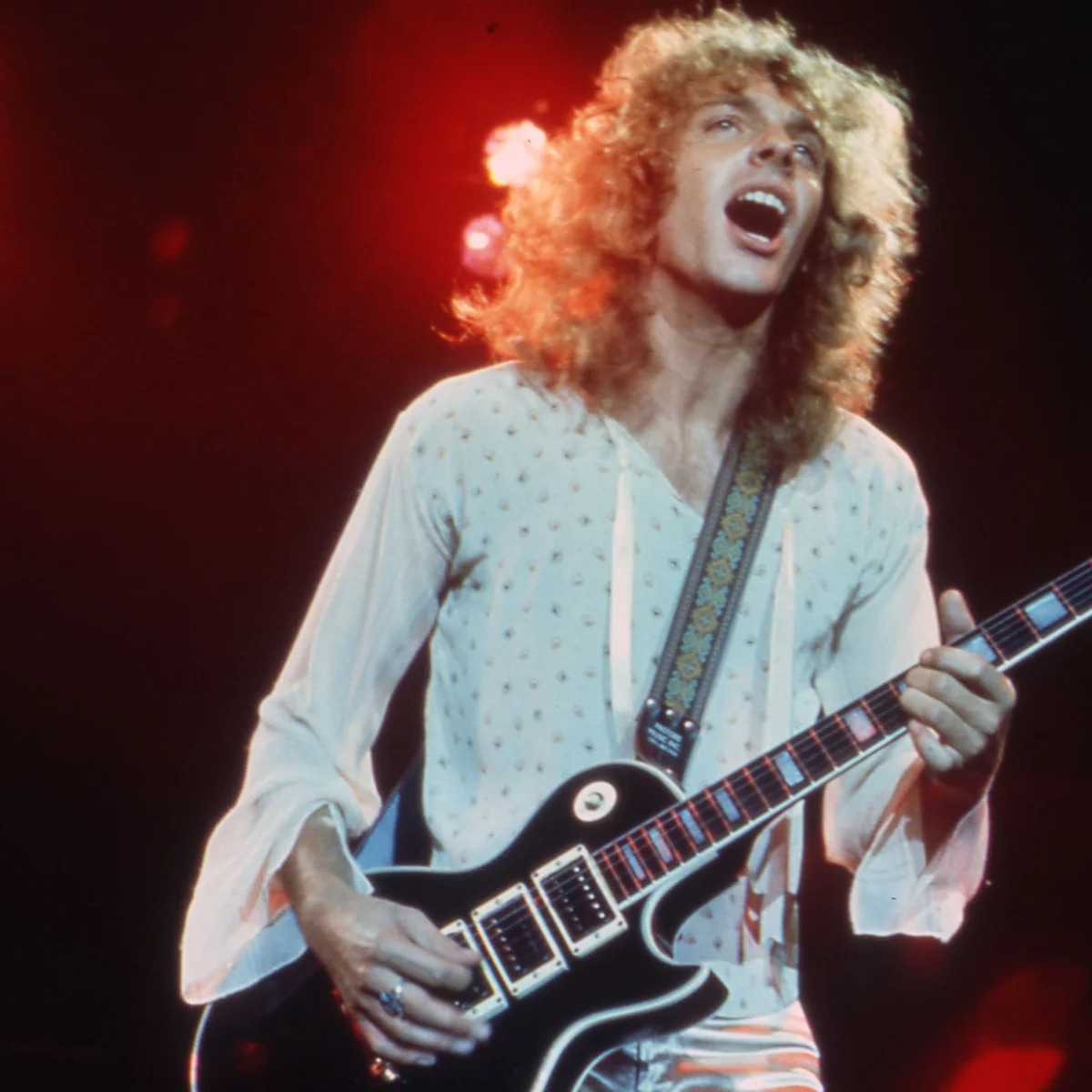
Peter Frampton — £1,000 · Pro-Level Tone
Peter Frampton's powerful and driving tone took shape during a defining era for electric guitar and remains one of the most sought-after sounds on guitar. Peter Frampton's talk box made "Do You Feel Like We Do" one of the most recognisable guitar sounds in history. His Les Paul through a Marshall, filtered through the Heil Sound Talk Box, produces a guitar-vocal hybrid tone that sounds like the instrument is literally talking. Beyond the gimmick, Frampton is a blues-rock player of considerable depth. At the £1,000 · Pro-Level mark — a serious investment that brings you within touching distance of the real thing — the build centres on a Epiphone Les Paul Special running through a Marshall DSL20CR, with Vox V847 Wah and Analogman Modded TS9 completing the signal chain, totalling ~£976.
Build Peter Frampton's £1,000 · Pro-Level Rig
4 pieces · Total ~£976
What guitar does Peter Frampton use?
Peter Frampton is primarily associated with lp style guitars. At a £1,000 budget, Epiphone Les Paul Special delivers the essential tonal character.
What to Buy
£1,000 · Pro-Level — Complete Gear List
Why This Rig Works
How Peter Frampton's gear choices create the signature tone
Epiphone Les Paul Special
The 650R/700T humbucker pair gives instant Les Paul darkness and warmth. They nail the aggressive, mid-forward crunch that hard rock is built on.
- WahVox V847 Wah
- OverdriveAnalogman Modded TS9
Marshall DSL20CR
The DSL's crunch channel captures the classic JCM800-era Marshall sound that Slash and Frusciante are built on. At 20 watts you can push the power amp hard enough to get natural tube saturation without needing ear protection.
The Combined Tone
Gibson Les Paul into a Marshall Super Lead. The Heil Talk Box is a speaker that pumps the guitar signal into a tube inserted in Frampton's mouth — he shapes vowels with his lips while the amp plays. The result is a "wah-wah" effect produced by a human vocal tract rather than a pedal. Without the talk box, his base tone is warm, mid-heavy blues-rock.
Tone Tips
Getting the Sound Right
- Talk box setup: speaker in a small enclosure → plastic tube → your mouth. Sing no note — just shape vowels
- Vowel shapes: "ah" for open tone, "wah" for forward peak, "oo" for dark, scooped tone
- A Dunlop Cry Baby Wah is the accessible alternative — approximates the talk box filter
- Les Paul bridge pickup for the base tone — warm but with enough bite to drive the talk box
- Marshall gain: moderate, not extreme — the talk box needs a clear signal to articulate well
- Play slow, melodic lines through the talk box — fast runs muddy the vowel articulation
- Frampton's non-talk-box playing is rooted in slow, emotive blues phrasing
- The "baby I love your way" clean chord work: open chord shapes, gentle picking, clean amp
Avoid These Pitfalls
Common Mistakes When Chasing This Tone
- Not exploring the Marshall Super Lead alone before adding pedals — a Les Paul or humbucker guitar into a British amp is already a near-complete overdrive system. Adding drive pedals on top is often unnecessary and muddies the amp's natural character
- Leaving the wah pedal engaged but stationary between rocking it — a cocked wah (fixed position, not moving) acts as a midrange filter that changes the core tone. Either rock it expressively or bypass it completely; a cocked wah changes the sound in ways that are often unintended
- Expecting a Les Paul to sound like a Strat with EQ adjustments — the mahogany body, set neck, and humbuckers produce a fundamentally different character that cannot be EQ'd away.
- Scooping the mids on a Marshall-style amp — the upper midrange emphasis is what makes British amps cut through. Mid-scoop EQ sounds good alone but disappears in a band mix.
- Using a distortion pedal to replace amp saturation — amp-driven tone has a specific feel (dynamics, touch sensitivity, natural compression) that pedal distortion cannot replicate. The source of gain matters.
- Setting gain too high on the overdrive pedal — most overdrive pedals are most useful at gain settings of 2-5, where they add character without dominating the tone. High gain settings on an OD pedal become a distortion, not an overdrive.
- Moving the wah too fast — wah is a filter effect that needs time to sweep through its range musically. Fast rocking produces a quacking sound; musical use is slower and more deliberate.
- Ignoring the guitar volume knob — rolling back to 6-7 is your rhythm setting; 10 is for leads. Most players leave it at 10 and miss the entire dynamic vocabulary.
Budget Alternatives
Same Tone, Different Budget
FAQ
Peter Frampton Tone — Common Questions
Peter Frampton is primarily associated with lp style guitars. At a £1,000 budget, Epiphone Les Paul Special delivers the essential tonal character.
Peter Frampton's amp is british crunch voiced — the amp running hot, providing natural tube saturation. At the £1,000 level, Marshall DSL20CR is the closest match.
The £1,000 tier adds noticeably better build quality and tonal nuance over the £500 rig. This build totals £976 with Epiphone Les Paul Special, Marshall DSL20CR, 2 effects. This is the tier where the tone becomes genuinely convincing for gigging and recording.
Peter Frampton's essential pedals include Overdrive, Wah. At the £1,000 tier: Vox V847 Wah, Analogman Modded TS9. Overdrive is the most important pedal — the others add nuance.
Peter Frampton's tone is defined by talk-box, singing-lead, melodic. The combination of lp guitar and british crunch amp creates a sound that is immediately recognisable.
Peter Frampton's gain approach is amp-driven — natural tube saturation from pushing the amp hard, not from distortion pedals. At £1,000, this is replicated through Marshall DSL20CR paired with Vox V847 Wah.
Peter Frampton — £1,000 · Pro-Level Complete Rig
~£976Guitar
Epiphone Les Paul Special
Wah
Vox V847 Wah
Overdrive
Analogman Modded TS9
Amp
Marshall DSL20CR
Tone Match
Closest Real-World Tone Match
If you like Peter Frampton's tone, these players use a similar approach — same gear philosophy, comparable sound characteristics.
Related Tones