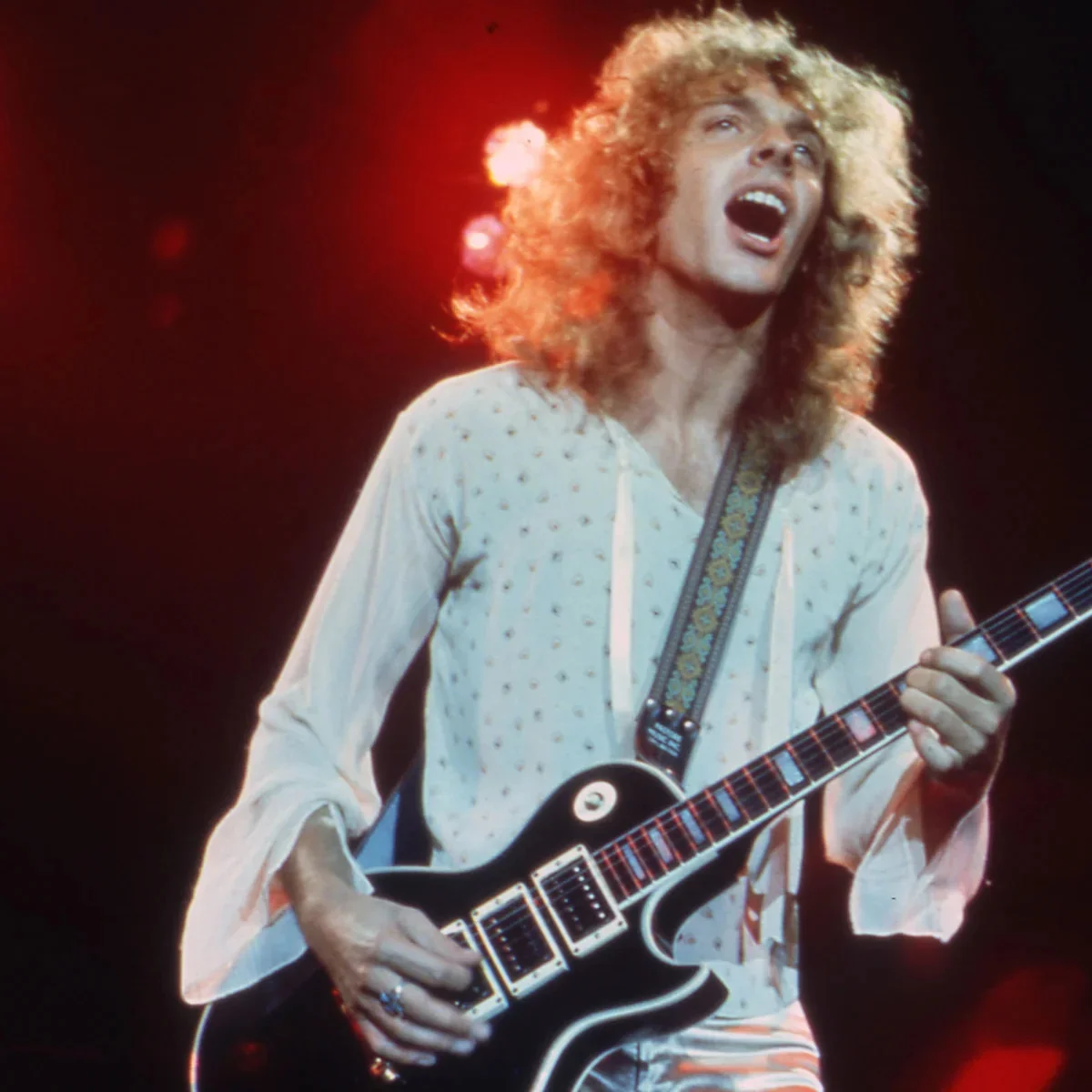
Peter Frampton — £500 · Sweet Spot Tone
Peter Frampton's powerful and driving tone took shape during the era that defined hard rock and blues-rock and remains one of the most sought-after sounds on guitar. Peter Frampton's talk box made "Do You Feel Like We Do" one of the most recognisable guitar sounds in history. His Les Paul through a Marshall, filtered through the Heil Sound Talk Box, produces a guitar-vocal hybrid tone that sounds like the instrument is literally talking. Beyond the gimmick, Frampton is a blues-rock player of considerable depth. At the £500 · Sweet Spot mark — the sweet spot — enough to get genuinely close to the sound without breaking the bank — the build centres on a Epiphone Les Paul Standard running through a Boss Katana 50 MkII, with Joyo Vintage Overdrive completing the signal chain, totalling ~£507.
Build Peter Frampton's £500 · Sweet Spot Rig
3 pieces · Total ~$644
What guitar does Peter Frampton use?
Peter Frampton is primarily associated with lp style guitars. At a £500 budget, Epiphone Les Paul Standard delivers the essential tonal character.
What to Buy
£500 · Sweet Spot — Complete Gear List
Can't find one? See alternatives:
Why This Rig Works
How Peter Frampton's gear choices create the signature tone
Epiphone Les Paul Standard
The set-neck construction and ProBucker humbuckers deliver the sustain, thickness and mid-forward push of the genuine article. Bridge pickup into a crunch amp is the authentic hard rock formula.
Joyo Vintage Overdrive
Joyo Vintage Overdrive — overdrive coloring added to the signal.
Boss Katana 50 MkII
Its 'Brown' amp character at low gain is an excellent approximation of the Fender-style clarity that Hendrix, Mayer, Gilmour and SRV all relied on. Built-in effects mean you're a few knob turns away from the right tone.
The Combined Tone
Gibson Les Paul into a Marshall Super Lead. The Heil Talk Box is a speaker that pumps the guitar signal into a tube inserted in Frampton's mouth — he shapes vowels with his lips while the amp plays. The result is a "wah-wah" effect produced by a human vocal tract rather than a pedal. Without the talk box, his base tone is warm, mid-heavy blues-rock.
Tone Tips
Getting the Sound Right
- On the Boss Katana 50 MkII: use the Brown channel — the closest model to a Marshall-voiced preamp at this price. Set character to 8, gain to 5. For Peter Frampton's lead volume jump, use the Boost mode rather than adding a separate boost pedal.
- Talk box setup: speaker in a small enclosure → plastic tube → your mouth. Sing no note — just shape vowels
- Vowel shapes: "ah" for open tone, "wah" for forward peak, "oo" for dark, scooped tone
- A Dunlop Cry Baby Wah is the accessible alternative — approximates the talk box filter
- Les Paul bridge pickup for the base tone — warm but with enough bite to drive the talk box
- Marshall gain: moderate, not extreme — the talk box needs a clear signal to articulate well
- The TS9 with gain at 0 and level at 8-9 into a Marshall Super Lead with humbuckers: the TS tightens the low end by cutting sub-bass before the Marshall's preamp sees it. This is the correct use — it focuses the amp's drive, not adds to it
- The Les Paul's humbuckers push a Marshall Super Lead into breakup much faster than single coils — start the amp's channel volume at 5 before going higher. The difference between 5 and 7 on a Marshall with a Les Paul is dramatic
Avoid These Pitfalls
Common Mistakes When Chasing This Tone
- Not exploring the Marshall Super Lead alone before adding pedals — a Les Paul or humbucker guitar into a British amp is already a near-complete overdrive system. Adding drive pedals on top is often unnecessary and muddies the amp's natural character
- Leaving the wah pedal engaged but stationary between rocking it — a cocked wah (fixed position, not moving) acts as a midrange filter that changes the core tone. Either rock it expressively or bypass it completely; a cocked wah changes the sound in ways that are often unintended
- Expecting a Les Paul to sound like a Strat with EQ adjustments — the mahogany body, set neck, and humbuckers produce a fundamentally different character that cannot be EQ'd away.
- Scooping the mids on a Marshall-style amp — the upper midrange emphasis is what makes British amps cut through. Mid-scoop EQ sounds good alone but disappears in a band mix.
- Using a distortion pedal to replace amp saturation — amp-driven tone has a specific feel (dynamics, touch sensitivity, natural compression) that pedal distortion cannot replicate. The source of gain matters.
Budget Alternatives
Same Tone, Different Budget
FAQ
Peter Frampton Tone — Common Questions
Peter Frampton is primarily associated with lp style guitars. At a £500 budget, Epiphone Les Paul Standard delivers the essential tonal character.
Peter Frampton's amp is british crunch voiced — the amp running hot, providing natural tube saturation. At the £500 level, Boss Katana 50 MkII is the closest match.
Yes — £500 covers a real guitar and amp in the right tonal family. This rig totals £507 and captures the essential character. The guitar and amp account for 80% of the tone; pedals are secondary at this budget.
Peter Frampton's essential pedals include Overdrive, Wah. At the £500 tier: Joyo Vintage Overdrive. Overdrive is the most important pedal — the others add nuance.
Peter Frampton's tone is defined by talk-box, singing-lead, melodic. The combination of lp guitar and british crunch amp creates a sound that is immediately recognisable.
Peter Frampton's gain approach is amp-driven — natural tube saturation from pushing the amp hard, not from distortion pedals. At £500, this is replicated through Boss Katana 50 MkII paired with Joyo Vintage Overdrive.
Peter Frampton — £500 · Sweet Spot Complete Rig
~£507Guitar
Epiphone Les Paul Standard
Overdrive
Joyo Vintage Overdrive
Amp
Boss Katana 50 MkII
Tone Match
Closest Real-World Tone Match
If you like Peter Frampton's tone, these players use a similar approach — same gear philosophy, comparable sound characteristics.
Related Tones