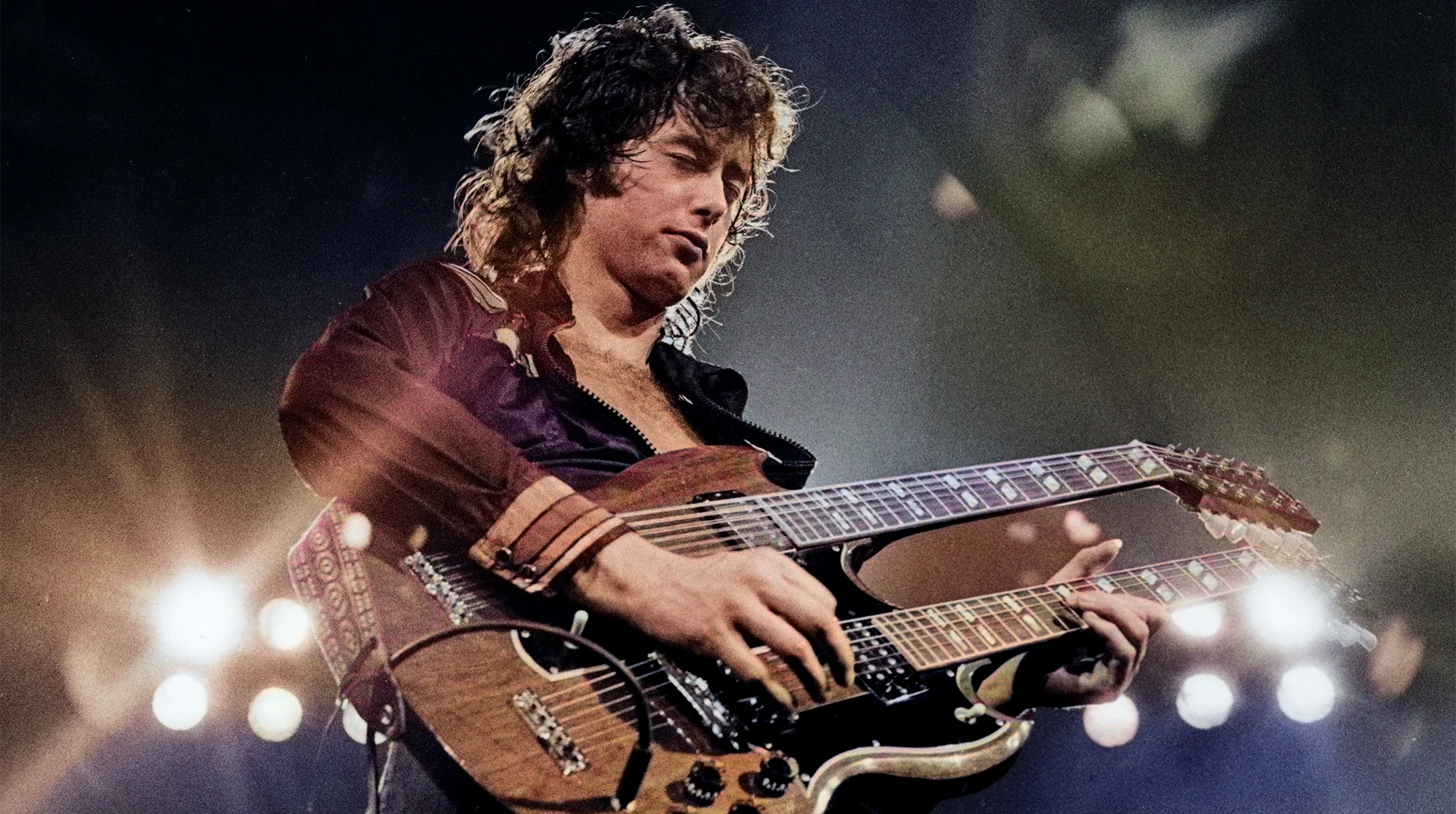
Jimmy Page — £500 · Sweet Spot Tone
Jimmy Page harnessed the full dynamic range of a Gibson Les Paul through a Marshall stack — from gentle, acoustic-influenced picking to howling feedback and studio-layered orchestration. His tone captured both raw power and deliberate delicacy. Replicating that powerful and driving sound at the £500 · Sweet Spot mark means Epiphone Les Paul Standard into Boss Katana 50 MkII. This build totals ~£478 and captures the core character — the sweet spot — enough to get genuinely close to the sound without breaking the bank.
Build Jimmy Page's £500 · Sweet Spot Rig
2 pieces · Total ~$607
What guitar does Jimmy Page use?
Jimmy Page is primarily associated with lp style guitars. At a £500 budget, Epiphone Les Paul Standard delivers the essential tonal character.
What to Buy
£500 · Sweet Spot — Complete Gear List
Can't find one? See alternatives:
Why This Rig Works
How Jimmy Page's gear choices create the signature tone
Epiphone Les Paul Standard
The set-neck construction and ProBucker humbuckers deliver the sustain, thickness and mid-forward push of the genuine article. Bridge pickup into a crunch amp is the authentic hard rock formula.
Boss Katana 50 MkII
Its 'Brown' amp character at low gain is an excellent approximation of the Fender-style clarity that Hendrix, Mayer, Gilmour and SRV all relied on. Built-in effects mean you're a few knob turns away from the right tone.
The Combined Tone
Thick, saggy Les Paul humbucker into a modified Marshall Super Lead — the combination delivers natural amp saturation with explosive transients and singing sustain. Page ran his Marshall loud with the guitar's volume knob as the main control; tone ranged from clean jazz voicings (volume at 4) to full-bore crunch (volume at 10).
Tone Tips
Getting the Sound Right
- On the Boss Katana 50 MkII: use the Brown channel — the closest model to a Marshall-voiced preamp at this price. Set character to 8, gain to 5. For Jimmy Page's lead volume jump, use the Boost mode rather than adding a separate boost pedal.
- Use the Les Paul bridge pickup for crunch; neck pickup for singing, sustained leads
- Control clean-to-dirty with the guitar volume knob, not the amp
- Marshall gain comes from cranked amp volume — the Les Paul humbucker provides the saturation
- Tune down a half step (Eb) for that slightly loose, saggy string feel
- Palm muting with varied pressure creates Page's rhythmic texture
- Stacking TS9 into a Marshall Super Lead with Les Paul humbuckers: the order matters — guitar → TS → amp. The humbucker drives the TS which drives the amp. Keep TS gain at 1-2 maximum or the harmonic layering becomes too thick
- A Les Paul's humbucker output into a Marshall Super Lead is a self-contained amp distortion system — try the sound without any drive pedals first. Most players add overdrive before fully exploring what the amp alone can do
Avoid These Pitfalls
Common Mistakes When Chasing This Tone
- Not exploring the Marshall Super Lead alone before adding pedals — a Les Paul or humbucker guitar into a British amp is already a near-complete overdrive system. Adding drive pedals on top is often unnecessary and muddies the amp's natural character
- Running the Tone Bender into an already-driven amp channel — fuzz into a driven amp creates uncontrolled intermodulation that sounds chaotic rather than musical. The Tone Bender works best into a clean or barely-clean amp
- Setting the amp bass too high — the inherent warmth of mahogany means you need less bass EQ than with a Strat. Starting at 5 rather than 7 prevents low-end mud.
- Scooping the mids on a Marshall-style amp — the upper midrange emphasis is what makes British amps cut through. Mid-scoop EQ sounds good alone but disappears in a band mix.
- Using a distortion pedal to replace amp saturation — amp-driven tone has a specific feel (dynamics, touch sensitivity, natural compression) that pedal distortion cannot replicate. The source of gain matters.
Budget Alternatives
Same Tone, Different Budget
FAQ
Jimmy Page Tone — Common Questions
Jimmy Page is primarily associated with lp style guitars. At a £500 budget, Epiphone Les Paul Standard delivers the essential tonal character.
Jimmy Page's amp is british crunch voiced — the amp running hot, providing natural tube saturation. At the £500 level, Boss Katana 50 MkII is the closest match.
Yes — £500 covers a real guitar and amp in the right tonal family. This rig totals £478 and captures the essential character. The guitar and amp account for 80% of the tone; pedals are secondary at this budget.
Jimmy Page's tone is defined by blues-rooted, dynamic, vintage. The combination of lp guitar and british crunch amp creates a sound that is immediately recognisable.
Jimmy Page's gain approach is amp-driven — natural tube saturation from pushing the amp hard, not from distortion pedals. At £500, this is replicated through Boss Katana 50 MkII.
Jimmy Page — £500 · Sweet Spot Complete Rig
~£478Guitar
Epiphone Les Paul Standard
Amp
Boss Katana 50 MkII
Tone Match
Closest Real-World Tone Match
If you like Jimmy Page's tone, these players use a similar approach — same gear philosophy, comparable sound characteristics.
Related Tones