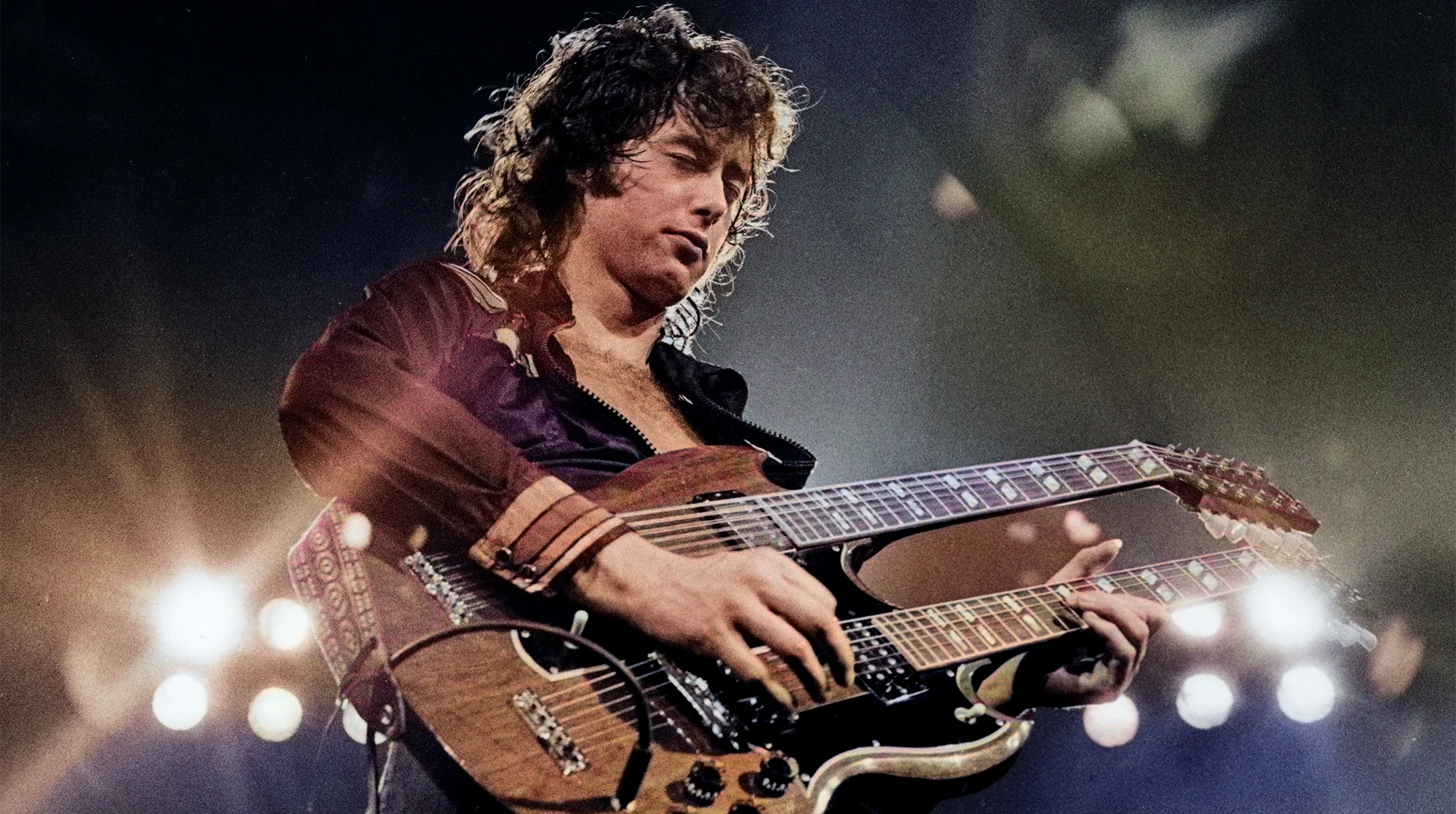
Jimmy Page — £2,500 · Premium Tone
Jimmy Page harnessed the full dynamic range of a Gibson Les Paul through a Marshall stack — from gentle, acoustic-influenced picking to howling feedback and studio-layered orchestration. His tone captured both raw power and deliberate delicacy. Replicating that powerful and driving sound at the £2,500 · Premium mark means Gibson Les Paul Junior into Marshall DSL40CR. The effects — Wilson Effects MkII Wah, Paul Cochrane Timmy — add the finishing texture. This build totals ~£2493 and captures the core character — a premium build targeting the most accurate recreation possible.
Build Jimmy Page's £2,500 · Premium Rig
7 pieces · Total ~$3,166
What guitar does Jimmy Page use?
Jimmy Page is primarily associated with lp style guitars. At a £2,500 budget, Gibson Les Paul Junior delivers the essential tonal character.
What to Buy
£2,500 · Premium — Complete Gear List
Can't find one? See alternatives:
Why This Rig Works
How Jimmy Page's gear choices create the signature tone
Gibson Les Paul Junior
The Gibson Les Paul Junior delivers warm humbucker thickness and singing sustain — the classic foundation for rock and blues tones.
- WahWilson Effects MkII Wah
- BoostPaul Cochrane Timmy
- EQBoss GE-7 Graphic EQ
- OverdriveBoss Blues Driver BD-2
- DelayWalrus Audio Fundamental Delay
Marshall DSL40CR
The Marshall DSL40CR converts the guitar signal into audible sound and adds its own tonal character — EQ shaping, natural gain, and the overall feel of the final tone.
The Combined Tone
Thick, saggy Les Paul humbucker into a modified Marshall Super Lead — the combination delivers natural amp saturation with explosive transients and singing sustain. Page ran his Marshall loud with the guitar's volume knob as the main control; tone ranged from clean jazz voicings (volume at 4) to full-bore crunch (volume at 10).
Tone Tips
Getting the Sound Right
- The Marshall DSL40CR delivers power-tube saturation at master volume 6–7 — this compression and sag is what separates amp-driven tone from pedal tone. Set the master first, then dial back the channel gain to taste rather than the other way around.
- Use the Les Paul bridge pickup for crunch; neck pickup for singing, sustained leads
- Control clean-to-dirty with the guitar volume knob, not the amp
- Wah pedal parked at mid-position adds a vocal mid-boost to lead tones
- Roll the guitar's tone control back to around 6 for heavy rhythm parts — the Les Paul's full-open tone can be too bright through a cranked Marshall; the tone knob tames the harshness and adds thickness to the rhythm crunch
- Study "Stairway to Heaven" not for the solo but for the layered guitar orchestration — Page recorded multiple acoustic and electric parts playing different roles, which is why the recording sounds so full; no single guitar part is meant to stand alone
- Use a lighter pick (0.6–0.73mm) for fingerpicking-style passages and switch to a heavier pick (1mm+) for heavy riffing — Page switched picks within songs depending on the playing style, which explains the wide tonal range across a single track
Avoid These Pitfalls
Common Mistakes When Chasing This Tone
- Not exploring the Marshall Super Lead alone before adding pedals — a Les Paul or humbucker guitar into a British amp is already a near-complete overdrive system. Adding drive pedals on top is often unnecessary and muddies the amp's natural character
- Running the Tone Bender into an already-driven amp channel — fuzz into a driven amp creates uncontrolled intermodulation that sounds chaotic rather than musical. The Tone Bender works best into a clean or barely-clean amp
- Leaving the wah in a fixed position (cocked) between uses — a cocked wah acts as a midrange filter and changes the tone. If not using the wah expressively, take it out of the chain.
- Using the bridge pickup as the default — the bridge is an accent position, not where the warmth and expressiveness of blues lead tone lives.
- Choosing a pick that is too heavy — thin to medium picks give edge noise and articulation that heavier picks smooth away. That edge is part of the sound.
Budget Alternatives
Same Tone, Different Budget
FAQ
Jimmy Page Tone — Common Questions
Jimmy Page is primarily associated with lp style guitars. At a £2,500 budget, Gibson Les Paul Junior delivers the essential tonal character.
Jimmy Page's amp is british crunch voiced — the amp running hot, providing natural tube saturation. At the £2,500 level, Marshall DSL40CR is the closest match.
The £2,500 tier uses Jimmy Page's actual gear choices or direct equivalents. Total: £2,493. The tonal step up from £1,000 is real but diminishing — worth it for regular performers and studio work.
Jimmy Page's essential pedals include Wah, Boost. At the £2,500 tier: Wilson Effects MkII Wah, Paul Cochrane Timmy, Boss GE-7 Graphic EQ. Wah is the most important pedal — the others add nuance.
Jimmy Page's tone is defined by blues-rooted, dynamic, vintage. The combination of lp guitar and british crunch amp creates a sound that is immediately recognisable.
Jimmy Page's gain approach is amp-driven — natural tube saturation from pushing the amp hard, not from distortion pedals. At £2,500, this is replicated through Marshall DSL40CR paired with Wilson Effects MkII Wah.
Jimmy Page — £2,500 · Premium Complete Rig
~£2493Guitar
Gibson Les Paul Junior
Wah
Wilson Effects MkII Wah
Boost
Paul Cochrane Timmy
EQ
Boss GE-7 Graphic EQ
Overdrive
Boss Blues Driver BD-2
Amp
Marshall DSL40CR
Delay
Walrus Audio Fundamental Delay
Tone Match
Closest Real-World Tone Match
If you like Jimmy Page's tone, these players use a similar approach — same gear philosophy, comparable sound characteristics.
Related Tones