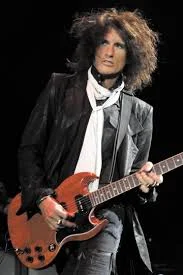
Joe Perry — £2,500 · Premium Tone
The £2,500 · Premium build for Joe Perry's heavy and assertive sound opens with Gibson Les Paul Junior — the tonal foundation that defines the character. Into Marshall DSL100H paired with Xotic Effects XW-1 Wah and Boss BD-2 Blues Driver, the rig comes to ~£2466 and delivers the essential elements. Joe Perry of Aerosmith is the archetype of American hard rock guitar — bluesy feel over technical ability, a thick Les Paul into a cranked Marshall, and the ability to make a two-bar riff memorable for fifty years.
Build Joe Perry's £2,500 · Premium Rig
4 pieces · Total ~$3,132
What guitar does Joe Perry use?
Joe Perry is primarily associated with lp style guitars. At a £2,500 budget, Gibson Les Paul Junior delivers the essential tonal character.
What to Buy
£2,500 · Premium — Complete Gear List
Can't find one? See alternatives:
Why This Rig Works
How Joe Perry's gear choices create the signature tone
Gibson Les Paul Junior
The Gibson Les Paul Junior delivers warm humbucker thickness and singing sustain — the classic foundation for rock and blues tones.
- WahXotic Effects XW-1 Wah
- OverdriveBoss BD-2 Blues Driver
Marshall DSL100H
The Marshall DSL100H converts the guitar signal into audible sound and adds its own tonal character — EQ shaping, natural gain, and the overall feel of the final tone.
The Combined Tone
Joe Perry signature Les Paul or vintage Gibson into a Marshall Super Lead or JMP head at moderate to high gain. The tone is warm and mid-heavy — not trebly. A light overdrive pushes leads above the rhythm. Perry's right-hand technique is loose and swinging, adding natural dynamics the gear alone cannot produce.
Tone Tips
Getting the Sound Right
- The Marshall DSL100H delivers power-tube saturation at master volume 6–7 — this compression and sag is what separates amp-driven tone from pedal tone. Set the master first, then dial back the channel gain to taste rather than the other way around.
- Les Paul bridge pickup for the main Aerosmith crunch — the warm humbucker into a driven Marshall is the entire recipe
- The Marshall runs at medium-to-high gain, not maximum — Perry's sound has headroom that allows pick dynamics to change the amount of breakup
- The basic I-IV-V blues structure underlies almost all of Perry's compositional approach — Aerosmith is a blues band dressed in hard rock clothes
- Learn to do slow, deliberate string bends that arrive at pitch slightly late — Perry's expressiveness comes from taking longer to reach the target note than technically precise players do, which creates a loose, conversational quality missing from players who bend "correctly"
- Study "Dream On" for the acoustic-electric interplay — Perry's acoustic guitar parts on Aerosmith ballads show a different side of his vocabulary: chordal, rhythmic, folk-influenced, and entirely different from the blues-rock lead style
- For the central crunch tone: set the Marshall's gain between 5 and 7 and let the Les Paul bridge humbucker provide the warmth — higher Marshall gain produces a stiffer, more modern sound that is tonally incorrect for classic Aerosmith recordings from 1973–1979
Avoid These Pitfalls
Common Mistakes When Chasing This Tone
- Scooping mids on the Marshall Super Lead with humbuckers — the mid-forward character of British amps with humbuckers is the central sound of classic rock. A mid scoop removes the fundamental voice of the combination
- Placing a tuner or buffered pedal before the fuzz pedal — most fuzz circuits (especially germanium ones) are sensitive to the impedance of the signal feeding them. A buffered pedal before the fuzz changes how the guitar volume knob responds. Run fuzz first in the chain
- Setting gain too high on the overdrive pedal — most overdrive pedals are most useful at gain settings of 2-5, where they add character without dominating the tone. High gain settings on an OD pedal become a distortion, not an overdrive.
- Leaving the wah in a fixed position (cocked) between uses — a cocked wah acts as a midrange filter and changes the tone. If not using the wah expressively, take it out of the chain.
- Ignoring the guitar volume knob — rolling back to 6-7 is your rhythm setting; 10 is for leads. Most players leave it at 10 and miss the entire dynamic vocabulary.
Budget Alternatives
Same Tone, Different Budget
FAQ
Joe Perry Tone — Common Questions
Joe Perry is primarily associated with lp style guitars. At a £2,500 budget, Gibson Les Paul Junior delivers the essential tonal character.
Joe Perry's amp is british crunch voiced — the amp running hot, providing natural tube saturation. At the £2,500 level, Marshall DSL100H is the closest match.
The £2,500 tier uses Joe Perry's actual gear choices or direct equivalents. Total: £2,466. The tonal step up from £1,000 is real but diminishing — worth it for regular performers and studio work.
Joe Perry's essential pedals include Overdrive, Wah. At the £2,500 tier: Xotic Effects XW-1 Wah, Boss BD-2 Blues Driver. Overdrive is the most important pedal — the others add nuance.
Joe Perry's tone is defined by classic-rock, les-paul-driven, blues-rooted. The combination of lp guitar and british crunch amp creates a sound that is immediately recognisable.
Joe Perry's gain approach is amp-driven — natural tube saturation from pushing the amp hard, not from distortion pedals. At £2,500, this is replicated through Marshall DSL100H paired with Xotic Effects XW-1 Wah.
Joe Perry — £2,500 · Premium Complete Rig
~£2466Guitar
Gibson Les Paul Junior
Wah
Xotic Effects XW-1 Wah
Overdrive
Boss BD-2 Blues Driver
Amp
Marshall DSL100H
Tone Match
Closest Real-World Tone Match
If you like Joe Perry's tone, these players use a similar approach — same gear philosophy, comparable sound characteristics.
Related Tones