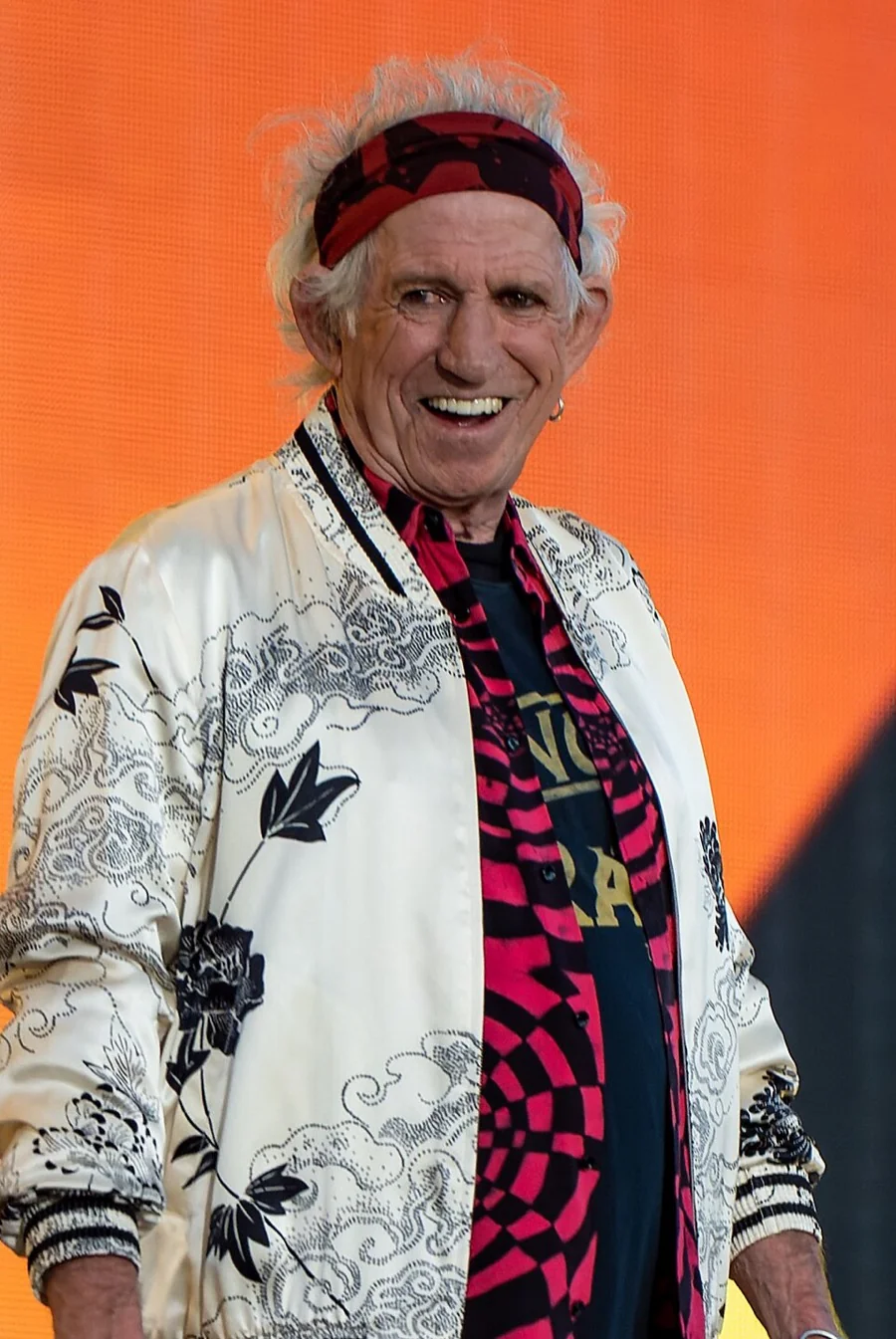
Keith Richards — £2,500 · Premium Tone
Keith Richards built the Rolling Stones' sound around open G tuning, a 5-string Telecaster and an amp pushed just to the edge of breakup. His riff-centric rhythm playing made the groove the star — the tone is raw, warm and deliberately unpolished. Replicating that powerful and driving sound at the £2,500 · Premium mark means Fender Player Telecaster into Fender '65 Twin Reverb. The effects — Boss GE-7 Graphic EQ, Boss Blues Driver BD-2 — add the finishing texture. This build totals ~£2496 and captures the core character — a premium build targeting the most accurate recreation possible.
Build Keith Richards's £2,500 · Premium Rig
4 pieces · Total ~$3,170
What guitar does Keith Richards use?
Keith Richards is primarily associated with tele style guitars. At a £2,500 budget, Fender Player Telecaster delivers the essential tonal character.
What to Buy
£2,500 · Premium — Complete Gear List
Why This Rig Works
How Keith Richards's gear choices create the signature tone
Fender Player Telecaster
Where the Squier approximates the Tele voice, the Player Telecaster *is* the Tele voice. Noticeably more articulate and dynamic, with the bridge pickup delivering the iconic snap and cut that defines the instrument.
- EQBoss GE-7 Graphic EQ
- OverdriveBoss Blues Driver BD-2
Fender '65 Twin Reverb
The Fender '65 Twin Reverb converts the guitar signal into audible sound and adds its own tonal character — EQ shaping, natural gain, and the overall feel of the final tone.
The Combined Tone
Open G tuned Fender Telecaster "Micawber" (low E string removed, 5 strings) into a small Fender or Tweed-style amp at the edge of natural saturation. No pedals on most recordings — the amp's breakup does the work. Warm, slightly compressed and honky with natural bite from the Tele bridge pickup.
Tone Tips
Getting the Sound Right
- The Fender '65 Twin Reverb stays cleaner longer than a Marshall-style amp — push it with a low-gain overdrive (gain at 2–3, level up) rather than cranking its own gain. Set treble at 6, bass at 4, and let the guitar's volume knob handle the dynamics.
- Open G tuning: remove the low E string entirely — GDGBD from low to high
- Bar the 5th fret with your index finger in open G to play a C chord, open strings ring freely
- Study "Jumpin' Jack Flash" and "Start Me Up" for definitive open-G riffing
- Open G tuning (DGDGBD) with the low E string removed gives the 'Exile' and 'Let It Bleed' sound — the five-string open G allows the characteristic riff shapes of 'Brown Sugar,' 'Honky Tonk Women' and 'Start Me Up.' The root note pattern is built around the open chord, not barre shapes
- The Telecaster bridge pickup is the foundation — Richards almost exclusively uses the bridge pickup. The brightness and twang cut through the band even when the amp is set clean, and when the amp breaks up, the bridge pickup adds an extra edge that the neck pickup cannot provide
- Practice the rolling rhythm technique — Richards plays rhythm guitar with a loose, slightly delayed strumming feel that sits behind the beat. The right hand moves with a rocking motion that emphasises the downstroke but allows the upstroke to ring naturally. Listen to 'Gimme Shelter' to hear the technique
Avoid These Pitfalls
Common Mistakes When Chasing This Tone
- Setting the TS9 gain above 5 into a clean amp — at high gain settings the TS becomes a distortion pedal that colours the tone heavily. Below 4, it's a boost and focus pedal. Single coils into a TS above 5 gets nasal and harsh
- Ignoring the neck pickup position as a usable tone — the neck pickup on a Tele produces a warm, jazz-like sound completely unlike the bridge. It is not an afterthought.
- Adding compression to fix flat clean tone — a flat, lifeless clean tone usually means the amp gain or presence is wrong, not that compression is needed. Compression on a flat tone just makes it louder.
- Choosing a pick that is too heavy — thin to medium picks give edge noise and articulation that heavier picks smooth away. That edge is part of the sound.
- Setting amp gain at 5 or higher — blues tone lives at the edge of breakup (gain 3-4), not in full saturation. High gain compresses away all the dynamic feel.
Budget Alternatives
Same Tone, Different Budget
FAQ
Keith Richards Tone — Common Questions
Keith Richards is primarily associated with tele style guitars. At a £2,500 budget, Fender Player Telecaster delivers the essential tonal character.
Keith Richards's amp is clean fender voiced — clean to moderate gain. At the £2,500 level, Fender '65 Twin Reverb is the closest match.
The £2,500 tier uses Keith Richards's actual gear choices or direct equivalents. Total: £2,496. The tonal step up from £1,000 is real but diminishing — worth it for regular performers and studio work.
Keith Richards's tone is defined by open-g-tuning, rhythm-focused, raw. The combination of tele guitar and clean fender amp creates a sound that is immediately recognisable.
Keith Richards's gain approach is very clean — minimal distortion even at volume. The tone comes from the amp's natural warmth. At £2,500, this is replicated through Fender '65 Twin Reverb paired with Boss GE-7 Graphic EQ.
Keith Richards — £2,500 · Premium Complete Rig
~£2496Guitar
Fender Player Telecaster
EQ
Boss GE-7 Graphic EQ
Overdrive
Boss Blues Driver BD-2
Amp
Fender '65 Twin Reverb
Tone Match
Closest Real-World Tone Match
If you like Keith Richards's tone, these players use a similar approach — same gear philosophy, comparable sound characteristics.
Related Tones