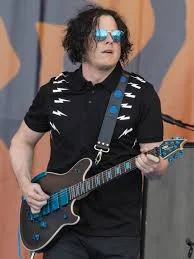
Jack White — £2,500 · Premium Tone
The £2,500 · Premium build for Jack White's raw and emotionally charged sound opens with Gibson Les Paul Junior — the tonal foundation that defines the character. Into Marshall DSL100H paired with Wampler Dracarys and Electro-Harmonix Big Muff Pi, the rig comes to ~£2486 and delivers the essential elements. Jack White built the White Stripes' entire sound from deliberately limited, cheap equipment. His raw, confrontational tone proved that restriction creates creativity — a beaten-up Airline guitar through a detuned Silvertone amp, with an octave fuzz pushing the frequency extremes.
Build Jack White's £2,500 · Premium Rig
4 pieces · Total ~$3,157
What guitar does Jack White use?
Jack White is primarily associated with lp style guitars. At a £2,500 budget, Gibson Les Paul Junior delivers the essential tonal character.
What to Buy
£2,500 · Premium — Complete Gear List
Can't find one? See alternatives:
Why This Rig Works
How Jack White's gear choices create the signature tone
Gibson Les Paul Junior
The Gibson Les Paul Junior delivers warm humbucker thickness and singing sustain — the classic foundation for rock and blues tones.
- DistortionWampler Dracarys
- Lead Fuzzenormous four-transistor sustain wall
Marshall DSL100H
The Marshall DSL100H converts the guitar signal into audible sound and adds its own tonal character — EQ shaping, natural gain, and the overall feel of the final tone.
The Combined Tone
Airline or Kay archtop through a Silvertone or Fender Super-Sonic, often with a DigiTech Whammy set to an octave above and an EHX Big Muff for fuzz sustain. The detuned strings and overdriven amp interact chaotically — the "wrong" sounds are intentional. White often plays in open A tuning.
Tone Tips
Getting the Sound Right
- The Marshall DSL100H delivers power-tube saturation at master volume 6–7 — this compression and sag is what separates amp-driven tone from pedal tone. Set the master first, then dial back the channel gain to taste rather than the other way around.
- Restriction is the creative tool — choose ONE amp and ONE guitar and commit
- Open A tuning (EAEAC#E) is White's standard — power chords become one-finger barres
- Study "Seven Nation Army" (open A), "Ball and Biscuit" (slide blues) for the full range
- The minimalist ethos is not poverty of ideas — White deliberately removed options to force creative solutions; understanding this means the "restricted" tone is an artistic choice, not a compromise, and copying his approach requires committing to the same discipline of limitation
- Open A tuning requires re-learning chord shapes from scratch — every standard chord shape becomes a different chord in open A. Spend time building a vocabulary of open A chord voicings (major, minor, seventh, suspended) before attempting White Stripes chord progressions
- Amp feedback positioning is a learned skill — moving the guitar closer to or further from the amp, angling it at different positions, controls the pitch and intensity of the feedback. Practice controlling where feedback sustains rather than letting it be random noise
Avoid These Pitfalls
Common Mistakes When Chasing This Tone
- Scooping mids on the Marshall DSL with humbuckers — the mid-forward character of British amps with humbuckers is the central sound of classic rock. A mid scoop removes the fundamental voice of the combination
- Placing a tuner or buffered pedal before the Big Muff — most fuzz circuits (especially germanium ones) are sensitive to the impedance of the signal feeding them. A buffered pedal before the fuzz changes how the guitar volume knob responds. Run fuzz first in the chain
- Expecting consistent performance from a germanium fuzz in cold conditions — germanium transistors are temperature sensitive. The bias point shifts significantly in cold weather.
- Adding a compressor before the amp "for more tone" — it kills the natural attack variation that defines the style. Blues tone is uncompressed and dynamic.
- Playing at bedroom volume and expecting full blues tone — tube amps need to push air to bloom correctly. A cold amp at low volume sounds flat and lifeless.
Budget Alternatives
Same Tone, Different Budget
FAQ
Jack White Tone — Common Questions
Jack White is primarily associated with lp style guitars. At a £2,500 budget, Gibson Les Paul Junior delivers the essential tonal character.
Jack White's amp is british crunch voiced — clean to moderate gain. At the £2,500 level, Marshall DSL100H is the closest match.
The £2,500 tier uses Jack White's actual gear choices or direct equivalents. Total: £2,486. The tonal step up from £1,000 is real but diminishing — worth it for regular performers and studio work.
Jack White's essential pedals include Distortion, Fuzz. At the £2,500 tier: Wampler Dracarys, Electro-Harmonix Big Muff Pi. Distortion is the most important pedal — the others add nuance.
Jack White's tone is defined by raw, primal, lo-fi. The combination of lp guitar and british crunch amp creates a sound that is immediately recognisable.
Jack White's gain approach is pedal-driven — distortion pedals into a relatively clean amp. The pedal defines the distortion character. At £2,500, this is replicated through Marshall DSL100H paired with Wampler Dracarys.
Jack White — £2,500 · Premium Complete Rig
~£2486Guitar
Gibson Les Paul Junior
Distortion
Wampler Dracarys
Fuzz
Electro-Harmonix Big Muff Pi
Amp
Marshall DSL100H
Tone Match
Closest Real-World Tone Match
If you like Jack White's tone, these players use a similar approach — same gear philosophy, comparable sound characteristics.
Related Tones