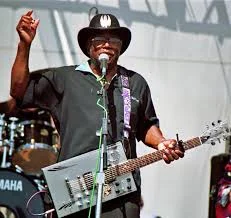
Bo Diddley — £2,500 · Premium Tone
At £2,500 · Premium, Bo Diddley's energetic and raw tone is more accessible than most players expect. Rooted in the dawn of rock and roll, their sound — Bo Diddley invented the syncopated rhythm pattern that bears his name — the "Bo Diddley beat" (the clave rhythm from Afro-Cuban music) became the rhythmic DNA of rock and roll, inspiring Buddy Holly, the Rolling Stones and The Clash. — starts with Gretsch G5420T Electromatic and Fender Blues DeVille, totalling ~£2496. That combination captures the defining characteristics without the premium price tag.
Build Bo Diddley's £2,500 · Premium Rig
4 pieces · Total ~$3,170
What guitar does Bo Diddley use?
Bo Diddley is primarily associated with hollow style guitars. At a £2,500 budget, Gretsch G5420T Electromatic delivers the essential tonal character.
What to Buy
£2,500 · Premium — Complete Gear List
Can't find one? See alternatives:
Why This Rig Works
How Bo Diddley's gear choices create the signature tone
Gretsch G5420T Electromatic
The Gretsch G5420T Electromatic provides the tonal foundation for the entire rig — its character shapes everything that follows.
- CompressionKeeley Compressor Plus
- ReverbStrymon Flint
Fender Blues DeVille
The Fender Blues DeVille converts the guitar signal into audible sound and adds its own tonal character — EQ shaping, natural gain, and the overall feel of the final tone.
The Combined Tone
Custom rectangular guitar (Bo Diddley shape) or Gretsch alternative into a Fender amp with vibrato/tremolo engaged. The tone is bright and trebly with the tremolo effect creating the characteristic pulsing, dancing quality. The rhythm is everything — the note content is secondary to the relentless syncopated pattern.
Tone Tips
Getting the Sound Right
- The Fender Blues DeVille stays cleaner longer than a Marshall-style amp — push it with a low-gain overdrive (gain at 2–3, level up) rather than cranking its own gain. Set treble at 6, bass at 4, and let the guitar's volume knob handle the dynamics.
- Learn the clave rhythm — the "Bo Diddley beat" is a 3-2 clave: three strokes (1, the "and" of 2, and 4) followed by two strokes (the "and" of 3 and the "and" of 4)
- The tremolo effect is always on — the pulsing amplitude modulation of the amp vibrato is part of the rhythmic character. Set it to match the tempo of the song
- This is fundamentally African-American folk music transformed by electricity — understanding the cultural and rhythmic lineage deepens the interpretation
- The Bo Diddley beat is a 3+3+2 syncopated pattern rooted in Cuban clave rhythm — it is not a simple shuffle. Practice the pattern at 100bpm against a straight metronome click until the syncopation is physically automatic before attempting it at full tempo
- The rectangular Gretsch guitar is not what creates the sound — the defining elements are the built-in tremolo unit and the maracas player in the band. A standard guitar with a tremolo pedal set to a slow, deep vibrato approximates the effect
- Chess Records added significant reverb and tremolo to the studio recordings — Bo Diddley's live tone was much drier. To replicate the studio sound, use a vibrato pedal (not chorus modulation) and a medium spring reverb set to a 1960s room ambience
Avoid These Pitfalls
Common Mistakes When Chasing This Tone
- Using high-gain distortion — hollowbody guitars are designed for clean and light-drive use. High gain causes uncontrollable acoustic resonance that the pickup amplifies as noise.
- Playing a vintage-voiced amp at low volume — the warmth and bloom of these amps comes from the power tubes working. At low volume the tone is flat and uninspiring compared to the amp's potential.
- Playing at bedroom volume expecting amp-driven tone — the power-tube saturation that defines this gain structure only occurs when the amp is working at substantial output. This is not replicable at low volumes.
- Choosing a pick that is too heavy — thin to medium picks give edge noise and articulation that heavier picks smooth away. That edge is part of the sound.
- Setting amp gain at 5 or higher — blues tone lives at the edge of breakup (gain 3-4), not in full saturation. High gain compresses away all the dynamic feel.
Budget Alternatives
Same Tone, Different Budget
FAQ
Bo Diddley Tone — Common Questions
Bo Diddley is primarily associated with hollow style guitars. At a £2,500 budget, Gretsch G5420T Electromatic delivers the essential tonal character.
Bo Diddley's amp is vintage blues voiced — the amp running hot, providing natural tube saturation. At the £2,500 level, Fender Blues DeVille is the closest match.
The £2,500 tier uses Bo Diddley's actual gear choices or direct equivalents. Total: £2,496. The tonal step up from £1,000 is real but diminishing — worth it for regular performers and studio work.
Bo Diddley's essential pedals include Tremolo. At the £2,500 tier: Keeley Compressor Plus, Strymon Flint. Tremolo is the most important pedal — the others add nuance.
Bo Diddley's tone is defined by bo-diddley-beat, tremolo-heavy, rock-n-roll. The combination of hollow guitar and vintage blues amp creates a sound that is immediately recognisable.
Bo Diddley's gain approach is amp-driven — natural tube saturation from pushing the amp hard, not from distortion pedals. At £2,500, this is replicated through Fender Blues DeVille paired with Keeley Compressor Plus.
Bo Diddley — £2,500 · Premium Complete Rig
~£2496Guitar
Gretsch G5420T Electromatic
Compression
Keeley Compressor Plus
Amp
Fender Blues DeVille
Reverb
Strymon Flint
Tone Match
Closest Real-World Tone Match
If you like Bo Diddley's tone, these players use a similar approach — same gear philosophy, comparable sound characteristics.
Related Tones