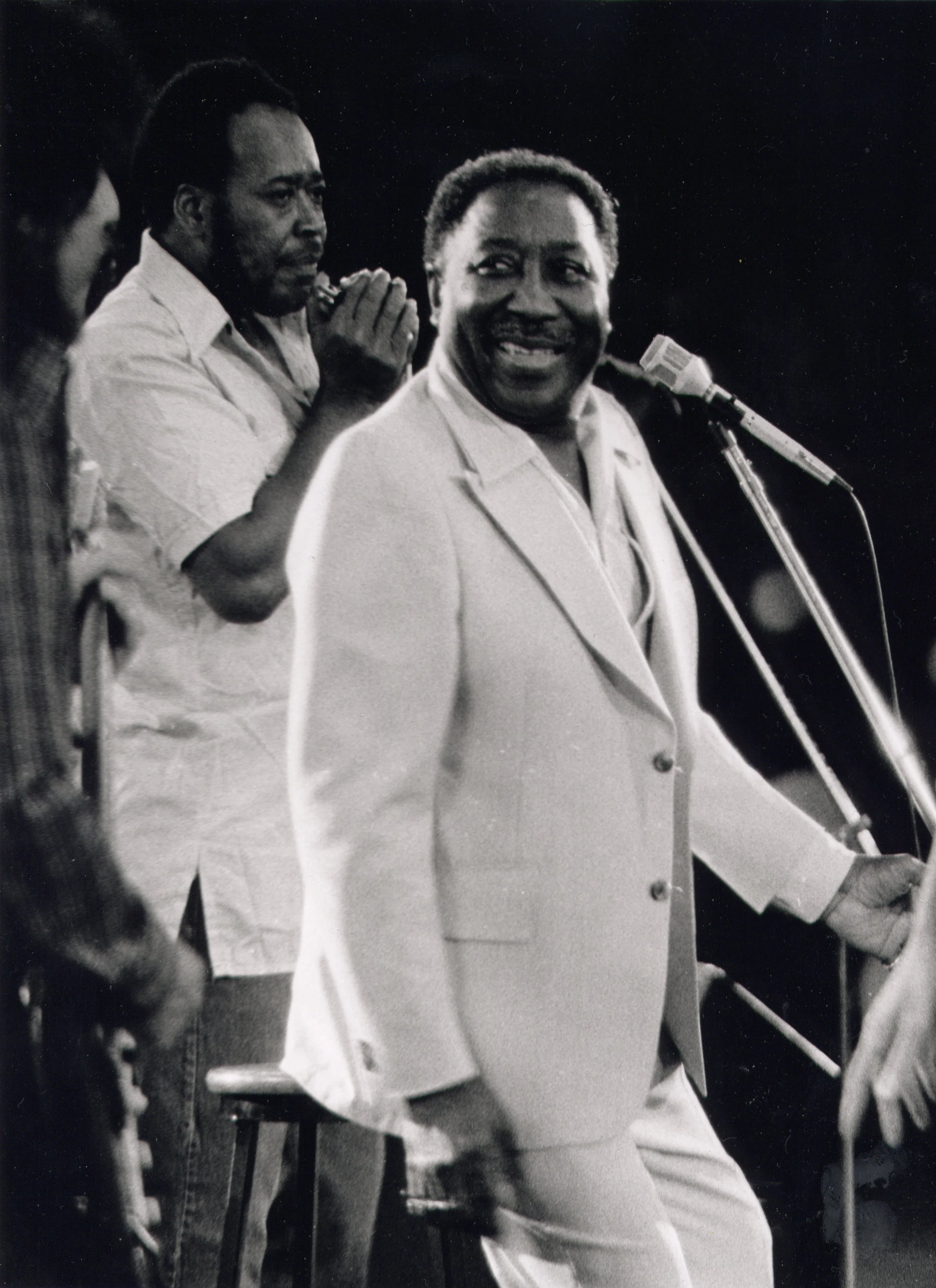
Muddy Waters — £2,500 · Premium Tone
Muddy Waters's soulful and deeply expressive tone took shape during the birth of amplified guitar and remains one of the most sought-after sounds on guitar. Muddy Waters invented electric Chicago blues — amplifying the Delta slide tradition and creating the vocabulary that became rock and roll. His slide playing on a Les Paul and his thick, swampy rhythm playing are the blueprint for everything that followed. At the £2,500 · Premium mark — a premium build targeting the most accurate recreation possible — the build centres on a Fender Player Telecaster running through a Fender Blues DeVille, with Strymon BigSky completing the signal chain, totalling ~£2417.
Build Muddy Waters's £2,500 · Premium Rig
3 pieces · Total ~$3,070
What guitar does Muddy Waters use?
Muddy Waters is primarily associated with tele style guitars. At a £2,500 budget, Fender Player Telecaster delivers the essential tonal character.
What to Buy
£2,500 · Premium — Complete Gear List
Can't find one? See alternatives:
Why This Rig Works
How Muddy Waters's gear choices create the signature tone
Fender Player Telecaster
Where the Squier approximates the Tele voice, the Player Telecaster *is* the Tele voice. Noticeably more articulate and dynamic, with the bridge pickup delivering the iconic snap and cut that defines the instrument.
Strymon BigSky
Strymon BigSky — reverb coloring added to the signal.
Fender Blues DeVille
The Fender Blues DeVille converts the guitar signal into audible sound and adds its own tonal character — EQ shaping, natural gain, and the overall feel of the final tone.
The Combined Tone
Gibson Les Paul Standard into a small Fender amplifier (Champ or Deluxe) run loud, with the amp naturally breaking up at high volume. The tone is warm, thick and saturated but never harsh. A glass or metal slide plays the melodic lines; his fingers handle the driving I-IV-V rhythm underneath.
Tone Tips
Getting the Sound Right
- The Fender Blues DeVille stays cleaner longer than a Marshall-style amp — push it with a low-gain overdrive (gain at 2–3, level up) rather than cranking its own gain. Set treble at 6, bass at 4, and let the guitar's volume knob handle the dynamics.
- Slide in standard tuning — Waters did not always use open tuning. Standard tuning slide requires targeting specific string frets that correspond to chord tones
- Push the amp to natural breakup — the tone should be slightly overdriven, not clean. Small tube amp at high volume produces this character
- The vocal phrasing mirrors the guitar — in Chicago blues the guitar responds to the vocal like a second voice. Listen to how the guitar fills the spaces after the lyric
- Standard-tuning slide targets the same notes as open-tuning but requires knowing which fret on each string corresponds to the required chord tone — practise finding the root, 3rd and 5th of each chord on every string independently before attempting slide riffs, as the fret-finding process must be automatic during performance
- The Chicago shuffle rhythm pattern is built on alternating bass notes on the low strings plus a muted "chunk" on the upper strings on the 2nd and 4th beats — practise this two-bar cell at 80bpm with a metronome until it is completely stable before attempting it at performance tempo, as the two-hand independence required is demanding
- Waters' contribution was taking the Delta acoustic slide tradition (Robert Johnson, Son House) and electrifying it — study "Rollin' Stone" (1950) and "Rollin' and Tumblin'" as the bridge between Delta acoustic and Chicago electric styles, as these early recordings demonstrate how amplification changed the dynamics and attack of the slide technique
Avoid These Pitfalls
Common Mistakes When Chasing This Tone
- Using a heavy pick with chicken-picking technique — hybrid picking (pick and fingers) on a Tele requires the pick to be thin enough not to interfere with the finger attack.
- Using a distortion pedal instead of pushing the amp — vintage-voiced amps create better overdrive by being pushed hard than by a pedal circuit. Let the amp do the work.
- Using a distortion pedal to replace amp saturation — amp-driven tone has a specific feel (dynamics, touch sensitivity, natural compression) that pedal distortion cannot replicate. The source of gain matters.
- Using a large amp at low volume — the character of this style comes from a small amp working hard. A 100W amp at 2 doesn't give the same result as a 15W amp at 8.
- Adding reverb heavily — early Chicago electric blues was relatively dry. Excessive reverb washes out the rawness that defines the genre.
Budget Alternatives
Same Tone, Different Budget
FAQ
Muddy Waters Tone — Common Questions
Muddy Waters is primarily associated with tele style guitars. At a £2,500 budget, Fender Player Telecaster delivers the essential tonal character.
Muddy Waters's amp is vintage blues voiced — the amp running hot, providing natural tube saturation. At the £2,500 level, Fender Blues DeVille is the closest match.
The £2,500 tier uses Muddy Waters's actual gear choices or direct equivalents. Total: £2,417. The tonal step up from £1,000 is real but diminishing — worth it for regular performers and studio work.
Muddy Waters's tone is defined by delta-blues, slide, chicago-electric. The combination of tele guitar and vintage blues amp creates a sound that is immediately recognisable.
Muddy Waters's gain approach is amp-driven — natural tube saturation from pushing the amp hard, not from distortion pedals. At £2,500, this is replicated through Fender Blues DeVille paired with Strymon BigSky.
Muddy Waters — £2,500 · Premium Complete Rig
~£2417Guitar
Fender Player Telecaster
Amp
Fender Blues DeVille
Reverb
Strymon BigSky
Tone Match
Closest Real-World Tone Match
If you like Muddy Waters's tone, these players use a similar approach — same gear philosophy, comparable sound characteristics.
Related Tones