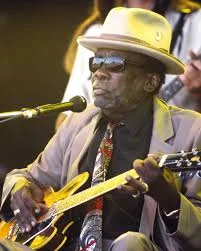
John Lee Hooker — £2,500 · Premium Tone
At £2,500 · Premium, John Lee Hooker's soulful and deeply expressive tone is more accessible than most players expect. Rooted in the birth of amplified guitar, their sound — John Lee Hooker invented the boogie — his hypnotic, one-chord drone style, foot-stomping rhythm and heavily amplified electric guitar tone created a primitive intensity that bypassed technique entirely and went straight for the gut. — starts with Epiphone ES-339 and Fender Blues DeVille, totalling ~£2317. That combination captures the defining characteristics without the premium price tag.
Build John Lee Hooker's £2,500 · Premium Rig
3 pieces · Total ~$2,943
What guitar does John Lee Hooker use?
John Lee Hooker is primarily associated with semi hollow style guitars. At a £2,500 budget, Epiphone ES-339 delivers the essential tonal character.
What to Buy
£2,500 · Premium — Complete Gear List
Can't find one? See alternatives:
Why This Rig Works
How John Lee Hooker's gear choices create the signature tone
Epiphone ES-339
The Epiphone ES-339 provides the tonal foundation for the entire rig — its character shapes everything that follows.
Strymon BigSky
Strymon BigSky — reverb coloring added to the signal.
Fender Blues DeVille
The Fender Blues DeVille converts the guitar signal into audible sound and adds its own tonal character — EQ shaping, natural gain, and the overall feel of the final tone.
The Combined Tone
Gibson ES-335 or similar semi-hollow into a small Fender amp, slightly overdriven. Often with no band at all — just guitar, voice and the stomp of his foot. The tone is raw and mid-heavy. The boogie pattern is a single low-register riff repeated hypnotically, building tension through repetition rather than harmonic movement.
Tone Tips
Getting the Sound Right
- The Fender Blues DeVille stays cleaner longer than a Marshall-style amp — push it with a low-gain overdrive (gain at 2–3, level up) rather than cranking its own gain. Set treble at 6, bass at 4, and let the guitar's volume knob handle the dynamics.
- The boogie pattern is everything — a single repeated figure on the low strings, usually I chord only for extended periods. Resist the urge to change chords
- The foot stomp provides the rhythm — Hooker would stomp his foot as he played, giving a primal rhythmic drive independent of any drummer
- The guitar and voice are one voice — Hooker's guitar playing is an extension of his vocal approach. The phrasing, timing and emotional intensity match the voice identically
- The boogie pattern is not in strict time — Hooker's playing deliberately fluctuates in tempo to create a hypnotic, swaying feel. Do not try to lock this to a click track. The tempo undulation IS the feel, not a technical imprecision to be corrected
- Single-chord improvisations hovering on the I chord for extended periods are a primary tool — Hooker's most powerful moments come from staying on one harmonic centre and building intensity through rhythm and note choices alone rather than following harmonic movement
- The direct-to-small-amp signal chain with no pedals was the entire rig — the raw, slightly overdriven tone on Chess Records is the result of amp breakup from a loud guitar signal. Replicate with a small 10-15W tweed-style amp pushed to its natural breakup point, no overdrive pedals
Avoid These Pitfalls
Common Mistakes When Chasing This Tone
- Using the same amp EQ as for a solid-body guitar — semi-hollow guitars have natural warmth that makes amp bass and treble settings behave differently. Start flat and adjust from there.
- Playing a vintage-voiced amp at low volume — the warmth and bloom of these amps comes from the power tubes working. At low volume the tone is flat and uninspiring compared to the amp's potential.
- Playing at bedroom volume expecting amp-driven tone — the power-tube saturation that defines this gain structure only occurs when the amp is working at substantial output. This is not replicable at low volumes.
- Setting amp gain at 5 or higher — blues tone lives at the edge of breakup (gain 3-4), not in full saturation. High gain compresses away all the dynamic feel.
- Ignoring the guitar volume knob — rolling back to 6-7 is your rhythm setting; 10 is for leads. Most players leave it at 10 and miss the entire dynamic vocabulary.
Budget Alternatives
Same Tone, Different Budget
FAQ
John Lee Hooker Tone — Common Questions
John Lee Hooker is primarily associated with semi hollow style guitars. At a £2,500 budget, Epiphone ES-339 delivers the essential tonal character.
John Lee Hooker's amp is vintage blues voiced — the amp running hot, providing natural tube saturation. At the £2,500 level, Fender Blues DeVille is the closest match.
The £2,500 tier uses John Lee Hooker's actual gear choices or direct equivalents. Total: £2,317. The tonal step up from £1,000 is real but diminishing — worth it for regular performers and studio work.
John Lee Hooker's tone is defined by boogie-rhythm, hypnotic, minimal-effects. The combination of semi hollow guitar and vintage blues amp creates a sound that is immediately recognisable.
John Lee Hooker's gain approach is amp-driven — natural tube saturation from pushing the amp hard, not from distortion pedals. At £2,500, this is replicated through Fender Blues DeVille paired with Strymon BigSky.
John Lee Hooker — £2,500 · Premium Complete Rig
~£2317Guitar
Epiphone ES-339
Amp
Fender Blues DeVille
Reverb
Strymon BigSky
Tone Match
Closest Real-World Tone Match
If you like John Lee Hooker's tone, these players use a similar approach — same gear philosophy, comparable sound characteristics.
Related Tones