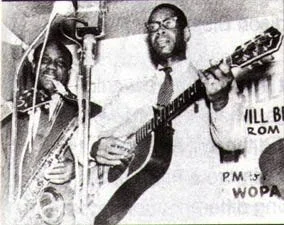
Elmore James — £2,500 · Premium Tone
The £2,500 · Premium build for Elmore James's amplified and authoritative sound opens with Epiphone ES-339 — the tonal foundation that defines the character. Into Fender Blues DeVille paired with King Tone Duellist OD and Strymon Flint, the rig comes to ~£2446 and delivers the essential elements. Elmore James electrified the Delta slide tradition, plugging a Dobro resonator into a small tube amp and unleashing the riff from "Dust My Broom" that echoes through fifty years of rock and roll. His aggressive, amplified slide defined Chicago electric blues.
Build Elmore James's £2,500 · Premium Rig
4 pieces · Total ~$3,106
What guitar does Elmore use?
Elmore is primarily associated with semi hollow style guitars. At a £2,500 budget, Epiphone ES-339 delivers the essential tonal character.
What to Buy
£2,500 · Premium — Complete Gear List
Can't find one? See alternatives:
Why This Rig Works
How Elmore James's gear choices create the signature tone
Epiphone ES-339
The Epiphone ES-339 provides the tonal foundation for the entire rig — its character shapes everything that follows.
- OverdriveKing Tone Duellist OD
- ReverbStrymon Flint
Fender Blues DeVille
The Fender Blues DeVille converts the guitar signal into audible sound and adds its own tonal character — EQ shaping, natural gain, and the overall feel of the final tone.
The Combined Tone
Elmore James's tone is driven and electric — a resonator or semi-hollow guitar with strings tuned to open D, running through a small tweed amp pushed hard into breakup. The slide is applied aggressively, with the amp providing natural compression and harmonic overtones. The riff is always the point: the three-note "Dust My Broom" pattern descends from a high bend and is struck with force. No clean headroom, no reverb tank — just the amp on the edge of its envelope and a lot of attack from the pick.
Tone Tips
Getting the Sound Right
- The Fender Blues DeVille stays cleaner longer than a Marshall-style amp — push it with a low-gain overdrive (gain at 2–3, level up) rather than cranking its own gain. Set treble at 6, bass at 4, and let the guitar's volume knob handle the dynamics.
- Tune to open D for the "Dust My Broom" riff
- Play the slide hard and with attitude — Elmore was not subtle
- The Valco or small National-style amp with tube compression at high volume created the saturated, warm overdrive — replicate with a small tweed-style amp pushed hard, or an overdrive pedal set for warm, compressed saturation rather than the bright, cutting distortion of a modern circuit
- The slide creates full chords as well as single notes — barring all six strings at one position with the slide produces full chord voicings that move as a unit. Practice the I-IV-V progression in open D using full slide barres before attempting single-string melody work over the same changes
- Electric amplification of acoustic Delta blues vocabulary is the historical synthesis — James took Robert Johnson's acoustic approach and added volume and electric sustain. Learning his phrases acoustically first reveals the Delta origin; amplified, the sustain and drive add the Chicago electric character
- The three-chord blues form (I-IV-V-I) in open D is the structural framework of every Elmore James song — variations occur in timing and turnaround details, not in the harmonic progression. Once the three positions are physically automatic, all improvisation within each chord becomes the entire creative task
Avoid These Pitfalls
Common Mistakes When Chasing This Tone
- Using the same amp EQ as for a solid-body guitar — semi-hollow guitars have natural warmth that makes amp bass and treble settings behave differently. Start flat and adjust from there.
- Playing a vintage-voiced amp at low volume — the warmth and bloom of these amps comes from the power tubes working. At low volume the tone is flat and uninspiring compared to the amp's potential.
- Setting gain too high on the overdrive pedal — most overdrive pedals are most useful at gain settings of 2-5, where they add character without dominating the tone. High gain settings on an OD pedal become a distortion, not an overdrive.
- Adding reverb heavily — early Chicago electric blues was relatively dry. Excessive reverb washes out the rawness that defines the genre.
- Using high-output pickups — original Chicago tone used lower-output single coils. High-output pickups hit the amp too hard and compress the dynamic range.
Budget Alternatives
Same Tone, Different Budget
FAQ
Elmore James Tone — Common Questions
Elmore is primarily associated with semi hollow style guitars. At a £2,500 budget, Epiphone ES-339 delivers the essential tonal character.
Elmore's amp is vintage blues voiced — clean to moderate gain. At the £2,500 level, Fender Blues DeVille is the closest match.
The £2,500 tier uses Elmore's actual gear choices or direct equivalents. Total: £2,446. The tonal step up from £1,000 is real but diminishing — worth it for regular performers and studio work.
Elmore's essential pedals include Overdrive, Reverb. At the £2,500 tier: King Tone Duellist OD, Strymon Flint. Overdrive is the most important pedal — the others add nuance.
Elmore's tone is defined by electric-slide, chicago-blues, intense. The combination of semi hollow guitar and vintage blues amp creates a sound that is immediately recognisable.
Elmore's gain approach is pedal-driven — distortion pedals into a relatively clean amp. The pedal defines the distortion character. At £2,500, this is replicated through Fender Blues DeVille paired with King Tone Duellist OD.
Elmore James — £2,500 · Premium Complete Rig
~£2446Guitar
Epiphone ES-339
Overdrive
King Tone Duellist OD
Amp
Fender Blues DeVille
Reverb
Strymon Flint
Tone Match
Closest Real-World Tone Match
If you like Elmore James's tone, these players use a similar approach — same gear philosophy, comparable sound characteristics.
Related Tones