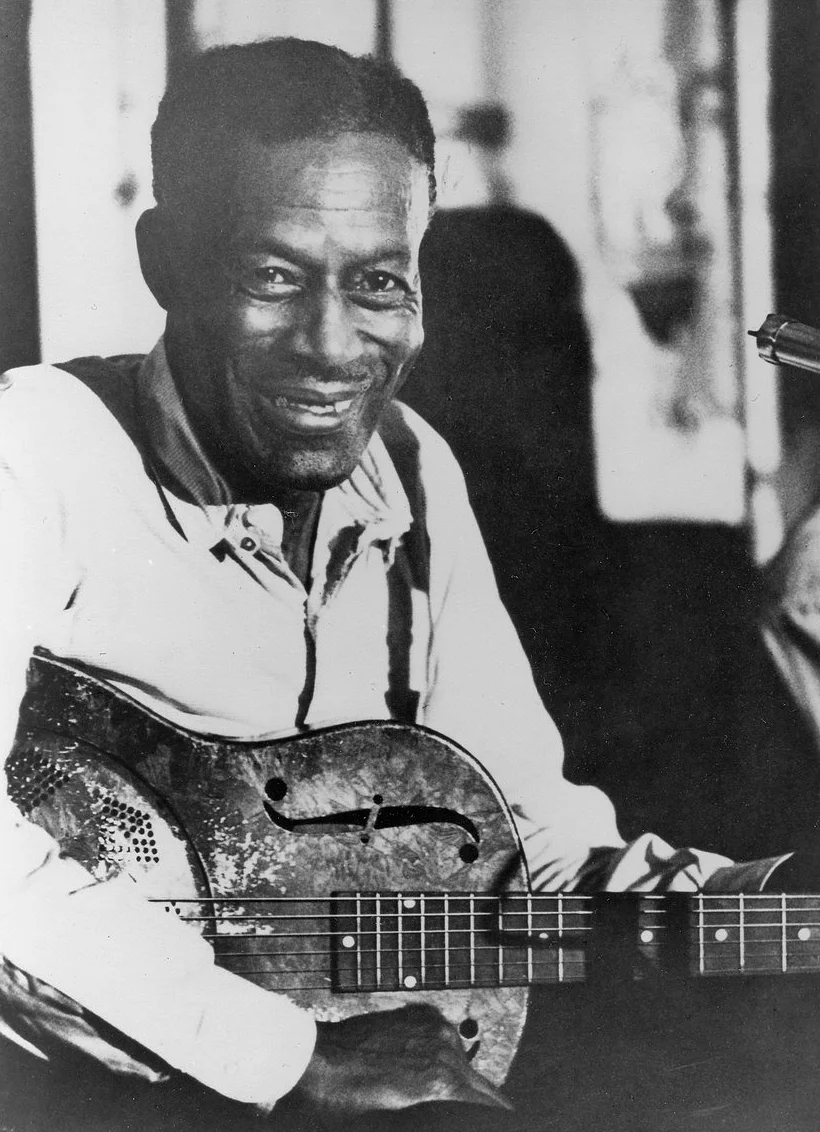
Son House — £2,500 · Premium Tone
At £2,500 · Premium, Son House's primal and resonant tone is more accessible than most players expect. Rooted in the early electric guitar era, their sound — Son House is the raw, primal voice of Delta Blues — a preacher-guitarist whose bottleneck slide playing directly shaped Robert Johnson and Muddy Waters, and whose influence flows through every heavy blues-rock band from Cream to Jack White. — starts with Epiphone ES-175 and Fender Blues DeVille, totalling ~£2467. That combination captures the defining characteristics without the premium price tag.
Build Son House's £2,500 · Premium Rig
3 pieces · Total ~$3,133
What guitar does Son House use?
Son House is primarily associated with hollow style guitars. At a £2,500 budget, Epiphone ES-175 delivers the essential tonal character.
What to Buy
£2,500 · Premium — Complete Gear List
Can't find one? See alternatives:
Why This Rig Works
How Son House's gear choices create the signature tone
Epiphone ES-175
The Epiphone ES-175 provides the tonal foundation for the entire rig — its character shapes everything that follows.
Strymon BigSky
Strymon BigSky — reverb coloring added to the signal.
Fender Blues DeVille
The Fender Blues DeVille converts the guitar signal into audible sound and adds its own tonal character — EQ shaping, natural gain, and the overall feel of the final tone.
The Combined Tone
Son House's tone is bone-dry acoustic resonance: a National steel-body resonator guitar or cheap Stella acoustic, bottleneck slide on the little finger, strings tuned to open G or open A. The sound is deliberate and percussive — slide phrases struck hard with bare fingers, bass strings thumped rhythmically. There is no amplification, no effects, no reverb. The power comes from the contrast between loud percussive thumb-slapped bass notes and singing slide phrases on the treble strings. A heavy-gauge string set helps maintain tension in open tuning and provides the resistance that makes the slide sing.
Tone Tips
Getting the Sound Right
- The Fender Blues DeVille stays cleaner longer than a Marshall-style amp — push it with a low-gain overdrive (gain at 2–3, level up) rather than cranking its own gain. Set treble at 6, bass at 4, and let the guitar's volume knob handle the dynamics.
- Tune to open G — press the slide straight across the fret to play chords
- Use a heavy slide (glass or thick metal) for more mass and sustain
- The vocal melody and the guitar melody are in call-and-response conversation — House sang a phrase, then answered it on the guitar. The guitar answer never duplicates the vocal line; it harmonises or responds to it, creating a two-voice dialogue from one performer
- String damping with the heel of the picking hand controls the resonance of individual notes — too little damping creates a wash of open-string overtones; too much kills the sustain. The correct position (very light heel contact near the bridge) allows single-note clarity in the slide line
- Delta blues uses highly variable tempo — the music speeds up as emotional intensity increases and slows at moments of tension. Do not try to lock this to a metronome. The deliberate tempo fluctuation is the emotional language of the style, not a technical imprecision to be corrected
- Slide tone comes from the metal tube's physical weight and length — a heavier glass or brass slide produces more sustain and volume than a lighter metal slide because it drives the strings harder with the same light contact force that the correct slide technique requires
Avoid These Pitfalls
Common Mistakes When Chasing This Tone
- Using high-gain distortion — hollowbody guitars are designed for clean and light-drive use. High gain causes uncontrollable acoustic resonance that the pickup amplifies as noise.
- Playing a vintage-voiced amp at low volume — the warmth and bloom of these amps comes from the power tubes working. At low volume the tone is flat and uninspiring compared to the amp's potential.
- Playing at bedroom volume expecting amp-driven tone — the power-tube saturation that defines this gain structure only occurs when the amp is working at substantial output. This is not replicable at low volumes.
- Ignoring the guitar volume knob — rolling back to 6-7 is your rhythm setting; 10 is for leads. Most players leave it at 10 and miss the entire dynamic vocabulary.
- Using a humbucker where single coils are needed — the quack, string definition, and high-frequency air of single coils cannot be EQ'd into a humbucker
Budget Alternatives
Same Tone, Different Budget
FAQ
Son House Tone — Common Questions
Son House is primarily associated with hollow style guitars. At a £2,500 budget, Epiphone ES-175 delivers the essential tonal character.
Son House's amp is vintage blues voiced — the amp running hot, providing natural tube saturation. At the £2,500 level, Fender Blues DeVille is the closest match.
The £2,500 tier uses Son House's actual gear choices or direct equivalents. Total: £2,467. The tonal step up from £1,000 is real but diminishing — worth it for regular performers and studio work.
Son House's essential pedals include Reverb. At the £2,500 tier: Strymon BigSky. Reverb is the most important pedal — the others add nuance.
Son House's tone is defined by delta-slide, raw-acoustic, primitive. The combination of hollow guitar and vintage blues amp creates a sound that is immediately recognisable.
Son House's gain approach is amp-driven — natural tube saturation from pushing the amp hard, not from distortion pedals. At £2,500, this is replicated through Fender Blues DeVille paired with Strymon BigSky.
Son House — £2,500 · Premium Complete Rig
~£2467Guitar
Epiphone ES-175
Amp
Fender Blues DeVille
Reverb
Strymon BigSky
Tone Match
Closest Real-World Tone Match
If you like Son House's tone, these players use a similar approach — same gear philosophy, comparable sound characteristics.
Related Tones