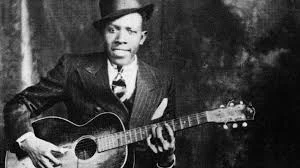
Robert Johnson — £2,500 · Premium Tone
Robert Johnson's soulful and deeply expressive tone took shape during the early electric guitar era and remains one of the most sought-after sounds on guitar. Robert Johnson is the foundational figure of the blues — his 29 recordings from 1936–37 contain the entire vocabulary of Delta blues, from the walking bass-line technique to the singing slide phrases that influenced every blues and rock guitarist who followed. At the £2,500 · Premium mark — a premium build targeting the most accurate recreation possible — the build centres on a Epiphone ES-175 running through a Fender Blues DeVille, with Strymon BigSky completing the signal chain, totalling ~£2467.
Build Robert Johnson's £2,500 · Premium Rig
3 pieces · Total ~$3,133
What guitar does Robert Johnson use?
Robert Johnson is primarily associated with hollow style guitars. At a £2,500 budget, Epiphone ES-175 delivers the essential tonal character.
What to Buy
£2,500 · Premium — Complete Gear List
Can't find one? See alternatives:
Why This Rig Works
How Robert Johnson's gear choices create the signature tone
Epiphone ES-175
The Epiphone ES-175 provides the tonal foundation for the entire rig — its character shapes everything that follows.
Strymon BigSky
Strymon BigSky — reverb coloring added to the signal.
Fender Blues DeVille
The Fender Blues DeVille converts the guitar signal into audible sound and adds its own tonal character — EQ shaping, natural gain, and the overall feel of the final tone.
The Combined Tone
Gibson L-1 or Kalamazoo acoustic guitar played unaccompanied, in open D or open G tuning with a slide. No amplification. The tone is thin, immediate and human — the sound of a single man and one guitar in a San Antonio or Dallas hotel room, singing and playing simultaneously with no separation between voice and instrument.
Tone Tips
Getting the Sound Right
- The Fender Blues DeVille stays cleaner longer than a Marshall-style amp — push it with a low-gain overdrive (gain at 2–3, level up) rather than cranking its own gain. Set treble at 6, bass at 4, and let the guitar's volume knob handle the dynamics.
- Open G tuning (D-G-D-G-B-D) or open D (D-A-D-F#-A-D) for standard Robert Johnson approach — barring across any fret produces a major chord
- The thumb-and-fingers technique plays bass and treble simultaneously — the thumb handles the alternating bass pattern on strings 6/5/4, fingers handle melody and lead on strings 1-3
- The recordings were made in two sessions in 1936 and 1937 — every recording exists. Work through all 29 tracks systematically; each has distinct technical and harmonic content
- The boogie bass with simultaneous slide melody requires independent hands — the thumb maintains a steady alternating bass pattern on strings 5 and 6 while the fingers play the slide melody on strings 1-3. This is a standard ragtime/country blues technique; practise the thumb pattern alone at 60bpm before introducing the melody
- The 29 complete recordings are the entire vocabulary — transcribe at least five full songs including all verse variations to absorb the Delta blues harmonic language. Johnson recycled the same core of riffs and bass patterns across different keys, so learning multiple songs accelerates the total vocabulary acquisition
- Open G and open A tunings appear across the recordings — determine the tuning of each song before attempting to learn it, as the fret shapes and slide positions differ completely between tunings. 'Cross Road Blues' and 'Terraplane Blues' represent the two most documented tuning approaches
Avoid These Pitfalls
Common Mistakes When Chasing This Tone
- Playing at high volume without managing feedback — hollow-body guitars are acoustically live and will feedback freely at stage volumes. Amp positioning and pickup height affect this dramatically.
- Using a distortion pedal instead of pushing the amp — vintage-voiced amps create better overdrive by being pushed hard than by a pedal circuit. Let the amp do the work.
- Using a distortion pedal to replace amp saturation — amp-driven tone has a specific feel (dynamics, touch sensitivity, natural compression) that pedal distortion cannot replicate. The source of gain matters.
- Playing at bedroom volume and expecting full blues tone — tube amps need to push air to bloom correctly. A cold amp at low volume sounds flat and lifeless.
- Using the bridge pickup as the default — the bridge is an accent position, not where the warmth and expressiveness of blues lead tone lives.
Budget Alternatives
Same Tone, Different Budget
FAQ
Robert Johnson Tone — Common Questions
Robert Johnson is primarily associated with hollow style guitars. At a £2,500 budget, Epiphone ES-175 delivers the essential tonal character.
Robert Johnson's amp is vintage blues voiced — the amp running hot, providing natural tube saturation. At the £2,500 level, Fender Blues DeVille is the closest match.
The £2,500 tier uses Robert Johnson's actual gear choices or direct equivalents. Total: £2,467. The tonal step up from £1,000 is real but diminishing — worth it for regular performers and studio work.
Robert Johnson's essential pedals include Reverb. At the £2,500 tier: Strymon BigSky. Reverb is the most important pedal — the others add nuance.
Robert Johnson's tone is defined by delta-blues, raw, acoustic-roots. The combination of hollow guitar and vintage blues amp creates a sound that is immediately recognisable.
Robert Johnson's gain approach is amp-driven — natural tube saturation from pushing the amp hard, not from distortion pedals. At £2,500, this is replicated through Fender Blues DeVille paired with Strymon BigSky.
Robert Johnson — £2,500 · Premium Complete Rig
~£2467Guitar
Epiphone ES-175
Amp
Fender Blues DeVille
Reverb
Strymon BigSky
Tone Match
Closest Real-World Tone Match
If you like Robert Johnson's tone, these players use a similar approach — same gear philosophy, comparable sound characteristics.
Related Tones