BluesDelta Blues1930s
Robert Johnson — £200 · Beginner Rig
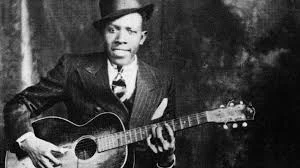
Gibson L-1 or Kalamazoo acoustic guitar played unaccompanied, in open D or open G tuning with a slide. No amplification. The tone is thin, immediate and human — the sound of a single man and one guitar in a San Antonio or Dallas hotel room, singing and playing simultaneously with no separation between voice and instrument.
Signal Path
Signal Chain
Full signal path
GuitarEpiphone SG
AmpFrontman 15
Full Gear List
£200 · Beginner — Complete Rig


Tone Tips
Getting the Sound Right
- Open G tuning (D-G-D-G-B-D) or open D (D-A-D-F#-A-D) for standard Robert Johnson approach — barring across any fret produces a major chord
- The thumb-and-fingers technique plays bass and treble simultaneously — the thumb handles the alternating bass pattern on strings 6/5/4, fingers handle melody and lead on strings 1-3
- Slide on the ring or little finger of the left hand — allows the other fingers to continue fretting bass notes while the slide handles the melodic slide phrases
- The vocal and guitar phrase in call-and-response — the guitar answers or echoes the vocal line, not playing over it. This vocal-guitar dialogue is the structure of the entire style
- "Cross Road Blues," "Sweet Home Chicago," and "Love in Vain" are the required listening — they contain the full vocabulary and are familiar to rock listeners through covers
- The bass line alternates between two bass strings on every beat — this "running bass" creates the illusion of a rhythm section and drives the song forward without drums
- Standard tuning Delta blues is also valid — some Johnson tracks are in standard tuning. Practise both open and standard tuning blues before attempting the simultaneous bass-and-melody technique
- Rhythm and melody are inseparable — unlike electric blues where a rhythm section provides the groove, acoustic Delta blues requires the guitarist to be their own rhythm section
Avoid These Pitfalls
Common Mistakes When Chasing This Tone
- Playing at high volume without managing feedback — hollow-body guitars are acoustically live and will feedback freely at stage volumes. Amp positioning and pickup height affect this dramatically.
- Using a distortion pedal instead of pushing the amp — vintage-voiced amps create better overdrive by being pushed hard than by a pedal circuit. Let the amp do the work.
- Using a distortion pedal to replace amp saturation — amp-driven tone has a specific feel (dynamics, touch sensitivity, natural compression) that pedal distortion cannot replicate. The source of gain matters.
- Playing at bedroom volume and expecting full blues tone — tube amps need to push air to bloom correctly. A cold amp at low volume sounds flat and lifeless.
- Using the bridge pickup as the default — the bridge is an accent position, not where the warmth and expressiveness of blues lead tone lives.
Tone Profile
Robert Johnson's Sound
Gibson L-1 or Kalamazoo acoustic guitar played unaccompanied, in open D or open G tuning with a slide. No amplification. The tone is thin, immediate and human — the sound of a single man and one guitar in a San Antonio or Dallas hotel room, singing and playing simultaneously with no separation between voice and instrument.