BluesElectric Blues1940s–1990s
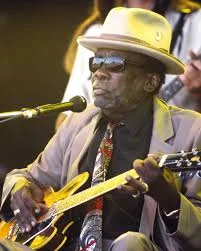
John Lee Hooker — £200 · Beginner Rig
Gibson ES-335 or similar semi-hollow into a small Fender amp, slightly overdriven. Often with no band at all — just guitar, voice and the stomp of his foot. The tone is raw and mid-heavy. The boogie pattern is a single low-register riff repeated hypnotically, building tension through repetition rather than harmonic movement.
Signal Path
Signal Chain
Full signal path
GuitarEpiphone SG
AmpFrontman 15
Full Gear List
£200 · Beginner — Complete Rig
Tone Tips
Getting the Sound Right
- The boogie pattern is everything — a single repeated figure on the low strings, usually I chord only for extended periods. Resist the urge to change chords
- The foot stomp provides the rhythm — Hooker would stomp his foot as he played, giving a primal rhythmic drive independent of any drummer
- Improvise freely over the one-chord vamp — the boogie is an open platform. Melodic phrases, call-and-response singing and guitar fills happen freely over the repeating figure
- Electric amplification is required — unlike acoustic Delta blues, Hooker's style requires the amplified "growl" of a semi-hollow guitar through a pushed amp
- Heavy vibrato on melodic phrases — when he plays above the boogie, long sustained notes are heavily vibrated for emotional intensity
- The rhythm is loose, not metronomic — the boogie breathes and speeds up and slows down slightly. This organic rhythmic quality is part of the hypnotic character
- Study "Boogie Chillen," "Boom Boom," and "I'm In The Mood" — these three tracks contain the definitive Hooker vocabulary
- Minor pentatonic is the primary scale — the blues vocabulary over the one-chord boogie is standard pentatonic minor with blues note (b5) additions
Avoid These Pitfalls
Common Mistakes When Chasing This Tone
- Using the same amp EQ as for a solid-body guitar — semi-hollow guitars have natural warmth that makes amp bass and treble settings behave differently. Start flat and adjust from there.
- Playing a vintage-voiced amp at low volume — the warmth and bloom of these amps comes from the power tubes working. At low volume the tone is flat and uninspiring compared to the amp's potential.
- Playing at bedroom volume expecting amp-driven tone — the power-tube saturation that defines this gain structure only occurs when the amp is working at substantial output. This is not replicable at low volumes.
- Setting amp gain at 5 or higher — blues tone lives at the edge of breakup (gain 3-4), not in full saturation. High gain compresses away all the dynamic feel.
- Ignoring the guitar volume knob — rolling back to 6-7 is your rhythm setting; 10 is for leads. Most players leave it at 10 and miss the entire dynamic vocabulary.
Tone Profile
John Lee Hooker's Sound
Gibson ES-335 or similar semi-hollow into a small Fender amp, slightly overdriven. Often with no band at all — just guitar, voice and the stomp of his foot. The tone is raw and mid-heavy. The boogie pattern is a single low-register riff repeated hypnotically, building tension through repetition rather than harmonic movement.