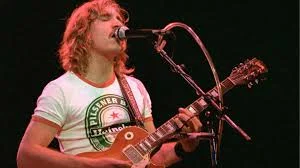
Joe Walsh — £2,500 · Premium Tone
Joe Walsh created some of rock's most instantly recognisable guitar tones — the smooth, sustained Les Paul into a Marshall sound on "Life's Been Good", the talk box on "Rocky Mountain Way" and the clean fingerpicked intro to "Hotel California" all demonstrate a player with extraordinary range and a flair for the iconic moment. Replicating that powerful and driving sound at the £2,500 · Premium mark means Gibson Les Paul Junior into Marshall DSL40CR. The effects — Dunlop GCB95 Cry Baby Wah, King Tone Duellist OD — add the finishing texture. This build totals ~£2465 and captures the core character — a premium build targeting the most accurate recreation possible.
Build Joe Walsh's £2,500 · Premium Rig
5 pieces · Total ~$3,131
What guitar does Joe Walsh use?
Joe Walsh is primarily associated with lp style guitars. At a £2,500 budget, Gibson Les Paul Junior delivers the essential tonal character.
What to Buy
£2,500 · Premium — Complete Gear List
Can't find one? See alternatives:
Why This Rig Works
How Joe Walsh's gear choices create the signature tone
Gibson Les Paul Junior
The Gibson Les Paul Junior delivers warm humbucker thickness and singing sustain — the classic foundation for rock and blues tones.
- Expression Filtervocal mid-sweep with Fasel resonance
- OverdriveKing Tone Duellist OD
- DelayStrymon Timeline
Marshall DSL40CR
The Marshall DSL40CR converts the guitar signal into audible sound and adds its own tonal character — EQ shaping, natural gain, and the overall feel of the final tone.
The Combined Tone
Gibson Les Paul through a Marshall 100W — warm, thick sustain with natural amp saturation. A talk box (Heil HT-1) produces the distinctive vocal-filtered guitar tone on "Rocky Mountain Way". Walsh's playing is relatively restrained and melody-focused; he uses space and dynamic contrast where other hard rock players would fill every gap.
Tone Tips
Getting the Sound Right
- The Marshall DSL40CR delivers power-tube saturation at master volume 6–7 — this compression and sag is what separates amp-driven tone from pedal tone. Set the master first, then dial back the channel gain to taste rather than the other way around.
- Talk box: shape vowels slowly as the guitar holds a note — "wah", "oo-ah" for the iconic effect
- Les Paul neck pickup for the smooth, thick sustained tones on Hotel California-style playing
- Study "Life's Been Good" and "Rocky Mountain Way" for the two defining Joe Walsh tones
- The slide guitar parts on 'Rocky Mountain Way' use standard tuning — Walsh's slide work is in standard, which requires knowing exactly which frets produce chord tones under the slide. Standard tuning slide is less forgiving than open tuning but allows faster movement between chordal and single-note playing
- The Les Paul into a cranked Marshall at real volume was the source of 'Life's Been Good' sustain — at bedroom levels, this requires a transparent boost pedal into the amp input to compensate for lost amp drive. The sound comes from the amp working hard, not from a distortion pedal
- The talkbox signal chain routes through the amp speaker output, not the instrument signal — guitar runs into the amp, the amp's speaker output drives the talk box unit (not a PA), the plastic tube from the unit sits at the corner of the mouth near the vocal microphone. The amp must drive the talk box directly
Avoid These Pitfalls
Common Mistakes When Chasing This Tone
- Not exploring the Marshall DSL alone before adding pedals — a Les Paul or humbucker guitar into a British amp is already a near-complete overdrive system. Adding drive pedals on top is often unnecessary and muddies the amp's natural character
- Ignoring the individual pickup volume and tone controls — the two-pickup switching options on a Les Paul give you four distinct tones within a single setting. Most players only use two.
- Too many repeats at high mix — more than 3 repeats makes the delay effect accumulate and overwhelm the dry guitar signal. Keep it to 2-3 repeats at a subtle mix level.
- Using a humbucker where single coils are needed — the quack, string definition, and high-frequency air of single coils cannot be EQ'd into a humbucker
- Adding a compressor before the amp "for more tone" — it kills the natural attack variation that defines the style. Blues tone is uncompressed and dynamic.
Budget Alternatives
Same Tone, Different Budget
FAQ
Joe Walsh Tone — Common Questions
Joe Walsh is primarily associated with lp style guitars. At a £2,500 budget, Gibson Les Paul Junior delivers the essential tonal character.
Joe Walsh's amp is british crunch voiced — the amp running hot, providing natural tube saturation. At the £2,500 level, Marshall DSL40CR is the closest match.
The £2,500 tier uses Joe Walsh's actual gear choices or direct equivalents. Total: £2,465. The tonal step up from £1,000 is real but diminishing — worth it for regular performers and studio work.
Joe Walsh's essential pedals include Overdrive, Delay. At the £2,500 tier: Dunlop GCB95 Cry Baby Wah, King Tone Duellist OD, Strymon Timeline. Overdrive is the most important pedal — the others add nuance.
Joe Walsh's tone is defined by classic-rock, melodic-slide, les-paul-crunch. The combination of lp guitar and british crunch amp creates a sound that is immediately recognisable.
Joe Walsh's gain approach is amp-driven — natural tube saturation from pushing the amp hard, not from distortion pedals. At £2,500, this is replicated through Marshall DSL40CR paired with Dunlop GCB95 Cry Baby Wah.
Joe Walsh — £2,500 · Premium Complete Rig
~£2465Guitar
Gibson Les Paul Junior
Wah
Dunlop GCB95 Cry Baby Wah
Overdrive
King Tone Duellist OD
Amp
Marshall DSL40CR
Delay
Strymon Timeline
Tone Match
Closest Real-World Tone Match
If you like Joe Walsh's tone, these players use a similar approach — same gear philosophy, comparable sound characteristics.
Related Tones