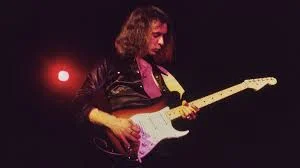
Ritchie Blackmore — £2,500 · Premium Tone
At £2,500 · Premium, Ritchie Blackmore's heavy and assertive tone is more accessible than most players expect. Rooted in the golden age of electric guitar innovation, their sound — Ritchie Blackmore fused classical music — Bach, Baroque modes and minor key drama — with hard rock aggression to create the foundation of neoclassical rock guitar. His Fender Stratocaster through a Marshall stack (boosted with a Dallas Rangemaster) produced a bright, sharp and harmonically complex tone that inspired generations of metal guitarists. — starts with Fender Player Stratocaster and Marshall DSL40CR, totalling ~£2475. That combination captures the defining characteristics without the premium price tag.
Build Ritchie Blackmore's £2,500 · Premium Rig
5 pieces · Total ~$3,143
What guitar does Ritchie Blackmore use?
Ritchie Blackmore is primarily associated with strat style guitars. At a £2,500 budget, Fender Player Stratocaster delivers the essential tonal character.
What to Buy
£2,500 · Premium — Complete Gear List
Can't find one? See alternatives:
Why This Rig Works
How Ritchie Blackmore's gear choices create the signature tone
Fender Player Stratocaster
Where the Squier approximates the Strat voice, the Player Strat *is* the Strat voice. Noticeably more articulate and dynamic, responding to every nuance of pick attack.
- EQEmpress ParaEQ
- OverdriveKing Tone Duellist OD
- DelayStrymon El Capistan
Marshall DSL40CR
The Marshall DSL40CR converts the guitar signal into audible sound and adds its own tonal character — EQ shaping, natural gain, and the overall feel of the final tone.
The Combined Tone
Fender Stratocaster (sometimes with a scalloped neck) into a Marshall Super Lead boosted with a Dallas Rangemaster or homemade preamp. The combination is brighter and more cutting than the typical Les Paul/Marshall tone — treble-heavy, harmonically complex and very directional. Blackmore's use of Dorian and Aeolian modes gives the leads a classical, compositional feel.
Tone Tips
Getting the Sound Right
- The Marshall DSL40CR delivers power-tube saturation at master volume 6–7 — this compression and sag is what separates amp-driven tone from pedal tone. Set the master first, then dial back the channel gain to taste rather than the other way around.
- Scalloped fretboard: the wood between frets is carved away — string bends and vibrato require less finger pressure
- Dorian mode (minor with raised 6th) is Blackmore's primary scale — darker than major, brighter than natural minor
- Study "Smoke on the Water", "Highway Star" solo and "Child in Time" for the full range
- Classical scale vocabulary — harmonic minor and Phrygian mode — creates the dramatic, dark quality of Deep Purple and Rainbow recordings. These scale choices borrowed from Bach and medieval music give 'Highway Star' and 'Stargazer' their theatricality beyond standard rock pentatonics
- The pickup selector is switched during sustained notes to change tone character mid-phrase — Blackmore switches from bridge to neck pickup on long held notes to move from attack to sustain within the same note. The bridge provides the initial edge; the neck carries the long decay
- The Leslie rotating speaker effect on specific tracks like 'Child in Time' came from a real rotating cabinet, not a standard modulation pedal — replicate with a tremolo/vibrato pedal set to slow, deep rotation rather than standard chorus or flanger. The amplitude modulation character is distinctly different from pitch modulation
Avoid These Pitfalls
Common Mistakes When Chasing This Tone
- Stacking a second overdrive after the TS9 with single coils — the combined mid emphasis of two stacked ODs into single-coil pickups produces a congested, nasal sound that struggles to sit in a mix
- Running the tone knob at 10 the entire time — the tone control on a Strat is an expressive tool. Rolling it back changes the character of the sound in ways that affect how you phrase.
- Scooping mids to "sound heavier" — a guitar with mids removed disappears under bass and drums. Metal tone cuts through a mix, and that requires midrange.
- Using single-coil pickups — the lack of output and mid-frequency push makes it impossible to achieve the tightness needed for high-gain rhythm playing.
Budget Alternatives
Same Tone, Different Budget
FAQ
Ritchie Blackmore Tone — Common Questions
Ritchie Blackmore is primarily associated with strat style guitars. At a £2,500 budget, Fender Player Stratocaster delivers the essential tonal character.
Ritchie Blackmore's amp is british crunch voiced — the amp running hot, providing natural tube saturation. At the £2,500 level, Marshall DSL40CR is the closest match.
The £2,500 tier uses Ritchie Blackmore's actual gear choices or direct equivalents. Total: £2,475. The tonal step up from £1,000 is real but diminishing — worth it for regular performers and studio work.
Ritchie Blackmore's essential pedals include Overdrive, EQ. At the £2,500 tier: Empress ParaEQ, King Tone Duellist OD, Strymon El Capistan. Overdrive is the most important pedal — the others add nuance.
Ritchie Blackmore's tone is defined by classical-influenced, baroque-rock, marshall-driven. The combination of strat guitar and british crunch amp creates a sound that is immediately recognisable.
Ritchie Blackmore's gain approach is amp-driven — natural tube saturation from pushing the amp hard, not from distortion pedals. At £2,500, this is replicated through Marshall DSL40CR paired with Empress ParaEQ.
Ritchie Blackmore — £2,500 · Premium Complete Rig
~£2475Guitar
Fender Player Stratocaster
EQ
Empress ParaEQ
Overdrive
King Tone Duellist OD
Amp
Marshall DSL40CR
Delay
Strymon El Capistan
Tone Match
Closest Real-World Tone Match
If you like Ritchie Blackmore's tone, these players use a similar approach — same gear philosophy, comparable sound characteristics.
Related Tones