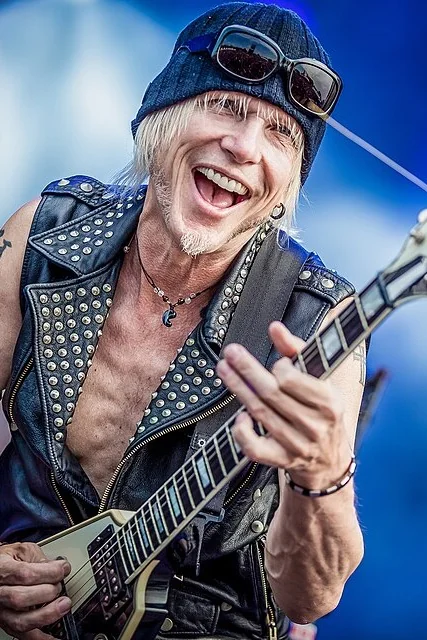
Michael Schenker — £2,500 · Premium Tone
At £2,500 · Premium, Michael Schenker's heavy and assertive tone is more accessible than most players expect. Rooted in the era that defined hard rock and blues-rock, their sound — Michael Schenker defined early European heavy metal lead guitar with UFO and MSG — a melodic, bluesy approach to hard rock leads on a Gibson Flying V that combined classical phrasing with raw aggression. — starts with Dean ML Select and Marshall DSL100H, totalling ~£2496. That combination captures the defining characteristics without the premium price tag.
Build Michael Schenker's £2,500 · Premium Rig
4 pieces · Total ~$3,170
What guitar does Michael Schenker use?
Michael Schenker is primarily associated with explorer style guitars. At a £2,500 budget, Dean ML Select delivers the essential tonal character.
What to Buy
£2,500 · Premium — Complete Gear List
Why This Rig Works
How Michael Schenker's gear choices create the signature tone
Dean ML Select
The Dean ML Select provides the tonal foundation for the entire rig — its character shapes everything that follows.
- WahWilson Effects MkII Wah
- DelayWalrus Audio Fundamental Delay
Marshall DSL100H
The Marshall DSL100H converts the guitar signal into audible sound and adds its own tonal character — EQ shaping, natural gain, and the overall feel of the final tone.
The Combined Tone
Gibson Flying V into a Marshall Super Lead or JCM800 at medium gain. The tone is warm and mid-forward — British rock character but not excessive metal gain. The Flying V's mahogany body and humbuckers produce rich sustain. Schenker's lead approach is melodic and lyrical, not speed-focused.
Tone Tips
Getting the Sound Right
- The Marshall DSL100H delivers power-tube saturation at master volume 6–7 — this compression and sag is what separates amp-driven tone from pedal tone. Set the master first, then dial back the channel gain to taste rather than the other way around.
- Flying V bridge pickup for leads — the warm, sustained character of the Gibson Flying V humbucker at the bridge produces the singing lead quality
- Marshall at medium gain — Schenker's tone is not extreme metal high-gain. Medium amp gain with the Flying V's output level produces the natural saturation
- The tone knob at 7-8 gives the warm-but-not-dark character — full treble is too bright, rolled off is too dark. Find the midpoint
- Pentatonic phrasing using the full length of the neck rather than staying in one position box — Schenker's solos flow from low register to high register within a single phrase, using all five pentatonic positions. Practice connecting positions by following phrases wherever they naturally lead rather than restricting movement to one box
- The wah pedal is often used at a fixed filter position rather than swept — Schenker parks the wah in a partially-open position to add a mid-focused nasal tilt to the overall tone. Experiment with heel-down, mid-position, and toe-down positions statically to hear each filter character before attempting sweeps
- Vibrato intensity varies by register — lower strings receive wider, slower vibrato; higher strings receive faster, narrower vibrato. This mirrors how string mass naturally affects physical vibrato speed and makes the technique sound organically varied rather than mechanically uniform
Avoid These Pitfalls
Common Mistakes When Chasing This Tone
- Scooping mids on the JCM800 with humbuckers — the mid-forward character of British amps with humbuckers is the central sound of classic rock. A mid scoop removes the fundamental voice of the combination
- Leaving the wah pedal engaged but stationary between rocking it — a cocked wah (fixed position, not moving) acts as a midrange filter that changes the core tone. Either rock it expressively or bypass it completely; a cocked wah changes the sound in ways that are often unintended
- Moving the wah too fast — wah is a filter effect that needs time to sweep through its range musically. Fast rocking produces a quacking sound; musical use is slower and more deliberate.
- Not setting delay to song tempo — a delay that doesn't match the song tempo creates a rhythmic clash that builds and becomes increasingly obvious. Tap the tempo every time.
- Skipping the Tube Screamer-style boost — this pedal is not about adding gain. It focuses the low end before the amp sees the signal, which produces tighter palm mutes.
Budget Alternatives
Same Tone, Different Budget
FAQ
Michael Schenker Tone — Common Questions
Michael Schenker is primarily associated with explorer style guitars. At a £2,500 budget, Dean ML Select delivers the essential tonal character.
Michael Schenker's amp is british crunch voiced — the amp running hot, providing natural tube saturation. At the £2,500 level, Marshall DSL100H is the closest match.
The £2,500 tier uses Michael Schenker's actual gear choices or direct equivalents. Total: £2,496. The tonal step up from £1,000 is real but diminishing — worth it for regular performers and studio work.
Michael Schenker's essential pedals include Wah, Delay. At the £2,500 tier: Wilson Effects MkII Wah, Walrus Audio Fundamental Delay. Wah is the most important pedal — the others add nuance.
Michael Schenker's tone is defined by flying-v, neoclassical, british-crunch. The combination of explorer guitar and british crunch amp creates a sound that is immediately recognisable.
Michael Schenker's gain approach is amp-driven — natural tube saturation from pushing the amp hard, not from distortion pedals. At £2,500, this is replicated through Marshall DSL100H paired with Wilson Effects MkII Wah.
Michael Schenker — £2,500 · Premium Complete Rig
~£2496Guitar
Dean ML Select
Wah
Wilson Effects MkII Wah
Amp
Marshall DSL100H
Delay
Walrus Audio Fundamental Delay
Tone Match
Closest Real-World Tone Match
If you like Michael Schenker's tone, these players use a similar approach — same gear philosophy, comparable sound characteristics.
Related Tones