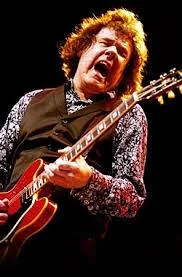
Gary Moore — £2,500 · Premium Tone
Gary Moore's raw and emotionally charged tone took shape during the era that defined hard rock and blues-rock and remains one of the most sought-after sounds on guitar. Gary Moore combined hard rock technique with the raw emotion of BB King and Albert King to produce one of the most powerful and expressive blues-rock tones ever recorded. His Les Paul through a Marshall delivered screaming vibrato and unrestrained string bends that sounded more like crying than playing. At the £2,500 · Premium mark — a premium build targeting the most accurate recreation possible — the build centres on a Gibson Les Paul Junior running through a Marshall DSL100H, with Boss SD-1 Super OverDrive and Walrus Audio Fundamental Delay completing the signal chain, totalling ~£2442.
Build Gary Moore's £2,500 · Premium Rig
4 pieces · Total ~$3,101
What guitar does Gary Moore use?
Gary Moore is primarily associated with lp style guitars. At a £2,500 budget, Gibson Les Paul Junior delivers the essential tonal character.
What to Buy
£2,500 · Premium — Complete Gear List
Can't find one? See alternatives:
Why This Rig Works
How Gary Moore's gear choices create the signature tone
Gibson Les Paul Junior
The Gibson Les Paul Junior delivers warm humbucker thickness and singing sustain — the classic foundation for rock and blues tones.
- OverdriveBoss SD-1 Super OverDrive
- DelayWalrus Audio Fundamental Delay
Marshall DSL100H
The Marshall DSL100H converts the guitar signal into audible sound and adds its own tonal character — EQ shaping, natural gain, and the overall feel of the final tone.
The Combined Tone
Gibson Les Paul Standard (including Peter Green's original 1959 burst for a period) into a Marshall 100W. The tone is thick, hot and articulate — mid-heavy with aggressive pick attack and dramatic sustained vibrato. No heavy effects; the emotion is entirely in the hands.
Tone Tips
Getting the Sound Right
- The Marshall DSL100H delivers power-tube saturation at master volume 6–7 — this compression and sag is what separates amp-driven tone from pedal tone. Set the master first, then dial back the channel gain to taste rather than the other way around.
- Wide, slow-starting vibrato that gradually increases in width — mimics a singer's natural swell
- Extreme string bends — Moore bent strings further than almost any other player
- Study "Still Got The Blues" and "Parisienne Walkways" for the definitive slow-blues approach
- Moore's extreme string bends require fretting-finger strength built progressively — he frequently bent the third string (G string) up a full tone and a half in the upper register, which requires strong fretting pressure and proper thumb placement behind the neck for leverage; practice bending to pitch verified by a tuner
- The combination of blues phrasing over hard-rock backing is the central tension in Moore's solo work — practise playing minor pentatonic phrases over a major key backing track and listen for how the "blues notes" (b3, b5, b7) create a emotional conflict that purely in-key playing doesn't produce
- Moore used vibrato as an expressive shape, not just decoration — the vibrato on "Still Got The Blues" starts slowly and wide, then gradually increases speed as the note sustains, which mimics how a vocalist or violinist controls note colour; practise this "accelerating vibrato" technique independently as a dedicated exercise
Avoid These Pitfalls
Common Mistakes When Chasing This Tone
- Not exploring the JCM800 alone before adding pedals — a Les Paul or humbucker guitar into a British amp is already a near-complete overdrive system. Adding drive pedals on top is often unnecessary and muddies the amp's natural character
- Leaving the wah pedal engaged but stationary between rocking it — a cocked wah (fixed position, not moving) acts as a midrange filter that changes the core tone. Either rock it expressively or bypass it completely; a cocked wah changes the sound in ways that are often unintended
- Setting gain too high on the overdrive pedal — most overdrive pedals are most useful at gain settings of 2-5, where they add character without dominating the tone. High gain settings on an OD pedal become a distortion, not an overdrive.
- Too many repeats at high mix — more than 3 repeats makes the delay effect accumulate and overwhelm the dry guitar signal. Keep it to 2-3 repeats at a subtle mix level.
- Ignoring the guitar volume knob — rolling back to 6-7 is your rhythm setting; 10 is for leads. Most players leave it at 10 and miss the entire dynamic vocabulary.
Budget Alternatives
Same Tone, Different Budget
FAQ
Gary Moore Tone — Common Questions
Gary Moore is primarily associated with lp style guitars. At a £2,500 budget, Gibson Les Paul Junior delivers the essential tonal character.
Gary Moore's amp is british crunch voiced — clean to moderate gain. At the £2,500 level, Marshall DSL100H is the closest match.
The £2,500 tier uses Gary Moore's actual gear choices or direct equivalents. Total: £2,442. The tonal step up from £1,000 is real but diminishing — worth it for regular performers and studio work.
Gary Moore's essential pedals include Overdrive, Delay. At the £2,500 tier: Boss SD-1 Super OverDrive, Walrus Audio Fundamental Delay. Overdrive is the most important pedal — the others add nuance.
Gary Moore's tone is defined by singing-sustain, vibrato-heavy, irish-blues. The combination of lp guitar and british crunch amp creates a sound that is immediately recognisable.
Gary Moore's gain approach is pedal-driven — distortion pedals into a relatively clean amp. The pedal defines the distortion character. At £2,500, this is replicated through Marshall DSL100H paired with Boss SD-1 Super OverDrive.
Gary Moore — £2,500 · Premium Complete Rig
~£2442Guitar
Gibson Les Paul Junior
Overdrive
Boss SD-1 Super OverDrive
Amp
Marshall DSL100H
Delay
Walrus Audio Fundamental Delay
Tone Match
Closest Real-World Tone Match
If you like Gary Moore's tone, these players use a similar approach — same gear philosophy, comparable sound characteristics.
Related Tones