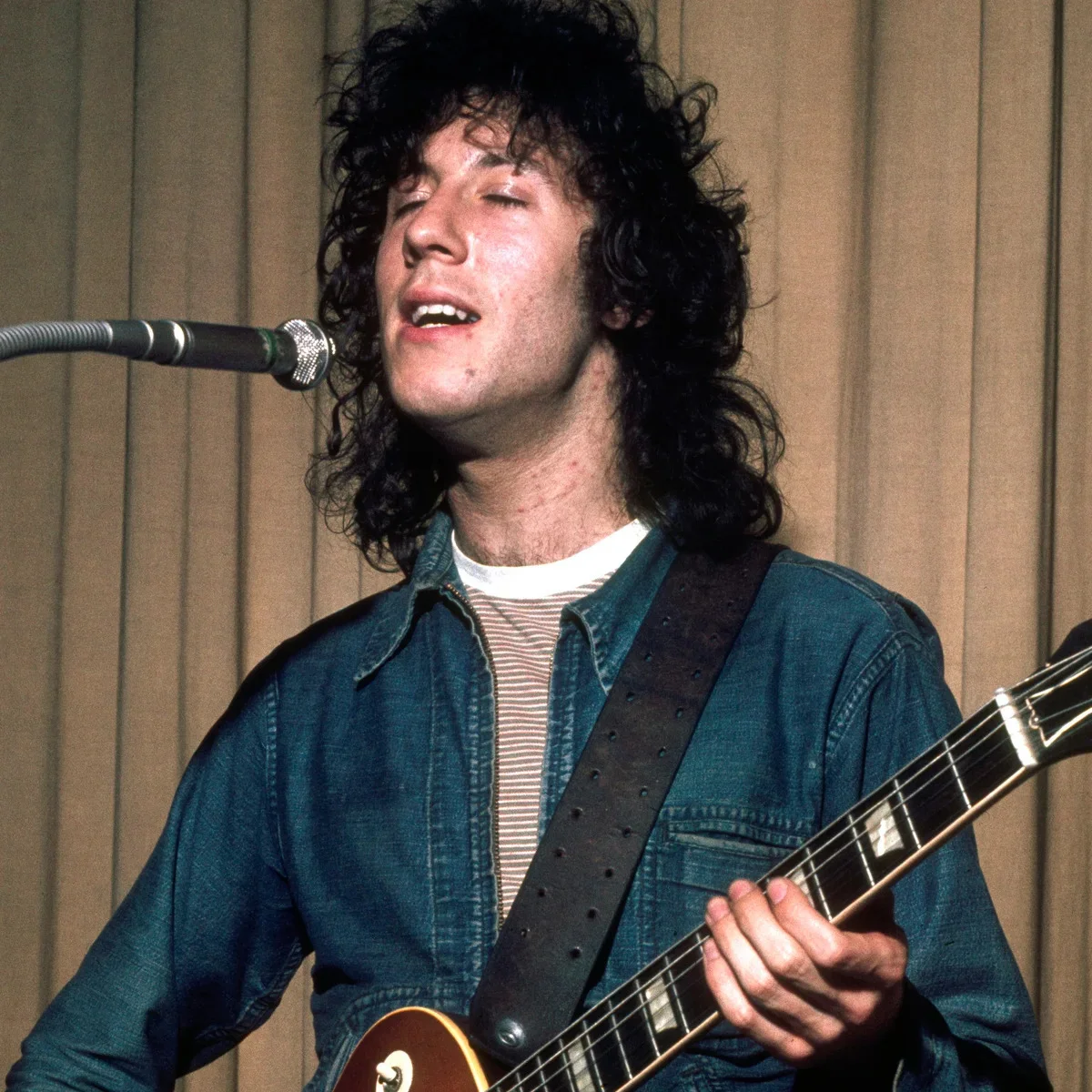
Peter Green — £2,500 · Premium Tone
Peter Green's 1959 Les Paul had its neck pickup accidentally reverse-mounted, creating a unique out-of-phase tone when both pickups were selected. Warm, slightly hollow and impossible to fully replicate, it gave early Fleetwood Mac a sound unlike anyone else — emotional, lyrical and deeply rooted in Chicago blues. Replicating that soulful and deeply expressive sound at the £2,500 · Premium mark means Gibson Les Paul Junior into Marshall DSL40CR. The effects — Boss GE-7 Graphic EQ, King Tone Duellist OD — add the finishing texture. This build totals ~£2495 and captures the core character — a premium build targeting the most accurate recreation possible.
Build Peter Green's £2,500 · Premium Rig
5 pieces · Total ~$3,169
What guitar does Peter Green use?
Peter Green is primarily associated with lp style guitars. At a £2,500 budget, Gibson Les Paul Junior delivers the essential tonal character.
What to Buy
£2,500 · Premium — Complete Gear List
Can't find one? See alternatives:
Why This Rig Works
How Peter Green's gear choices create the signature tone
Gibson Les Paul Junior
The Gibson Les Paul Junior delivers warm humbucker thickness and singing sustain — the classic foundation for rock and blues tones.
- EQBoss GE-7 Graphic EQ
- OverdriveKing Tone Duellist OD
- ReverbStrymon BigSky
Marshall DSL40CR
The Marshall DSL40CR converts the guitar signal into audible sound and adds its own tonal character — EQ shaping, natural gain, and the overall feel of the final tone.
The Combined Tone
Les Paul with both pickups selected (out-of-phase neck position) into a Marshall Super Lead. The out-of-phase tone is slightly hollow, less bassy than normal Les Paul, and cuts through a mix without harshness. Green's vibrato and precise note selection do the rest — no effects.
Tone Tips
Getting the Sound Right
- The Marshall DSL40CR delivers power-tube saturation at master volume 6–7 — this compression and sag is what separates amp-driven tone from pedal tone. Set the master first, then dial back the channel gain to taste rather than the other way around.
- Out-of-phase pickup: on a standard Les Paul, select both pickups and reverse one pickup's leads
- Out-of-phase tone is thinner and slightly hollow — compensate with amp mid boost
- BB King was Green's primary influence — note the similar phrasing restraint
- The out-of-phase pickup sound came from one humbucker having its magnet accidentally reversed on Green's Les Paul — a push-pull pot mod reversing one pickup's phase on a standard Les Paul replicates this hollow, vocal, phase-cancelled tone that is the defining character of 'The Green Manalishi' and 'Oh Well'
- Dynamic range is extreme and deliberate — Green played softly during verses, reaching full volume only at solo peaks. Practice building pressure over longer phrase arcs that span full verse-chorus cycles, not just within individual licks. The dynamic contrast IS the musicality
- Restraint defines the Green aesthetic — a typical phrase contains 8-10 notes maximum. Practice imposing a self-imposed note maximum on improvisations to force more deliberate note choices. Every note in a Green solo has a clear musical purpose
Avoid These Pitfalls
Common Mistakes When Chasing This Tone
- Not exploring the Marshall Super Lead alone before adding pedals — a Les Paul or humbucker guitar into a British amp is already a near-complete overdrive system. Adding drive pedals on top is often unnecessary and muddies the amp's natural character
- Expecting a Les Paul to sound like a Strat with EQ adjustments — the mahogany body, set neck, and humbuckers produce a fundamentally different character that cannot be EQ'd away.
- Adding a compressor before the amp "for more tone" — it kills the natural attack variation that defines the style. Blues tone is uncompressed and dynamic.
- Playing at bedroom volume and expecting full blues tone — tube amps need to push air to bloom correctly. A cold amp at low volume sounds flat and lifeless.
Budget Alternatives
Same Tone, Different Budget
FAQ
Peter Green Tone — Common Questions
Peter Green is primarily associated with lp style guitars. At a £2,500 budget, Gibson Les Paul Junior delivers the essential tonal character.
Peter Green's amp is british crunch voiced — the amp running hot, providing natural tube saturation. At the £2,500 level, Marshall DSL40CR is the closest match.
The £2,500 tier uses Peter Green's actual gear choices or direct equivalents. Total: £2,495. The tonal step up from £1,000 is real but diminishing — worth it for regular performers and studio work.
Peter Green's essential pedals include Overdrive. At the £2,500 tier: Boss GE-7 Graphic EQ, King Tone Duellist OD, Strymon BigSky. Overdrive is the most important pedal — the others add nuance.
Peter Green's tone is defined by out-of-phase-pickup, warm-vocal, vintage-tone. The combination of lp guitar and british crunch amp creates a sound that is immediately recognisable.
Peter Green's gain approach is amp-driven — natural tube saturation from pushing the amp hard, not from distortion pedals. At £2,500, this is replicated through Marshall DSL40CR paired with Boss GE-7 Graphic EQ.
Peter Green — £2,500 · Premium Complete Rig
~£2495Guitar
Gibson Les Paul Junior
EQ
Boss GE-7 Graphic EQ
Overdrive
King Tone Duellist OD
Amp
Marshall DSL40CR
Reverb
Strymon BigSky
Tone Match
Closest Real-World Tone Match
If you like Peter Green's tone, these players use a similar approach — same gear philosophy, comparable sound characteristics.
Related Tones