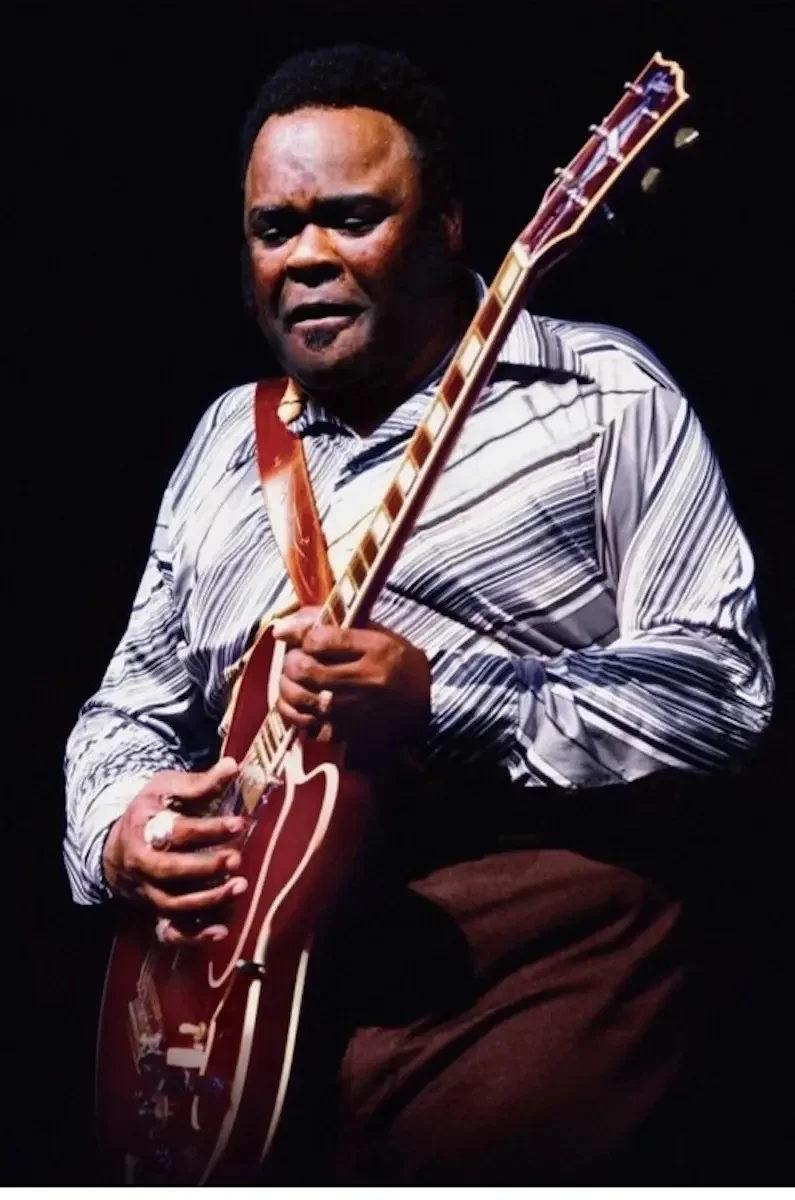
Freddie King — £2,500 · Premium Tone
The £2,500 · Premium build for Freddie King's soulful and deeply expressive sound opens with Epiphone ES-339 — the tonal foundation that defines the character. Into Fender Blues DeVille paired with Boss CS-3 Compression Sustainer and Boss Blues Driver BD-2, the rig comes to ~£2465 and delivers the essential elements. Freddie King was the most powerful and aggressive of the three Kings — his uptempo Texas shuffle and raw, fast picking style influenced Eric Clapton and Peter Green profoundly. His Gibson ES-335 through a small Fender amp, played with a plastic thumb pick and metal index-finger pick, produced a uniquely percussive and forward attack.
Build Freddie King's £2,500 · Premium Rig
5 pieces · Total ~$3,131
What guitar does Freddie King use?
Freddie King is primarily associated with semi hollow style guitars. At a £2,500 budget, Epiphone ES-339 delivers the essential tonal character.
What to Buy
£2,500 · Premium — Complete Gear List
Can't find one? See alternatives:
Why This Rig Works
How Freddie King's gear choices create the signature tone
Epiphone ES-339
The Epiphone ES-339 provides the tonal foundation for the entire rig — its character shapes everything that follows.
- Dynamics Shapertransparent dynamic control and singing sustain
- OverdriveBoss Blues Driver BD-2
- ReverbStrymon BigSky
Fender Blues DeVille
The Fender Blues DeVille converts the guitar signal into audible sound and adds its own tonal character — EQ shaping, natural gain, and the overall feel of the final tone.
The Combined Tone
Gibson ES-335 or 345 through a small Fender amplifier (Bassman, Super). Bright, forward and punchy. The fingerpick technique (plastic thumb pick + metal steel fingerpick on the index finger) creates a sharper, more percussive attack than a normal plectrum — notes have a bright initial transient followed by warm sustain.
Tone Tips
Getting the Sound Right
- The Fender Blues DeVille stays cleaner longer than a Marshall-style amp — push it with a low-gain overdrive (gain at 2–3, level up) rather than cranking its own gain. Set treble at 6, bass at 4, and let the guitar's volume knob handle the dynamics.
- Thumb pick + metal fingerpick combination: practise until the attack feels natural
- Bright pickup selector position (bridge or middle-bridge on ES-335)
- "Hideaway" is the definitive Freddie King instrumental — learn it note for note
- The plastic thumb pick and metal fingerpick combination is the right-hand tool — Freddie King wore a plastic thumb pick and a single metal fingerpick on his index finger. This hybrid picking creates an attack that is brighter than a plectrum alone and heavier than pure fingerpicking
- Major pentatonic is used as prominently as minor — King switched freely between minor and major pentatonic to suggest IV chord colour even when playing over the I chord. This harmonic flexibility is what lifts his solos above the purely minor-pentatonic approach of many blues players
- 'Hideaway' is built on a specific I-IV-V turnaround pattern with a named 'Hideaway shuffle' that became a template for blues instrumentals — learn the complete arrangement including the turnaround section, which is the section most copied by other blues guitarists after its release
Avoid These Pitfalls
Common Mistakes When Chasing This Tone
- Using the same amp EQ as for a solid-body guitar — semi-hollow guitars have natural warmth that makes amp bass and treble settings behave differently. Start flat and adjust from there.
- Playing a vintage-voiced amp at low volume — the warmth and bloom of these amps comes from the power tubes working. At low volume the tone is flat and uninspiring compared to the amp's potential.
- Setting gain too high on the overdrive pedal — most overdrive pedals are most useful at gain settings of 2-5, where they add character without dominating the tone. High gain settings on an OD pedal become a distortion, not an overdrive.
- Picking too delicately — the style requires aggressive, forceful playing that physically drives the strings. Restraint produces flat, uninteresting tone.
- Using light strings (9s or 10s) — the reduced string tension and output produces a thinner sound that can't be EQ'd to match the heaviness of 11s or 13s.
Budget Alternatives
Same Tone, Different Budget
FAQ
Freddie King Tone — Common Questions
Freddie King is primarily associated with semi hollow style guitars. At a £2,500 budget, Epiphone ES-339 delivers the essential tonal character.
Freddie King's amp is vintage blues voiced — the amp running hot, providing natural tube saturation. At the £2,500 level, Fender Blues DeVille is the closest match.
The £2,500 tier uses Freddie King's actual gear choices or direct equivalents. Total: £2,465. The tonal step up from £1,000 is real but diminishing — worth it for regular performers and studio work.
Freddie King's essential pedals include Overdrive. At the £2,500 tier: Boss CS-3 Compression Sustainer, Boss Blues Driver BD-2, Strymon BigSky. Overdrive is the most important pedal — the others add nuance.
Freddie King's tone is defined by texas-blues, chicago-blues, melodic-phrasing. The combination of semi hollow guitar and vintage blues amp creates a sound that is immediately recognisable.
Freddie King's gain approach is amp-driven — natural tube saturation from pushing the amp hard, not from distortion pedals. At £2,500, this is replicated through Fender Blues DeVille paired with Boss CS-3 Compression Sustainer.
Freddie King — £2,500 · Premium Complete Rig
~£2465Guitar
Epiphone ES-339
Compression
Boss CS-3 Compression Sustainer
Overdrive
Boss Blues Driver BD-2
Amp
Fender Blues DeVille
Reverb
Strymon BigSky
Tone Match
Closest Real-World Tone Match
If you like Freddie King's tone, these players use a similar approach — same gear philosophy, comparable sound characteristics.
Related Tones