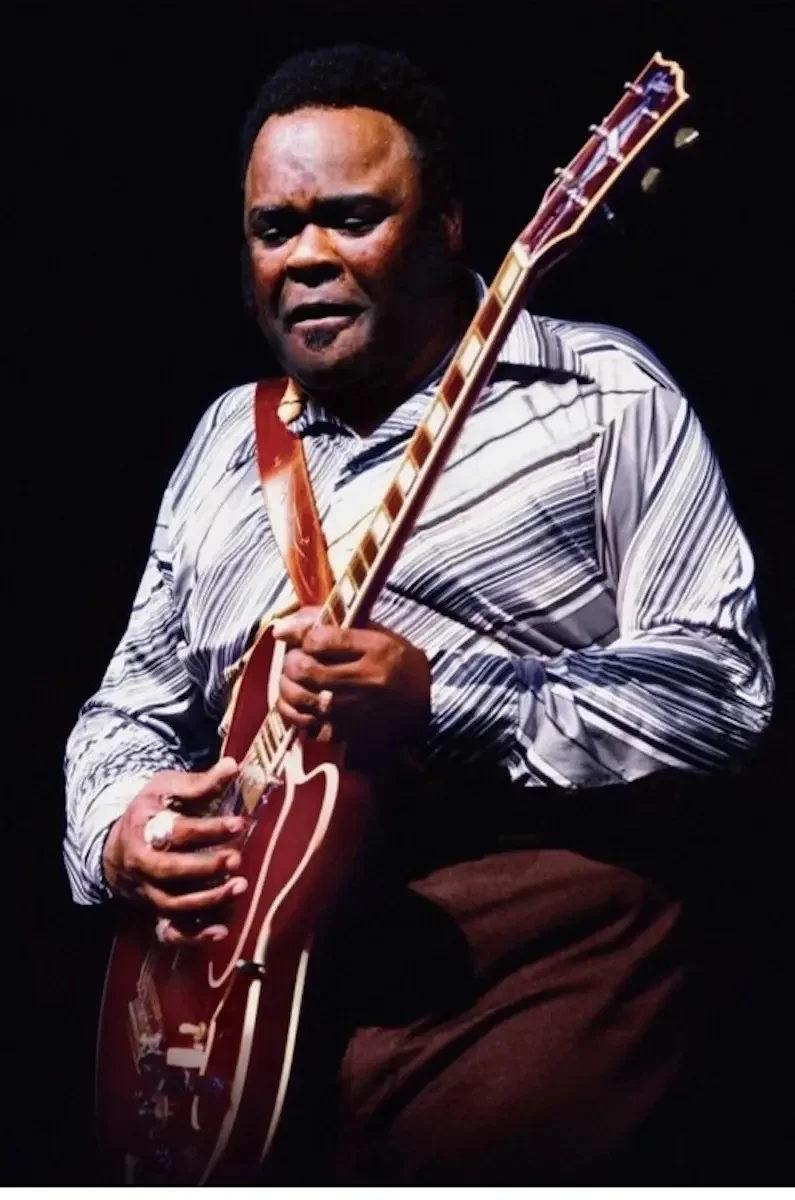
Freddie King Pedalboard
Full effects breakdown — core pedals, signal chain order, and budget alternatives
Freddie King's signal chain is built around a single essential effect: Overdrive. The resulting sound: Gibson ES-335 or 345 through a small Fender amplifier (Bassman, Super). The overdrive functions as a signal booster and light overdrive rather than a heavy distortion source — it pushes the amp's input harder, causing the amp's own tubes to clip. The pedal adds focus and sustain while the amp provides the tonal character. The overdrive is typically set with gain near zero and level above unity — it pushes the amp's input stage rather than adding its own distortion. The result is an amp-driven tone rather than a pedal-driven one.
Essential Pedals
These effects are non-negotiable for Freddie King's tone. Skip any one and the signature sound is lost.
Optional / Contextual Effects
Freddie King uses these situationally — great to have but not required for the core sound.
£1,000 Pedalboard Breakdown
Specific gear recommendations at the £1,000 budget tier.
Pedalboard at Every Budget
The effects chain scales with budget — budget tiers keep the essential categories intact with less expensive alternatives.
- CompressionBoss CS-3 Compression Sustainer
- OverdriveBoss Blues Driver BD-2
- ReverbStrymon BigSky
Signal Chain Order
For Freddie King's signal chain, the order keeps the tone responsive at each stage — each effect receives the right input impedance and signal character from the preceding stage.
- Guitar
- Drive pedals (Overdrive)
- Amp
Related Gear
Similar Guitarists
FAQ
Freddie King Pedalboard — Common Questions
Freddie King's pedalboard includes: MXR M108S 10-Band EQ. The core effects in Freddie King's sound are Overdrive.
The standard signal chain for Freddie King's pedalboard follows the professional convention: guitar → tuner → wah (if used) → compression → overdrive/distortion → amp → modulation (chorus/flanger) → delay → reverb. For Freddie King's signal chain, the order keeps the tone responsive at each stage — each effect receives the right input impedance and signal character from the preceding stage.
Freddie King typically uses a transparent overdrive or boost to push the amp's front end rather than relying on a dedicated distortion pedal.
Building a Freddie King-style pedalboard depends on budget. At £200 you can cover the essentials (~£228 for the full rig). At £500 the pedalboard includes Boss Blues Driver BD-2. At £1,000 (full rig: ~£957) all the key pedals are covered.
Freddie King's delay is handled by a dedicated delay pedal placed at the end of the signal chain (or in the amp's effects loop). Common choices include the Boss DD series, TC Electronic Flashback, or MXR Carbon Copy.