Rig Builder
Budget Rig Breakdown
Signal Chain
Essentials
Complete Your Rig
The accessories every serious guitarist needs — cables, strings, and the rest.
Ernie Ball Regular Slinky Strings (10-46)
The balance between bending ease and tone — standard gauge for blues and classic rock.
Dunlop Tortex Standard Pick 0.73mm (Pack of 12)
Medium-gauge picks used by blues and rock guitarists for attack and warmth.
Planet Waves American Stage Guitar Cable 10ft
Solderless ends and lifetime warranty. The cable most session guitarists trust.
Boss TU-3 Chromatic Tuner Pedal
The professional standard for live tuning. True bypass, powers other pedals, ultra-accurate.
Levy's M8 Guitar Strap
Quality leather strap used by touring guitarists. Genuine comfort for 3-hour sets.
Technique
Key Tone Tips
- Out-of-phase pickup: on a standard Les Paul, select both pickups and reverse one pickup's leads
- Out-of-phase tone is thinner and slightly hollow — compensate with amp mid boost
- Vibrato is slow and elegant — Green's phrasing is unhurried and conversational
- Marshall gain at edge of breakup; let the guitar's volume knob control crunch
- String bends are measured and perfectly in tune — precision over drama
- Use the neck pickup alone for warmer, rounder lead tones on softer passages
- Leave space — Green was a master of the dramatic pause between phrases
- Listen to "Albatross" and "Oh Well" for the two contrasting sides of his tone
- BB King was Green's primary influence — note the similar phrasing restraint
- The out-of-phase pickup sound came from one humbucker having its magnet accidentally reversed on Green's Les Paul — a push-pull pot mod reversing one pickup's phase on a standard Les Paul replicates this hollow, vocal, phase-cancelled tone that is the defining character of 'The Green Manalishi' and 'Oh Well'
- Dynamic range is extreme and deliberate — Green played softly during verses, reaching full volume only at solo peaks. Practice building pressure over longer phrase arcs that span full verse-chorus cycles, not just within individual licks. The dynamic contrast IS the musicality
- Restraint defines the Green aesthetic — a typical phrase contains 8-10 notes maximum. Practice imposing a self-imposed note maximum on improvisations to force more deliberate note choices. Every note in a Green solo has a clear musical purpose
Background
About Peter Green's Sound
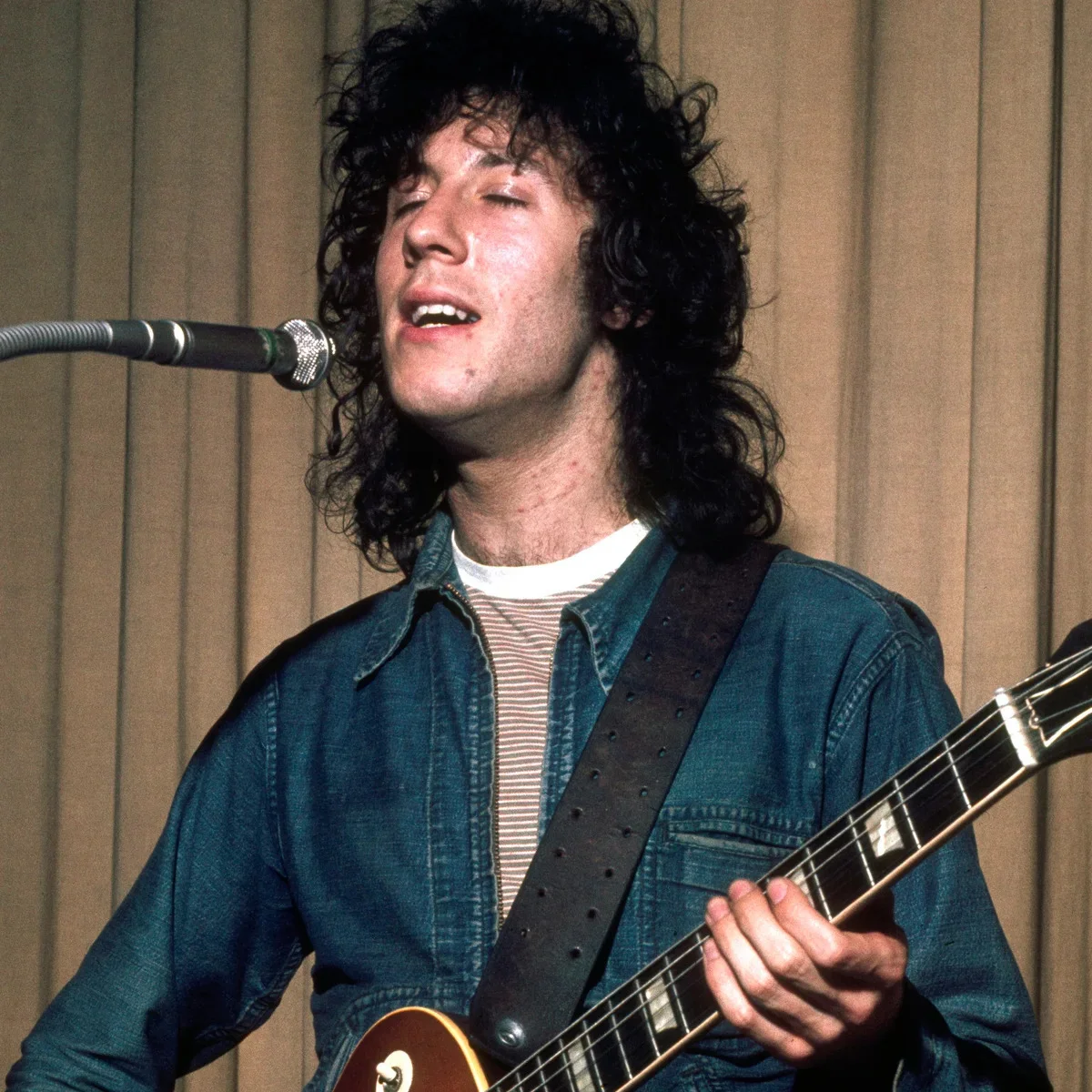
Peter Green's 1959 Les Paul had its neck pickup accidentally reverse-mounted, creating a unique out-of-phase tone when both pickups were selected. Warm, slightly hollow and impossible to fully replicate, it gave early Fleetwood Mac a sound unlike anyone else — emotional, lyrical and deeply rooted in Chicago blues.
Tone History
Peter Green's Tone Evolution
Peter Green built one of the most singular tones in blues history from a single accident: a reversed neck pickup on his 1959 Les Paul created an out-of-phase sound that no other guitarist has fully replicated. Warm, slightly hollow, and saturated with vibrato, it shaped both early Fleetwood Mac and a generation of blues-rock players.
Full timeline: 2 eras →Song Breakdowns
Peter Green Song Rigs
Black Magic Woman
The Pious Bird of Good Omen · 1968
The original Black Magic Woman — quieter and more melancholic than the Sant…
Albatross
Fleetwood Mac (The Blue Horizon Years) · 1968
A UK number one hit — an instrumental built on the warm, pure tone of Green…
Oh Well
Then Play On · 1969
Green at his most aggressive — the two-part Oh Well shows both his heavy el…