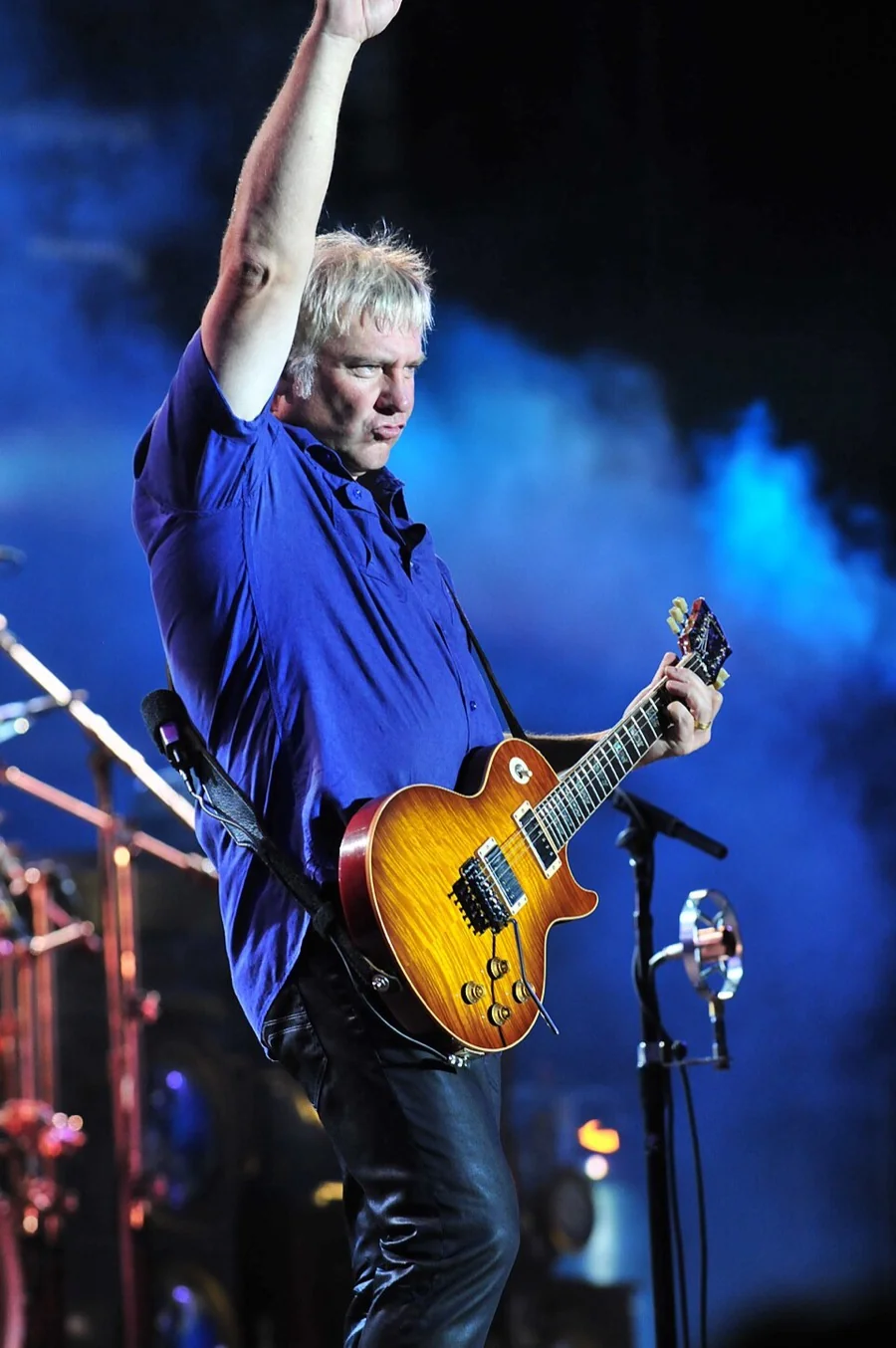
Alex Lifeson — £2,500 · Premium Tone
The £2,500 · Premium build for Alex Lifeson's powerful and driving sound opens with Epiphone ES-339 — the tonal foundation that defines the character. Into Marshall DSL100H paired with Fulltone OCD Overdrive and Boss CE-2W Chorus Ensemble, the rig comes to ~£2445 and delivers the essential elements. Alex Lifeson is one of progressive rock's most underrated guitarists — his complex chord voicings, unconventional song structures and blend of clean arpeggios with heavy crunch created the harmonic language of Rush. He treats the guitar as an orchestral instrument, filling sonic space that most bands need additional members to cover.
Build Alex Lifeson's £2,500 · Premium Rig
5 pieces · Total ~$3,105
What guitar does Alex Lifeson use?
Alex Lifeson is primarily associated with semi hollow style guitars. At a £2,500 budget, Epiphone ES-339 delivers the essential tonal character.
What to Buy
£2,500 · Premium — Complete Gear List
Can't find one? See alternatives:
Why This Rig Works
How Alex Lifeson's gear choices create the signature tone
Epiphone ES-339
The Epiphone ES-339 provides the tonal foundation for the entire rig — its character shapes everything that follows.
- OverdriveFulltone OCD Overdrive
- ChorusBoss CE-2W Chorus Ensemble
- DelayBoss DD-3T Digital Delay
Marshall DSL100H
The Marshall DSL100H converts the guitar signal into audible sound and adds its own tonal character — EQ shaping, natural gain, and the overall feel of the final tone.
The Combined Tone
Gibson ES-355 or Hentor Sportscaster Strat-style through Hiwatt or Marshall Super Lead. TC Electronic chorus and flanger give signature shimmer to clean parts; crunch parts are the natural Marshall breakup. Lifeson's sound is simultaneously warm on clean passages and cutting on heavy sections.
Tone Tips
Getting the Sound Right
- The Marshall DSL100H delivers power-tube saturation at master volume 6–7 — this compression and sag is what separates amp-driven tone from pedal tone. Set the master first, then dial back the channel gain to taste rather than the other way around.
- Add9 and sus2 chord voicings give Lifeson's riffs an open, ambiguous harmonic quality
- TC Electronic chorus: slow rate, medium depth — adds shimmer without obviously chorusing
- Use capo positions to create bright, open chord voicings in unusual keys
- Experiment with alternate tunings — Lifeson used dropped-D, open G and various alternate tunings throughout his career not for convenience but for specific harmonic colours unavailable in standard tuning
- Treat the guitar parts as one component of a three-piece arrangement — Rush had no rhythm section to fill space, so every Lifeson chord choice must imply the harmony without blocking Geddy Lee's bass; think subtractively about voicings
- Practice transitioning instantly between clean arpeggios and full crunch in the same song — the dramatic shift from ambient clean intro to Marshall crunch chorus without any pause or volume adjustment is a fundamental Rush technique that requires precise amp channel management
Avoid These Pitfalls
Common Mistakes When Chasing This Tone
- Stacking a second overdrive after the TS9 with single coils — the combined mid emphasis of two stacked ODs into single-coil pickups produces a congested, nasal sound that struggles to sit in a mix
- Using the same amp EQ as for a solid-body guitar — semi-hollow guitars have natural warmth that makes amp bass and treble settings behave differently. Start flat and adjust from there.
- Using too much reverb on clean passages — prog clean tone should be open and detailed. Long reverb tails wash out the note clarity that makes complex chord voicings readable.
- Ignoring the room or PA system — prog guitar changes tone dramatically in different acoustic environments. Dialling in EQ in isolation gives a different result than through a full PA.
Budget Alternatives
Same Tone, Different Budget
FAQ
Alex Lifeson Tone — Common Questions
Alex Lifeson is primarily associated with semi hollow style guitars. At a £2,500 budget, Epiphone ES-339 delivers the essential tonal character.
Alex Lifeson's amp is british crunch voiced — clean to moderate gain. At the £2,500 level, Marshall DSL100H is the closest match.
The £2,500 tier uses Alex Lifeson's actual gear choices or direct equivalents. Total: £2,445. The tonal step up from £1,000 is real but diminishing — worth it for regular performers and studio work.
Alex Lifeson's essential pedals include Delay, Chorus, Overdrive. At the £2,500 tier: Fulltone OCD Overdrive, Boss CE-2W Chorus Ensemble, Boss DD-3T Digital Delay. Delay is the most important pedal — the others add nuance.
Alex Lifeson's tone is defined by power-chords, atmospheric-clean, prog-rock. The combination of semi hollow guitar and british crunch amp creates a sound that is immediately recognisable.
Alex Lifeson's gain approach is pedal-driven — distortion pedals into a relatively clean amp. The pedal defines the distortion character. At £2,500, this is replicated through Marshall DSL100H paired with Fulltone OCD Overdrive.
Alex Lifeson — £2,500 · Premium Complete Rig
~£2445Guitar
Epiphone ES-339
Overdrive
Fulltone OCD Overdrive
Chorus
Boss CE-2W Chorus Ensemble
Amp
Marshall DSL100H
Delay
Boss DD-3T Digital Delay
Tone Match
Closest Real-World Tone Match
If you like Alex Lifeson's tone, these players use a similar approach — same gear philosophy, comparable sound characteristics.
Related Tones