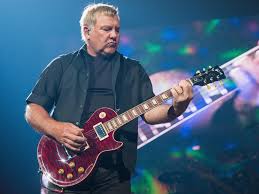
Alex Lifeson — £1,000 · Pro-Level Tone
The £1,000 · Pro-Level build for Alex Lifeson's powerful and driving sound opens with Epiphone ES-339 — the tonal foundation that defines the character. Into Boss Katana 100 MkII paired with Boss SD-1 Super Overdrive and Walrus Audio Fundamental Delay, the rig comes to ~£1056 and delivers the essential elements. Alex Lifeson is one of progressive rock's most underrated guitarists — his complex chord voicings, unconventional song structures and blend of clean arpeggios with heavy crunch created the harmonic language of Rush. He treats the guitar as an orchestral instrument, filling sonic space that most bands need additional members to cover.
Build Alex Lifeson's £1,000 · Pro-Level Rig
4 pieces · Total ~£1056
What guitar does Alex Lifeson use?
Alex Lifeson is primarily associated with semi hollow style guitars. At a £1,000 budget, Epiphone ES-339 delivers the essential tonal character.
What to Buy
£1,000 · Pro-Level — Complete Gear List
Why This Rig Works
How Alex Lifeson's gear choices create the signature tone
Epiphone ES-339
The Epiphone ES-339 provides the tonal foundation for the entire rig — its character shapes everything that follows.
- OverdriveBoss SD-1 Super Overdrive
- DelayWalrus Audio Fundamental Delay
Boss Katana 100 MkII
The extra headroom lets you push the clean channel harder before it breaks up, essential for loud-amp technique. More speaker excursion gives a fuller, more three-dimensional clean.
The Combined Tone
Gibson ES-355 or Hentor Sportscaster Strat-style through Hiwatt or Marshall Super Lead. TC Electronic chorus and flanger give signature shimmer to clean parts; crunch parts are the natural Marshall breakup. Lifeson's sound is simultaneously warm on clean passages and cutting on heavy sections.
Tone Tips
Getting the Sound Right
- Add9 and sus2 chord voicings give Lifeson's riffs an open, ambiguous harmonic quality
- TC Electronic chorus: slow rate, medium depth — adds shimmer without obviously chorusing
- Clean arpeggios with the chorus running create the ambient intros that define Rush albums
- For heavy parts: remove all effects and let the Marshall crunch stand on its own
- Hammer-ons and pull-offs within chord shapes (rather than scale runs) are central
- Open strings ringing beneath fretted notes — let the E and B strings sustain where possible
- Study "Freewill" guitar parts and "La Villa Strangiato" for the full orchestral approach
- Palm muting is rhythmically precise — Lifeson follows Neil Peart's patterns exactly
Avoid These Pitfalls
Common Mistakes When Chasing This Tone
- Stacking a second overdrive after the TS9 with single coils — the combined mid emphasis of two stacked ODs into single-coil pickups produces a congested, nasal sound that struggles to sit in a mix
- Using the same amp EQ as for a solid-body guitar — semi-hollow guitars have natural warmth that makes amp bass and treble settings behave differently. Start flat and adjust from there.
- Using a high-gain distortion pedal instead of amp gain — British crunch amps have a specific harmonic character when driven from their own gain stage. A pedal changes this character.
- Clean amp at too low a volume — even a clean amp provides warmth and tonal character that the pedal sits in. An amp at minimum volume has no character for the pedal to interact with.
- Too many repeats at high mix — more than 3 repeats makes the delay effect accumulate and overwhelm the dry guitar signal. Keep it to 2-3 repeats at a subtle mix level.
- Using too much reverb on clean passages — prog clean tone should be open and detailed. Long reverb tails wash out the note clarity that makes complex chord voicings readable.
- Ignoring the room or PA system — prog guitar changes tone dramatically in different acoustic environments. Dialling in EQ in isolation gives a different result than through a full PA.
Budget Alternatives
Same Tone, Different Budget
FAQ
Alex Lifeson Tone — Common Questions
Alex Lifeson is primarily associated with semi hollow style guitars. At a £1,000 budget, Epiphone ES-339 delivers the essential tonal character.
Alex Lifeson's amp is british crunch voiced — clean to moderate gain. At the £1,000 level, Boss Katana 100 MkII is the closest match.
The £1,000 tier adds noticeably better build quality and tonal nuance over the £500 rig. This build totals £1,056 with Epiphone ES-339, Boss Katana 100 MkII, 2 effects. This is the tier where the tone becomes genuinely convincing for gigging and recording.
Alex Lifeson's essential pedals include Delay, Chorus, Overdrive. At the £1,000 tier: Boss SD-1 Super Overdrive, Walrus Audio Fundamental Delay. Delay is the most important pedal — the others add nuance.
Alex Lifeson's tone is defined by power-chords, atmospheric-clean, prog-rock. The combination of semi hollow guitar and british crunch amp creates a sound that is immediately recognisable.
Alex Lifeson's gain approach is pedal-driven — distortion pedals into a relatively clean amp. The pedal defines the distortion character. At £1,000, this is replicated through Boss Katana 100 MkII paired with Boss SD-1 Super Overdrive.
Alex Lifeson — £1,000 · Pro-Level Complete Rig
~£1056Guitar
Epiphone ES-339
Overdrive
Boss SD-1 Super Overdrive
Amp
Boss Katana 100 MkII
Delay
Walrus Audio Fundamental Delay
Tone Match
Closest Real-World Tone Match
If you like Alex Lifeson's tone, these players use a similar approach — same gear philosophy, comparable sound characteristics.
Related Tones