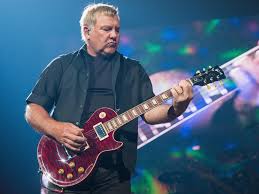
Rig Builder
Budget Rig Breakdown
Signal Chain
ODJoyo Vintage
AmpKatana 50
DelayStrymon El

£ Budget$37
£ Budget$189
Technique
Key Tone Tips
- Add9 and sus2 chord voicings give Lifeson's riffs an open, ambiguous harmonic quality
- TC Electronic chorus: slow rate, medium depth — adds shimmer without obviously chorusing
- Clean arpeggios with the chorus running create the ambient intros that define Rush albums
- For heavy parts: remove all effects and let the Marshall crunch stand on its own
- Hammer-ons and pull-offs within chord shapes (rather than scale runs) are central
- Open strings ringing beneath fretted notes — let the E and B strings sustain where possible
- Study "Freewill" guitar parts and "La Villa Strangiato" for the full orchestral approach
- Palm muting is rhythmically precise — Lifeson follows Neil Peart's patterns exactly
- Use capo positions to create bright, open chord voicings in unusual keys
Background
About Alex Lifeson's Sound
Alex Lifeson is one of progressive rock's most underrated guitarists — his complex chord voicings, unconventional song structures and blend of clean arpeggios with heavy crunch created the harmonic language of Rush. He treats the guitar as an orchestral instrument, filling sonic space that most bands need additional members to cover.