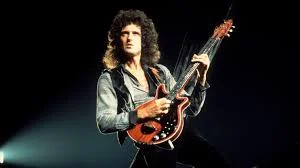
Brian May — £2,500 · Premium Tone
Brian May built his guitar — the "Red Special" — from an oak fireplace mantelpiece with his father. Paired with a sixpence coin pick and a Dallas Rangemaster treble booster into Vox AC30s, it produces one of the most harmonically rich and immediately recognisable tones in rock history. Replicating that powerful and driving sound at the £2,500 · Premium mark means Epiphone ES-339 into Vox AC30C2. The effects — Electro-Harmonix LPB-1 Linear Power Booster, MXR M108S 10-Band EQ — add the finishing texture. This build totals ~£2484 and captures the core character — a premium build targeting the most accurate recreation possible.
Build Brian May's £2,500 · Premium Rig
6 pieces · Total ~$3,155
What guitar does Brian May use?
Brian May is primarily associated with semi hollow style guitars. At a £2,500 budget, Epiphone ES-339 delivers the essential tonal character.
What to Buy
£2,500 · Premium — Complete Gear List
Can't find one? See alternatives:
Why This Rig Works
How Brian May's gear choices create the signature tone
Epiphone ES-339
The Epiphone ES-339 provides the tonal foundation for the entire rig — its character shapes everything that follows.
- BoostElectro-Harmonix LPB-1 Linear Power Booster
- Tone Sculptorten-band surgical frequency sculpting
- ModulationWalrus Audio Julia
- DelayStrymon Timeline
Vox AC30C2
The Vox AC30C2 converts the guitar signal into audible sound and adds its own tonal character — EQ shaping, natural gain, and the overall feel of the final tone.
The Combined Tone
The Red Special (three Burns Tri-Sonic pickups, out-of-phase switching) into a Dallas Rangemaster treble booster into Vox AC30s. The treble booster sharpens the top end and drives the AC30 into harmonic saturation — the result is bright, complex and layered. May uses a sixpence coin as a pick for a brighter, more articulated attack.
Tone Tips
Getting the Sound Right
- The Vox AC30C2 runs Class A and compresses naturally as volume increases. Keep the bass control at 3 to prevent the inherent warmth from muddying — use the amp's natural bloom instead of stacking external drive on top.
- Use a coin as a pick — the rigid edge creates a brighter, more defined attack
- Treble booster (not overdrive) into the AC30 is the key — it drives the amp harmonically
- Study "Bohemian Rhapsody" solo and "Brighton Rock" for the full Red Special vocabulary
- The "Brighton Rock" solo features two-handed tapping executed with the coin pick — May discovered the technique independently before it became mainstream; study the solo as a tapping exercise separate from the tone challenge, since the two-handed mechanical coordination takes dedicated isolated practice
- Harmony guitar parts in Queen recordings are typically two or three guitars playing the same melody line harmonised in thirds and sixths — learn the original melody first, then work out the harmony line by ear rather than from tablature, as developing this skill is what makes the orchestration replicable in new contexts
- The AC30 top boost channel responds differently at different volume levels — at low volume, the tone is clear and bell-like; as the volume increases past 6, the output stage begins to saturate in a musical, sustained way. Practice going between these two voices to understand the amp's dynamic range before adding the treble booster
Avoid These Pitfalls
Common Mistakes When Chasing This Tone
- Running high-gain settings on a semi-hollow — the resonant body cavity feeds back uncontrollably at high gain levels. These guitars require lower gain and benefit from the natural resonance.
- Using a distortion pedal instead of a treble booster — the classic Vox driven sound comes from a treble booster (Rangemaster-style) into the input. This creates input stage saturation that pedal distortion does not replicate.
- Not setting delay to song tempo — a delay that doesn't match the song tempo creates a rhythmic clash that builds and becomes increasingly obvious. Tap the tempo every time.
- Ignoring the room or PA system — prog guitar changes tone dramatically in different acoustic environments. Dialling in EQ in isolation gives a different result than through a full PA.
- Adding too many pedals — complex rigs with multiple switches require full attention to operate. Start with less and add only when a specific gap is identified.
Budget Alternatives
Same Tone, Different Budget
FAQ
Brian May Tone — Common Questions
Brian May is primarily associated with semi hollow style guitars. At a £2,500 budget, Epiphone ES-339 delivers the essential tonal character.
Brian May's amp is vox ac voiced — the amp running hot, providing natural tube saturation. At the £2,500 level, Vox AC30C2 is the closest match.
The £2,500 tier uses Brian May's actual gear choices or direct equivalents. Total: £2,484. The tonal step up from £1,000 is real but diminishing — worth it for regular performers and studio work.
Brian May's essential pedals include Boost, Delay. At the £2,500 tier: Electro-Harmonix LPB-1 Linear Power Booster, MXR M108S 10-Band EQ, Walrus Audio Julia. Boost is the most important pedal — the others add nuance.
Brian May's tone is defined by layered-harmonics, orchestral, vintage-chime. The combination of semi hollow guitar and vox ac amp creates a sound that is immediately recognisable.
Brian May's gain approach is amp-driven — natural tube saturation from pushing the amp hard, not from distortion pedals. At £2,500, this is replicated through Vox AC30C2 paired with Electro-Harmonix LPB-1 Linear Power Booster.
Brian May — £2,500 · Premium Complete Rig
~£2484Guitar
Epiphone ES-339
Boost
Electro-Harmonix LPB-1 Linear Power Booster
EQ
MXR M108S 10-Band EQ
Modulation
Walrus Audio Julia
Amp
Vox AC30C2
Delay
Strymon Timeline
Tone Match
Closest Real-World Tone Match
If you like Brian May's tone, these players use a similar approach — same gear philosophy, comparable sound characteristics.
Related Tones