RockHard Rock1960s–1980s
Jimmy Page — £500 · Sweet Spot Rig
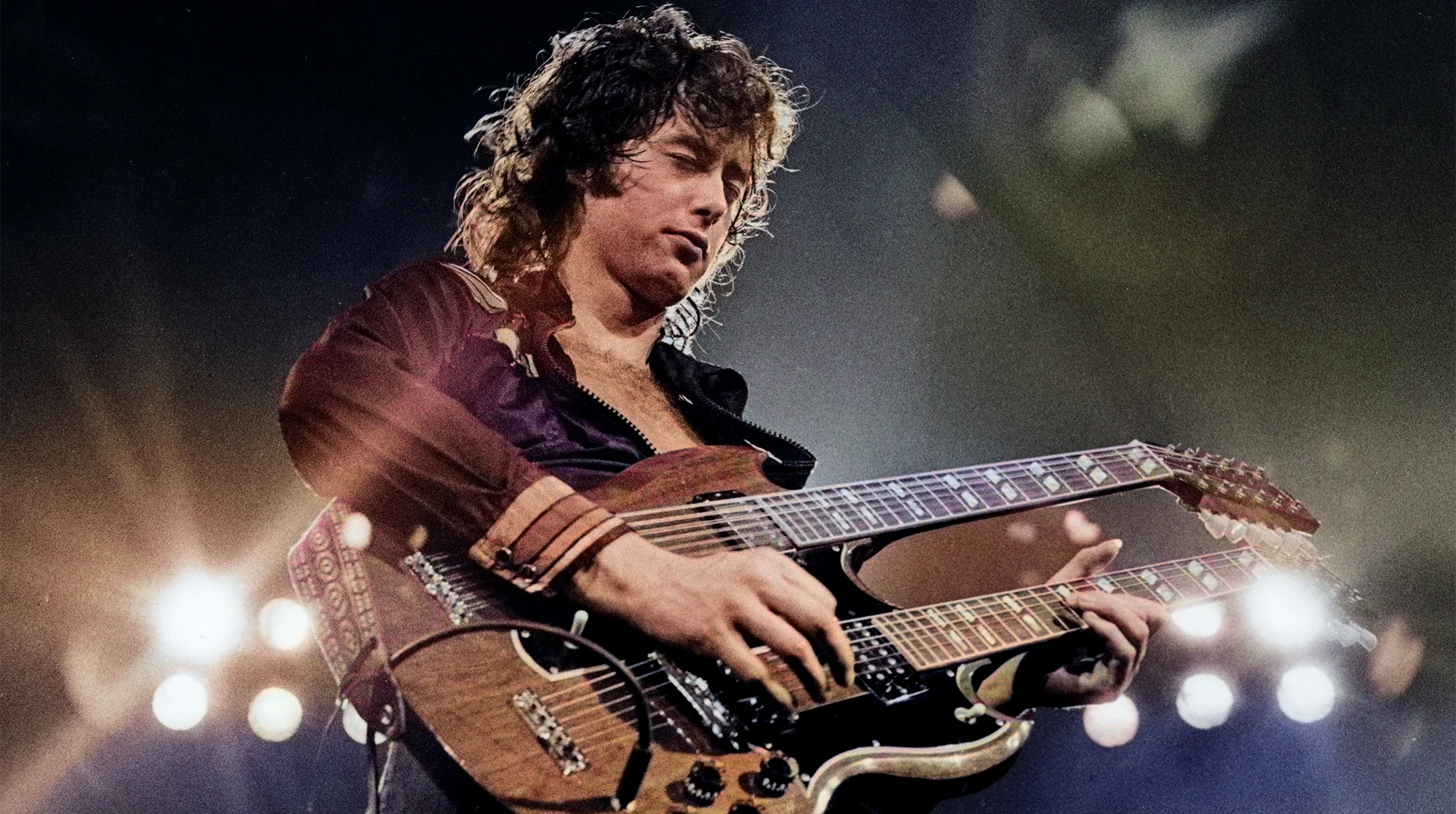
Thick, saggy Les Paul humbucker into a modified Marshall Super Lead — the combination delivers natural amp saturation with explosive transients and singing sustain. Page ran his Marshall loud with the guitar's volume knob as the main control; tone ranged from clean jazz voicings (volume at 4) to full-bore crunch (volume at 10).
Signal Path
Signal Chain
Full signal path
GuitarLP Std
AmpKatana 50
Full Gear List
£500 · Sweet Spot — Complete Rig
Tone Tips
Getting the Sound Right
- Use the Les Paul bridge pickup for crunch; neck pickup for singing, sustained leads
- Control clean-to-dirty with the guitar volume knob, not the amp
- Marshall gain comes from cranked amp volume — the Les Paul humbucker provides the saturation
- Tune down a half step (Eb) for that slightly loose, saggy string feel
- Palm muting with varied pressure creates Page's rhythmic texture
- Slapback delay (80–120ms) adds the live, roomy depth of his studio recordings
- Use a bow on strings for textural sounds — hold it at a 90° angle near the nut
- Open DADGAD tuning for Kashmir-style riffs on acoustic or clean electric
Avoid These Pitfalls
Common Mistakes When Chasing This Tone
- Not exploring the Marshall Super Lead alone before adding pedals — a Les Paul or humbucker guitar into a British amp is already a near-complete overdrive system. Adding drive pedals on top is often unnecessary and muddies the amp's natural character
- Running the Tone Bender into an already-driven amp channel — fuzz into a driven amp creates uncontrolled intermodulation that sounds chaotic rather than musical. The Tone Bender works best into a clean or barely-clean amp
- Setting the amp bass too high — the inherent warmth of mahogany means you need less bass EQ than with a Strat. Starting at 5 rather than 7 prevents low-end mud.
- Scooping the mids on a Marshall-style amp — the upper midrange emphasis is what makes British amps cut through. Mid-scoop EQ sounds good alone but disappears in a band mix.
- Using a distortion pedal to replace amp saturation — amp-driven tone has a specific feel (dynamics, touch sensitivity, natural compression) that pedal distortion cannot replicate. The source of gain matters.
- Leaving the wah in a fixed position (cocked) between uses — a cocked wah acts as a midrange filter and changes the tone. If not using the wah expressively, take it out of the chain.
- Using the bridge pickup as the default — the bridge is an accent position, not where the warmth and expressiveness of blues lead tone lives.
- Choosing a pick that is too heavy — thin to medium picks give edge noise and articulation that heavier picks smooth away. That edge is part of the sound.
Tone Profile
Jimmy Page's Sound
Thick, saggy Les Paul humbucker into a modified Marshall Super Lead — the combination delivers natural amp saturation with explosive transients and singing sustain. Page ran his Marshall loud with the guitar's volume knob as the main control; tone ranged from clean jazz voicings (volume at 4) to full-bore crunch (volume at 10).