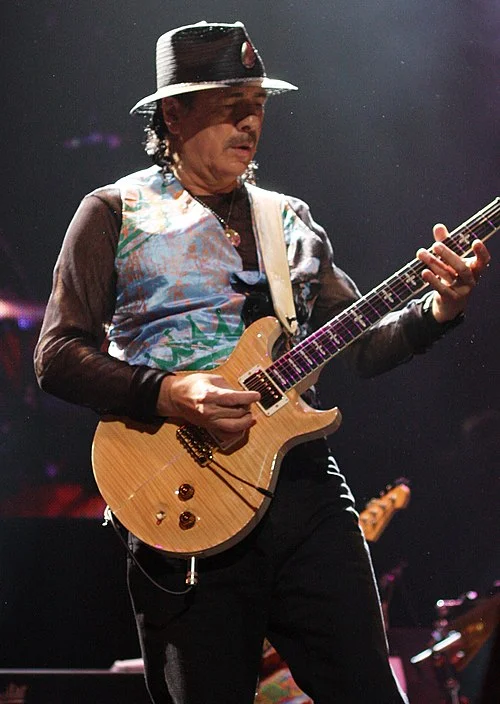
Carlos Santana — £500 · Sweet Spot Tone
At £500 · Sweet Spot, Carlos Santana's powerful and driving tone is more accessible than most players expect. Rooted in the golden age of electric guitar innovation, their sound — Carlos Santana's tone is defined by warm, sustaining lead lines with a smooth, vocal pick attack. His Mesa Boogie-driven sound — singing with natural compression and smooth overdrive — made the guitar sound as expressive as a human voice. — starts with Epiphone SG Special and Fender Blues Junior IV, totalling ~£643. That combination captures the defining characteristics without the premium price tag.
Build Carlos Santana's £500 · Sweet Spot Rig
3 pieces · Total ~$817
What guitar does Carlos Santana use?
Carlos Santana is primarily associated with hss style guitars. At a £500 budget, Epiphone SG Special delivers the essential tonal character.
What to Buy
£500 · Sweet Spot — Complete Gear List
Can't find one? See alternatives:
Why This Rig Works
How Carlos Santana's gear choices create the signature tone
Epiphone SG Special
The SG body is lighter and more upper-fret accessible than a Les Paul, with a snappier attack. The humbuckers deliver the essential dark, punchy character needed for AC/DC and Black Sabbath tones.
Boss SD-1 Super OverDrive
Boss SD-1 Super OverDrive — overdrive coloring added to the signal.
Fender Blues Junior IV
This is where the magic happens for Mayer and SRV tones. The EL84 power section breaks up beautifully when pushed, and the bright, clean headroom is exactly what Tube Screamer boost tones are built on.
The Combined Tone
PRS or SG neck pickup into a Mesa Boogie Mark I (or II) with the lead channel pushed hard — natural amp compression creates the smooth, sustaining quality. Santana's controlled pick attack and slow, wide vibrato do the rest. A chorus adds shimmer to clean parts; a touch of delay opens up the lead tone.
Tone Tips
Getting the Sound Right
- The Fender Blues Junior IV stays cleaner longer than a Marshall-style amp — push it with a low-gain overdrive (gain at 2–3, level up) rather than cranking its own gain. Set treble at 6, bass at 4, and let the guitar's volume knob handle the dynamics.
- Neck pickup only — Santana's lead tone never comes from the bridge
- Mesa Boogie lead channel: gain around 6–7, master volume up for natural compression
- Use a medium-light pick held loosely — attack is everything
- Vibrato is wide and slow, almost like a singer's natural note-to-note variation
- Boss SD-1 with gain low and level boosted pushes the amp into smooth sustain
- The TS9 before the Marshall DSL's high-gain channel: gain at 0, level at 8-9. This cuts sub-bass and boosts midrange before the amp sees it — the result is tighter palm mutes and more note definition at the same gain level
- Set the delay tempo to the song's BPM: quarter-note delay for a rhythmic pulse; dotted eighth delay for the "Edge effect" that fills space between guitar notes. A mis-set delay that fights the tempo becomes increasingly obvious as the song progresses
Avoid These Pitfalls
Common Mistakes When Chasing This Tone
- Not using a gate on the Marshall DSL's high-gain channel — self-noise at this gain level is continuous and audible between notes. A noise gate is not a style choice; it is functional equipment for this gain level
- Leaving the wah pedal engaged but stationary between rocking it — a cocked wah (fixed position, not moving) acts as a midrange filter that changes the core tone. Either rock it expressively or bypass it completely; a cocked wah changes the sound in ways that are often unintended
- Leaving the guitar volume at 10 — single coil brightness at full volume can be harsh. Rolling back to 8-9 tames the top end without killing output.
- Using the amp's volume at less than 4 — boutique clean amps are designed to be played at certain output levels. At very low volumes the tone is compressed and flat compared to full-level operation.
- Using a coloured overdrive as a boost where a transparent boost is needed — a TS-style OD adds midrange colour. A Klon-style or clean boost is more neutral and suitable for clean boost applications.
Budget Alternatives
Same Tone, Different Budget
FAQ
Carlos Santana Tone — Common Questions
Carlos Santana is primarily associated with hss style guitars. At a £500 budget, Epiphone SG Special delivers the essential tonal character.
Carlos Santana's amp is boutique clean voiced — clean with headroom, pushed by an overdrive pedal. At the £500 level, Fender Blues Junior IV is the closest match.
Yes — £500 covers a real guitar and amp in the right tonal family. This rig totals £643 and captures the essential character. The guitar and amp account for 80% of the tone; pedals are secondary at this budget.
Carlos Santana's essential pedals include Overdrive, Modulation. At the £500 tier: Boss SD-1 Super OverDrive. Overdrive is the most important pedal — the others add nuance.
Carlos Santana's tone is defined by singing-sustain, latin, warm. The combination of hss guitar and boutique clean amp creates a sound that is immediately recognisable.
Carlos Santana's gain approach is clean-boosted — a clean amp pushed by an overdrive pedal. The pedal adds colour; the amp adds body. At £500, this is replicated through Fender Blues Junior IV paired with Boss SD-1 Super OverDrive.
Carlos Santana — £500 · Sweet Spot Complete Rig
~£643Guitar
Epiphone SG Special
Overdrive
Boss SD-1 Super OverDrive
Amp
Fender Blues Junior IV
Tone Match
Closest Real-World Tone Match
If you like Carlos Santana's tone, these players use a similar approach — same gear philosophy, comparable sound characteristics.
Related Tones