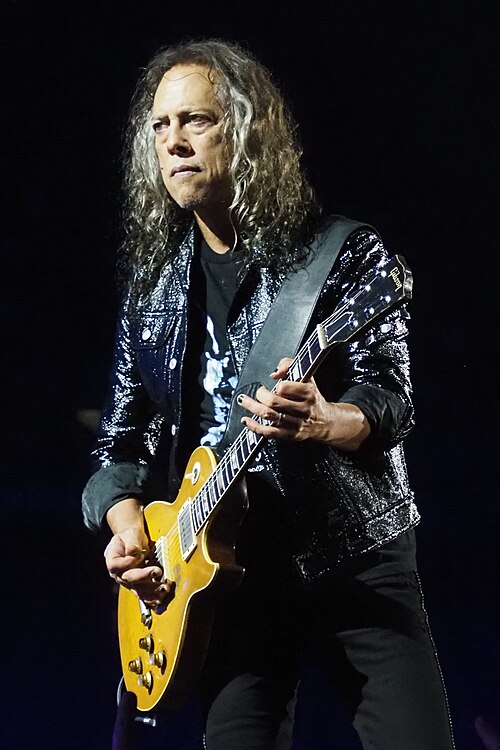
Kirk Hammett
Kirk Hammett joined Metallica in 1983 after studying with Joe Satriani and quickly established himself as one of the premier lead guitarists in heavy metal. His Wah-drenched solos over Hetfield's precise rhythms define the Metallica sound — melodic phrasing over brutal backing.
ESP guitar with EMG-81 into Mesa/Boogie — wah-heavy lead tone with sustained single-note lines. The wah is almost always engaged for solos, adding vocal expressiveness to the tight, high-gain amp tone.
Guitars
ESP KH-2 Kirk Hammett Signature
Primary guitar — custom EMG pickups, Floyd Rose. Various graphic finishes including "Ouija" board.
Gibson Flying V
1983–1987Early Metallica era — Kill Em All and Ride the Lightning.
ESP Shark
1989–1994Offset shark fin body — used on Justice and Black Album tours.
Amplifiers
Mesa/Boogie Mark IIC+
1985–1992Matching Hetfield's setup — tight, complex gain.
Mesa/Boogie Dual Rectifier
1992–presentLoad era onwards — heavier, looser character suits his lead style.
Effects Pedals
Dunlop Cry Baby Wah (KH-95)
Signature wah with Kirk's voiced frequency response. Almost every Hammett solo features wah. Essential to his sound.
Boss NS-2 Noise Suppressor
Noise gate for high-gain signal chain management.
Key Albums & Tone
"For Whom the Bell Tolls" solo and "Fade to Black" closing solo showcase melodic lead vocabulary.
"Battery" and "Disposable Heroes" solos — speed and fluency.
"Enter Sandman", "The Unforgiven", "Nothing Else Matters" — career-defining solos.
Frequently Asked Questions
What guitar does Kirk Hammett use?
ESP KH-2 Kirk Hammett Signature and Gibson Flying V. Primary guitar — custom EMG pickups, Floyd Rose. Various graphic finishes including "Ouija" board.
What amp does Kirk Hammett use?
Mesa/Boogie Mark IIC+ and Mesa/Boogie Dual Rectifier. Matching Hetfield's setup — tight, complex gain.
What pedals does Kirk Hammett use?
Kirk Hammett uses Dunlop Cry Baby Wah (KH-95), Boss NS-2 Noise Suppressor.
What is Kirk Hammett's signature sound?
ESP guitar with EMG-81 into Mesa/Boogie — wah-heavy lead tone with sustained single-note lines. The wah is almost always engaged for solos, adding vocal expressiveness to the tight, high-gain amp tone.