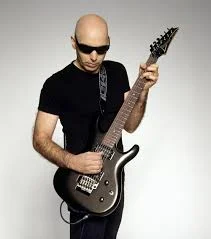
Joe Satriani
Joe Satriani is the best-selling instrumental rock guitarist of all time — his 1987 album Surfing with the Alien sold over one million copies and remains the benchmark for melodic guitar instrumental music. He has taught some of the most famous guitarists in rock history, including Steve Vai, Kirk Hammett, and Larry LaLonde, before his solo career began. He founded the G3 concert series with Steve Vai and Eric Johnson in 1996 and has headlined it annually since, showcasing the world's elite guitar instrumentalists.
Ibanez JS1000 into a Marshall JVM with heavy chorus and precise digital delay — maximum sustain and expressive whammy bar technique in service of melodic instrumental music. Satriani's tone is bright and singing, never dark or opaque; every note needs to project a melody even at high gain levels. His pitch-accurate vibrato and whammy bar control are central to the melodic expression.
Signal Chain Order
Why Joe Satriani's Rig Works
Satriani's insistence that delay time exactly match each song's tempo, rather than using a fixed favorite setting, reflects a genuinely different priority than most rock guitarists bring to delay: because his instrumental compositions rely on the guitar to carry melody the way a vocalist would in a normal song, an out-of-time delay repeat competes with and muddies the melodic line instead of supporting it. Tempo-locked delay repeats land in the rhythmic pocket rather than against it, which keeps the melody legible even with echo layered underneath.
Running the TS9 at unity volume with gain near zero — the same "boost not overdrive" technique found in SRV's and John Mayer's rigs — serves a specific purpose in an instrumental context: it pushes the Marshall's own tubes into extra harmonic saturation and sustain without adding the Tube Screamer's own colored midrange hump on top, keeping the tone bright and singing rather than pushing it toward the more compressed, mid-forward character a hotter TS9 setting would introduce.
The whammy bar and DigiTech Whammy pedal both serve his melodic priorities directly, not as novelty effects — because there's no vocal line to carry a song's hook, pitch-bending and dive techniques become substitute melodic devices, letting a single sustained note function almost like a sung phrase with rising or falling inflection. That's a meaningfully different use case from a rhythm-guitar-focused player reaching for the same pedal.
Guitars
Ibanez JS1000
1988–presentThe primary Satriani guitar and his own signature model — DiMarzio PAF Joe (neck) and Mo' Joe (bridge) pickups. Floyd Rose tremolo for whammy bar expression. Candy apple finish is the most iconic.
Ibanez JS2450
2013–presentPremium JS series with refined appointments. Used alongside the JS1000 in current live rigs.
Ibanez JS1 Chrome Boy
1990–1993Mirrored chrome finish used on the Surfing with the Alien and Flying in a Blue Dream live tours — one of the most recognisable guitar appearances in rock.
Amplifiers
Marshall JVM410H
2007–presentPrimary live and studio amp. Four channels covering everything from clean to extremely high gain. Satriani uses the OD2 channel for his primary lead tone.
Peavey 5150 (Eddie Van Halen)
1998–2006Used extensively on The Extremist and Crystal Planet era tours.
Marshall JMP Super Lead
1987–1992Original amp used on Surfing with the Alien and Dreaming No. 11 recordings.
Effects Pedals
Ibanez TS9 Tube Screamer
Used as amp push rather than pedal overdrive — Volume at Unity, Gain at minimum, pushes the Marshall input for added harmonics and sustain.
Pedal guide →DigiTech Whammy
Essential Satriani effect — pitch shifting for the distinctive whammy-dive passages and octave-up effects that define his extended technique vocabulary.
Boss DD-20 Giga Delay
Precise tap-tempo delay with multiple presets for each song's required delay time. Very exact — Satriani is meticulous about delay timing matching song tempo.
Boss CH-1 Super Chorus
Subtle chorus for warmth and breadth — present on most clean and lead tones without being obviously pronounced.
Dunlop Cry Baby Wah
Used expressively in solos — not rhythm wah but a genuine melodic tool alongside the whammy bar.
Pedal guide →Key Albums & Tone
"Satch Boogie" and title track — the definitive Satriani tone. Ibanez JS into Marshall, TS9 boost, chorus and delay. One million copies sold.
"The Forgotten" and "Big Bad Moon" — broader production with vocals on some tracks. Lead guitar tone at its most expressive.
"Summer Song" — the most radio-friendly Satriani track and widely the introduction to his tone for mainstream rock audiences.
"Crystal Planet" title track — heavier direction without losing the melodic focus. Peavey 5150 era.
Frequently Asked Questions
What guitar does Joe Satriani use?
Ibanez JS1000 and Ibanez JS2450. The primary Satriani guitar and his own signature model — DiMarzio PAF Joe (neck) and Mo' Joe (bridge) pickups. Floyd Rose tremolo for whammy bar expression. Candy apple finish is the most iconic.
What amp does Joe Satriani use?
Marshall JVM410H and Peavey 5150 (Eddie Van Halen). Primary live and studio amp. Four channels covering everything from clean to extremely high gain. Satriani uses the OD2 channel for his primary lead tone.
What pedals does Joe Satriani use?
Joe Satriani uses Ibanez TS9 Tube Screamer, DigiTech Whammy, Boss DD-20 Giga Delay and more.
What is Joe Satriani's signature sound?
Ibanez JS1000 into a Marshall JVM with heavy chorus and precise digital delay — maximum sustain and expressive whammy bar technique in service of melodic instrumental music. Satriani's tone is bright and singing, never dark or opaque; every note needs to project a melody even at high gain levels. His pitch-accurate vibrato and whammy bar control are central to the melodic expression.
About This Data
Gear information for Joe Satriani is compiled from live performance footage, rig-rundown interviews, manufacturer and signature-model documentation, and cross-referenced guitar press coverage — not a single source. Where accounts conflict (a common issue with decades-old gear history), we favour the version corroborated by the most independent sources and note genuine ambiguity in the text rather than presenting a guess as settled fact.
This page is maintained by Alex Hall, last reviewed July 2026. Spotted something out of date or inaccurate? Let us know — corrections are usually made within a few days.