Rig Builder
Budget Rig Breakdown
Signal Chain

Essentials
Complete Your Rig
The accessories every serious guitarist needs — cables, strings, and the rest.
D'Addario Chromes Flatwound Strings 11-50
Flatwound strings eliminate string noise and produce the warm, smooth tone jazz requires.
Dunlop Ultex Standard Pick 0.60mm
Thin picks produce the softer, warmer jazz attack — less attack = more warmth.
Planet Waves American Stage Guitar Cable 10ft
Solderless ends and lifetime warranty. The cable most session guitarists trust.
Boss TU-3 Chromatic Tuner Pedal
The professional standard for live tuning. True bypass, powers other pedals, ultra-accurate.
Levy's M8 Guitar Strap
Quality leather strap used by touring guitarists. Genuine comfort for 3-hour sets.
Technique
Key Tone Tips
- Use the bridge pickup for session comping — cuts through dense arrangements
- Switch to neck pickup for ballads and melody work
- Blend major 6th and 9th chord voicings for a classic pop-jazz sound
- Study the recordings with Oscar Peterson — Kessel's comping under a piano is masterful
- Keep the amp clean and bright — Barney valued clarity and attack over warmth
- Jazz bebop vocabulary on a Gibson ES-330 or ES-175 — Kessel's hollow archtop gave the warm, full projection needed in acoustic jazz and amplified Los Angeles studio sessions, and the semi-hollow body resonance contributes harmonic richness no solidbody can replicate
- Single-coil pickup combined with a warm, slightly rounded tone-knob setting gives the precise articulation without the muddy thickness of a full humbucking pickup — aim for a bright-but-round character by keeping treble moderate and mids slightly boosted
- Study 'Easy Like' and the complete 'Poll Winners' album with Shelly Manne and Ray Brown — these recordings document the California bebop chamber jazz context that shaped the full range of Kessel's harmonic and rhythmic vocabulary
- Chord-melody approach: root in the bass, guide tones (3rd and 7th) in the middle voices, melody on top — this three-voice arrangement produces the elegant, harmonically complete jazz texture from a single guitar without any support instrument
- Chromatic passing tones between chord tones create smooth line continuity — following bebop practice of approaching each chord tone from a semitone below or above connects the notes into flowing lines and removes the stepwise gap that sounds mechanical
- The pick should barely move the string — a very light attack with a medium-thin pick allows fast, articulate bebop runs without generating excess string noise or pick clicks that the studio microphone will capture and exaggerate
- Vibrato at the end of held notes is slow and subtle — jazz vibrato is fundamentally different from rock vibrato. Develop a gentle, wide, slow vibrato applied with minimal pressure change to avoid going sharp at the peak of the cycle
Background
About Kessel's Sound
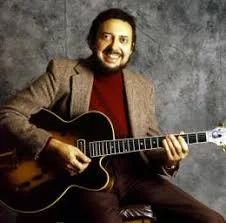
Barney Kessel was one of the most commercially versatile jazz guitarists in history — equally at home recording bebop albums, playing on Elvis Presley and Ray Charles sessions as one of the legendary Wrecking Crew, and performing solo jazz concerts worldwide.
Tone History
Kessel's Tone Evolution
Barney Kessel was one of the finest jazz guitarists of the bebop era — a studio guitarist of legendary efficiency who appeared on thousands of recordings for Verve, Contemporary, and as a member of Phil Spector's Wrecking Crew session collective.
Full timeline: 2 eras →Song Breakdowns
Kessel Song Rigs
Easy Like
Easy Like · 1953
Barney Kessel's debut album and one of the earliest jazz guitar recordings …
Let's Cook!
Let's Cook! · 1957
Kessel at his most swinging — an uptempo blowing vehicle that shows his spe…
To Swing or Not to Swing
To Swing or Not to Swing · 1955
The most technically ambitious early Kessel recording — a longer, explorato…